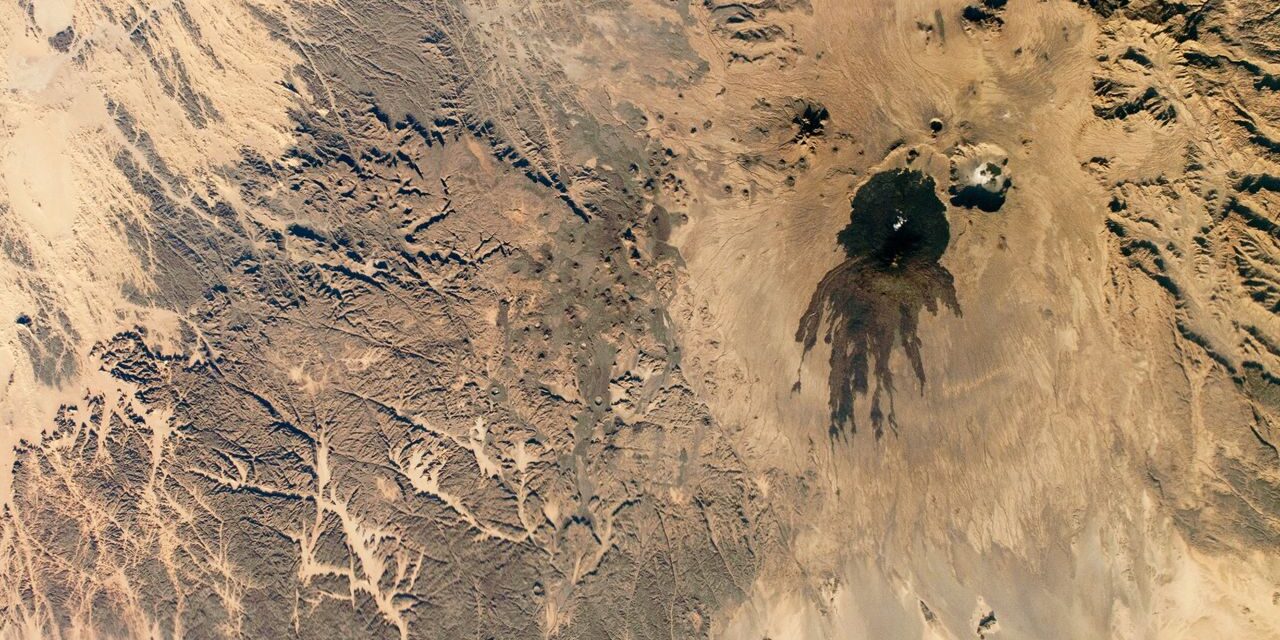
The Sahara Desert, known for its vast dunes and scorching temperatures, also hides geological wonders beneath its surface. A striking feature within this arid landscape is a dark volcano that bears the scars of ancient lava flows. The formation, resembling a ‘skull’ when viewed from above, has recently sparked interest among geologists and scientists alike. Its unique topography presents opportunities for understanding volcanic activity and its effects on the surrounding environment.
What happened
The volcano, often referred to informally as the ‘skull,’ is located in a remote area of the Sahara. Satellite imagery reveals shadowy tendrils of hardened lava that have spread across the landscape, creating a dramatic contrast with the sandy surroundings. These formations were formed during periods of volcanic activity that occurred millions of years ago, shaping not only the physical landscape but also influencing local ecosystems.
This particular volcano is categorized as a shield volcano, which is characterized by its broad, gently sloping sides formed by low-viscosity lava that can flow over great distances. The ‘skull’ feature refers to a distinct shape created by the arrangement of rock layers and lava remnants that can be seen when viewed from above, often inspiring curiosity and speculation regarding its formation.
What it means for readers
Understanding this geological phenomenon has implications beyond mere curiosity. The ‘skull’ volcano and its lava flows serve as a natural laboratory for studying volcanic processes and their impacts on climate and environment. For readers interested in earth sciences, this site represents an opportunity to observe the effects of past volcanic activity on sedimentary processes and current ecosystems.
Research conducted at such sites can help scientists draw parallels to historical volcanic events elsewhere, aiding predictions about future eruptions. Learning more about these ancient lava remnants can better inform local communities about natural hazards and potential volcanic activity, important knowledge given the unpredictable nature of natural disasters.
What happens now
Moving forward, researchers plan to conduct further analyses of the ‘skull’ volcano. They will employ advanced techniques, including remote sensing and geochemical sampling, to uncover the age of the lava flows and the specific conditions under which they formed. This could provide deeper insights into the volcano’s eruption history and its role in the regional geology.
For travelers and adventurers, the ‘skull’ volcano presents a unique destination within the Sahara. Understanding its geological significance not only enhances the experience for visitors but also promotes awareness of the importance of preserving such natural wonders. As scientists continue to explore this enigmatic feature, the story of the Sahara’s volcanic landscape will continue to unfold, holding lessons for both the scientific community and the public.
Ultimately, the discovery of this ancient volcano serves as a reminder of the planet’s dynamic nature and the ongoing processes that shape our world. Enthusiasts and experts alike will be watching as new findings emerge, adding to our understanding of Earth’s geological history.