
Latest developments
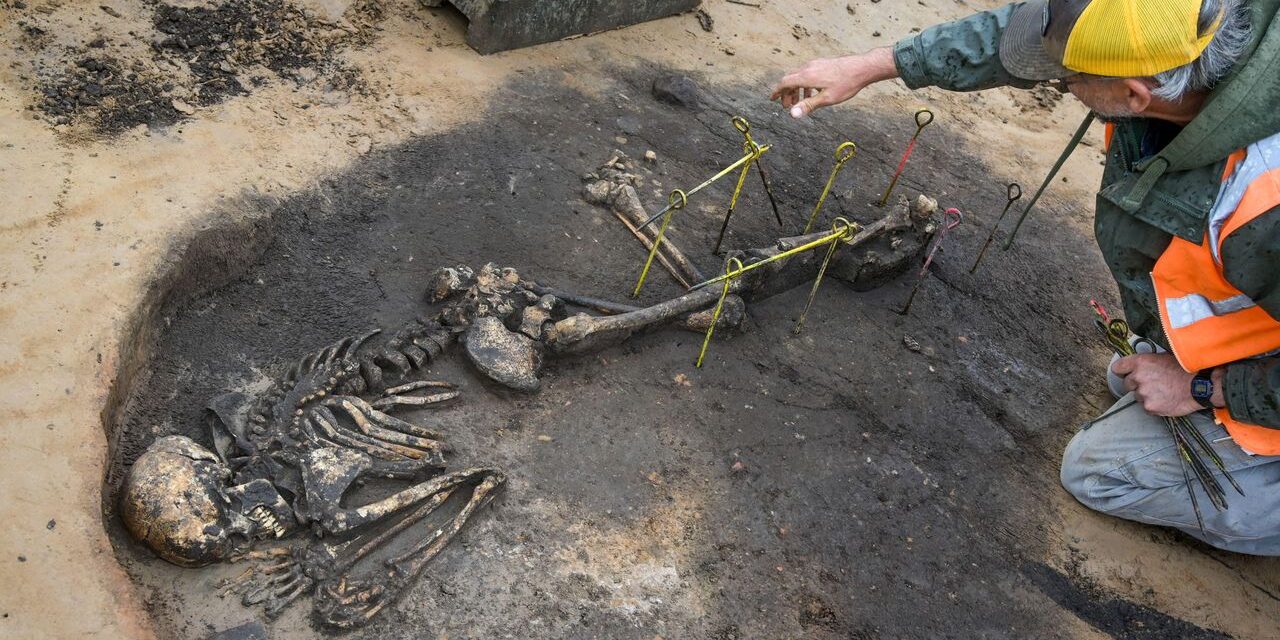
Recent excavations in Germany have revealed the remains of a man, believed to be over 5,000 years old, found in a kiln-like structure. Archaeologists are intrigued by the evidence suggesting that this individual may have been a victim of human sacrifice. The discovery, made in a site near the town of Pömmelte in Saxony-Anhalt, forms part of a larger cemetery complex linked to the Funnel Beaker culture, known for its elaborate burial rituals.
Analysis of the man’s skull shows signs of significant trauma, leading researchers to speculate on the circumstances surrounding his death and burial. The kiln, typically used for pottery, is an unusual burial site, raising questions about the cultural practices of the people who lived in that era.
Background and context
The Funnel Beaker culture, which thrived in parts of modern-day Germany and neighboring countries, dates back to roughly 4,500-3,200 BCE. This civilization is noted for its distinctive pottery, megalithic structures, and complex burial customs, often involving grave goods and communal burial sites. The findings in Pömmelte mirror similar discoveries in other parts of Europe, where ritualistic practices have been connected to the belief systems of ancient communities.
The buried individual’s battered skull, combined with the unique placement within the kiln, suggests a form of ritualistic sacrifice, which was not uncommon among ancient societies seeking to appease deities or ensure favorable conditions for their tribes. Additionally, the location of this find, alongside other graves containing ornate artifacts, points to a significant funerary landscape that reflects the social stratification and beliefs of the Funnel Beaker people.
What to watch next
As researchers continue to study the remains, experts will be looking to uncover more about the social and religious practices of the Funnel Beaker culture. DNA analysis and advanced imaging techniques may provide insights into the individual’s health, diet, and possible lineage, which could further contextualize this burial within the broader historical narrative of prehistoric Europe.
Future excavations in the Pömmelte area could reveal additional artifacts or even other skeletal remains, offering a more comprehensive understanding of these ancient rituals. The findings pose intriguing questions about the nature of sacrifice and community practices during this period and how they may have influenced societal structures in Europe millennia ago.
Original Source: https://www.livescience.com/archaeology/5-000-year-old-burial-of-man-with-battered-skull-found-in-kiln-in-germany-and-he-may-have-been-a-human-sacrifice