
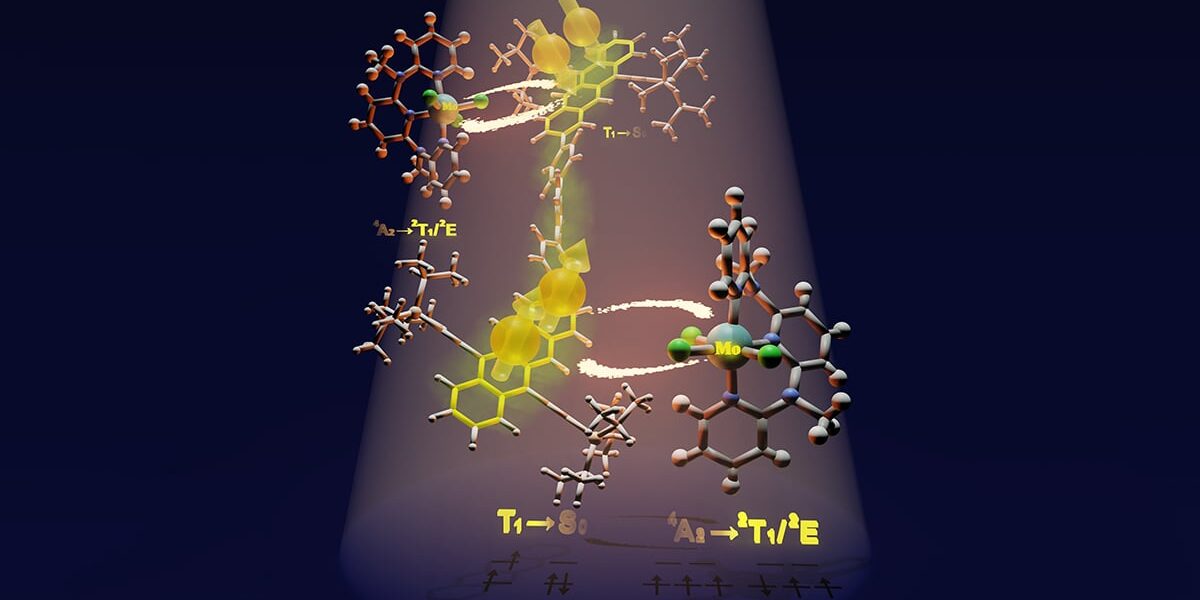
In an impressive breakthrough for renewable energy technology, scientists have reportedly achieved a solar cell efficiency of 130% Quantum Yield – completely shattering the previously theorized limit of 100%. The paradigm-shifting breakthrough promises significant advances in the field of sustainable energy, carrying the potential to reshape not just the solar energy industry, but the entirety of our global energy systems.
The concept of Quantum Yield refers to the quantity of usable energy a photovoltaic cell, or commonly known solar cell, can generate from photons (light particles). Before this discovery, it was universally accepted among physicists that the maximum Quantum Yield was 100%, indicating that for every photon absorbed by the solar cell, one electron could be generated.
However, this groundbreaking research has somehow managed to defy universally accepted principles, generating an astounding 1.3 electrons per photon – hence the 130% Quantum Yield. This macro world violation of what was perceived as an unbreakable barrier of Quantum Physics, is yet another testament to the ever-evolving frontiers of scientific discovery.
The remarkable finding was reported by an international team of researchers from the United States and the United Kingdom. Their study was published recently in the peer-reviewed journal ‘Nature Energy.’ The official announcement has spurred animated debate and excitement in scientific circles around the globe, with some heralding it as potentially the most significant breakthrough in renewable energy in the past decade, if not more.
Yet, with such a paradigm-shattering breakthrough comes inevitable skepticism. Critics are questioning the validity of exceeding 100% Quantum Yield, given the fundamental principles of quantum physics that have long been in place. However, despite such reservations, the detailed research paper and confirmatory laboratory tests appear robust, thus instigating support from a steadily increasing portion of the scientific community.
Although this feat is monumental, its practical application, spanning across industries from massive solar farms to home solar power systems, is not yet entirely understood. The process that led to an increased Quantum Yield involved highly specialized conditions under controlled laboratory settings. Therefore, corresponding this ground-breaking feat in commercial settings even with the best solar panels holds some significant challenges.
Notwithstanding these hurdles, if effectively applied, the discovery could usher in a new era of significantly more efficient solar power, with capabilities far surpassing current industry standards. This would represent a colossal stride toward zero-emission energy generation.
The remarkable breakthrough comes against a backdrop of broader efforts to increase the efficiency of solar power, an energy source that, despite being in abundance, still accounts for less than 3% of the world’s total energy production. However, given the crucial role solar energy is poised to play in curbing carbon emissions and halting climate change, milestones, such as the one reached by these researchers, are essential for driving forward the green shift.
This news has already made rounds on various online platforms. Renewable energy forums and social media discussions have become rife with debates surrounding the feasibility and ramifications of this discovery. Major online technology and science outlets have embarked on detailed explanatory pieces, exploring the theoretical aspects behind the breakthrough. The mainstream media and online news sources are also heaping a considerable amount of attention on this singularly unique discovery, marking its significance in present and future renewable energy initiatives.
The announcement of this breakthrough falls perfectly in line with the world’s push towards renewable energy sources. It signifies the great strides being made within the field, the willingness to challenge solidified concepts, and the boundless potential that lies in renewable energy innovations. While hurdles remain in the path to commercial applications of this astounding 130% Quantum Yield, the sheer magnitude of this discovery cannot be undermined. The breakthrough stands as a testament to scientific progress and carries the hope that abundant and highly efficient solar power may soon become a reality.
Original Source: https://www.sciencealert.com/new-breakthrough-in-solar-cell-efficiency-hits-130-quantum-yield