
Latest developments
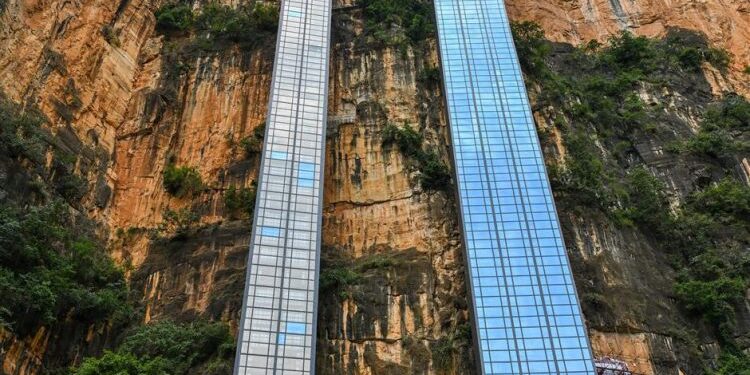
In a groundbreaking initiative aimed at improving educational access, China has unveiled a 288-meter outdoor elevator in the mountainous region of Zhaojue County, Sichuan province. This engineering marvel, said to be the world’s highest outdoor elevator, has been specifically designed to ease the daily commute for children who must navigate steep terrains to reach their school.
The elevator is now operational, providing a much-needed lifeline for approximately 1,000 students from remote villages. Prior to its construction, many students faced daunting walks that could take upwards of two hours each way. Local authorities report that the elevator significantly reduces travel time, enabling students to focus more on their studies and less on their arduous journeys.
Background and context
This innovative project emerged from a broader effort by the Chinese government to enhance educational opportunities in rural and mountainous areas. Traditionally, children in these isolated regions have faced significant obstacles—including difficult terrain, lack of infrastructure, and often dangerous weather conditions—that limit their ability to attend school regularly. The government has been addressing these issues through various initiatives, including the construction of roads and transportation systems, but the outdoor elevator represents a novel solution to a long-standing problem.
The decision to build the elevator was motivated by extensive feedback from local communities, as well as studies indicating that access to education directly correlates with improved economic outcomes. The elevator, constructed with safety features and user-friendly access, symbolizes a commitment to equalizing educational opportunities across different demographics, particularly in underserved areas.
What to watch next
As this elevator project unfolds, other regions in China and beyond are likely watching closely. Policymakers may consider similar vertical transport solutions to address geographic barriers to education. The potential for application in other challenging landscapes could lead to increased investment in infrastructure that supports academic access and equity.
In the coming months, it will be essential to evaluate the elevator’s long-term impact on student attendance and academic performance. Additionally, local reports will provide insight into how this structure integrates into daily life for the residents and the broader implications for rural education in China. If successful, this project may set a precedence for future educational initiatives globally, highlighting innovative solutions to longstanding geographical challenges.