
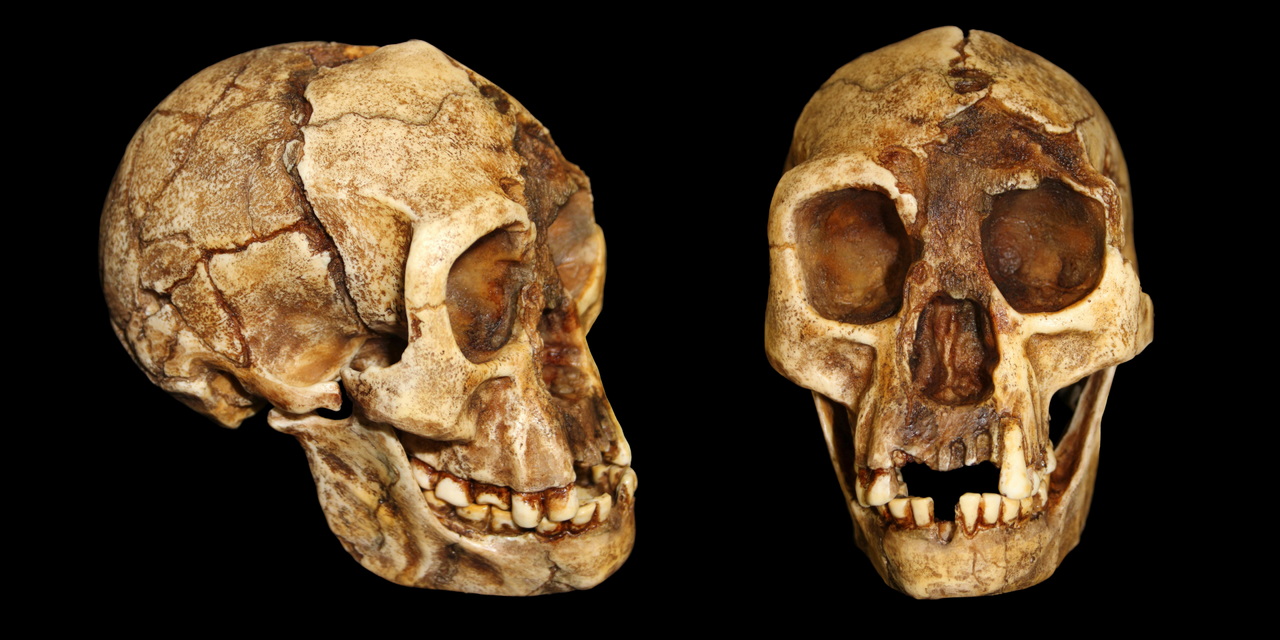
A recent study of ancient hip bones has revealed that the enigmatic species known as Homo floresiensis, often referred to as the ‘hobbit’ due to its small stature, exhibited a mode of locomotion more similar to modern humans than to earlier hominins like Australopithecus afarensis, famously represented by the fossil known as Lucy.
What happened
Researchers at the University of the Witwatersrand in South Africa have focused on the hip structure of Homo floresiensis, which was discovered on the island of Flores in Indonesia in 2003. Previously, this species was widely thought to have walked in a manner resembling that of Lucy, who thrived over 3 million years ago. Recent skeletal analysis indicates that the hip bones of Homo floresiensis, aged approximately 50,000 years, reflect a fundamentally different walking pattern, aligning more closely with that of contemporary humans.
The findings were published in a study that utilized 3D imaging technology to examine the hip bones in detail. Lead researcher, Dr. Sergio Almécija, pointed out that the adaptations in the pelvis of Homo floresiensis may shed light on the evolutionary pathways that led to bipedalism. This study opens up fresh discussions about the evolutionary narratives of human ancestors and the environment in which they existed.
What it means for readers
This revelation complicates our understanding of early human evolution. The resemblance in hip bone structure between Homo floresiensis and modern humans indicates a more sophisticated locomotion system than previously believed. This suggests that the ‘hobbit’ may not have been merely a primitive counterpart in the human lineage but rather a species that managed to evolve its own unique adaptations, potentially allowing it to traverse its environment more efficiently.
The implications are significant not just for anthropology but for our broader understanding of evolution. By reevaluating how we categorize these early hominins, researchers can gain deeper insights into the variations and adaptability of species that existed alongside our own ancestors. This challenges the traditional linear perception of human evolution, highlighting a more complex web of evolutionary pathways.
What happens now
Looking ahead, this discovery raises several important questions. Scholars will likely continue to investigate Homo floresiensis using advanced imaging techniques and comparative anatomical studies. Future research could focus on the relationship between this species and other hominins, examining the environmental factors that may have influenced their development.
Additionally, more fossil remains may be discovered in the coming years, providing further context and data for these inquiries. As scientists continue to piece together the puzzle of human evolution, articles like this highlight the dynamic nature of research in this field. It is essential for readers interested in anthropology and evolutionary biology to keep abreast of these developments, as they may redefine what we think we know about our origins.
In summary, the insights gained from the hip bones of H. floresiensis not only challenge existing narratives but also underscore the complexity of human evolution. As research progresses, it promises to illuminate the diverse ways in which different hominin species adapted to their environments, offering deeper reserves of knowledge for future generations.
Original Source: https://www.livescience.com/archaeology/human-evolution/strange-hobbit-species-walked-more-like-us-than-like-lucy-hip-bones-reveal