
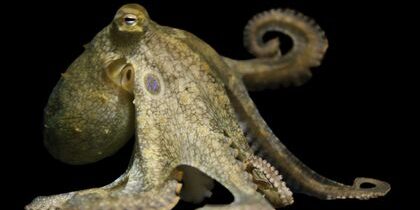
Recent research has revealed that some octopuses exhibit remarkable intelligence, and new findings suggest that a previously undocumented genetic mutation may play a crucial role in their mental capabilities. This insight can help illuminate how these enigmatic creatures navigate complex environments and solve problems.
Background and context
Octopuses are well-known for their extraordinary behaviors, which include the ability to use tools, solve mazes, and engage in complex hunting strategies. Their intelligence challenges the traditional view of animal cognition, as they possess a decentralized nervous system with over 500 million neurons spread throughout their bodies. Unlike mammals, whose cognitive abilities are closely tied to brain size, octopus intelligence evolves from unique adaptations to their underwater habitats.
Research concerning octopus intelligence has mainly focused on their problem-solving skills and social behaviors. However, the genomic basis for this intelligence has remained largely unexplored. Recently, scientists have directed their attention toward the genetic elements that may endow these cephalopods with their impressive cognitive functions. Specifically, the discovery of a novel mutation in an RNA-binding protein suggests a connection between this genetic change and the octopus’s ability to build proteins accurately—an essential process for cognitive function.
Latest developments
A study conducted by a team of molecular biologists has found an unprecedented mutation in the MBNL gene, which plays a role in regulating RNA splicing. RNA splicing is critical for producing various proteins that influence neuronal development and function. This particular mutation appears to enhance the accuracy of protein synthesis, potentially resulting in more complex neural networks.
This breakthrough insight complements earlier findings that highlight the role of enriched environments in fostering octopus intelligence. For example, octopuses raised in stimulating conditions exhibit superior problem-solving skills compared to those in barren habitats. Therefore, coupling the emerging genetic information with an understanding of environmental impacts can help researchers paint a clearer picture of cephalopod cognition.
The implications of these findings extend beyond mere curiosity. By determining how this genetic mutation impacts the ability of octopuses to adapt, learn, and solve problems, scientists may unlock broader insights into the evolution of intelligence itself—not just in octopuses but across various animal species.
What to watch next
As research continues, the focus will likely shift toward experimental studies that evaluate how this genetic mutation affects behavior and cognitive abilities in octopuses in both controlled and natural environments. Scientists may also explore whether similar mutations exist in other intelligent marine species, leading to a better understanding of the evolutionary pathways that have shaped marine cognition.
Ultimately, these findings could foster greater appreciation for octopuses and other cephalopods, prompting further conservation efforts to preserve their complex habitats. The more we learn about these creatures, the more we unravel the evolutionary secrets that underpin intelligence in the animal kingdom.