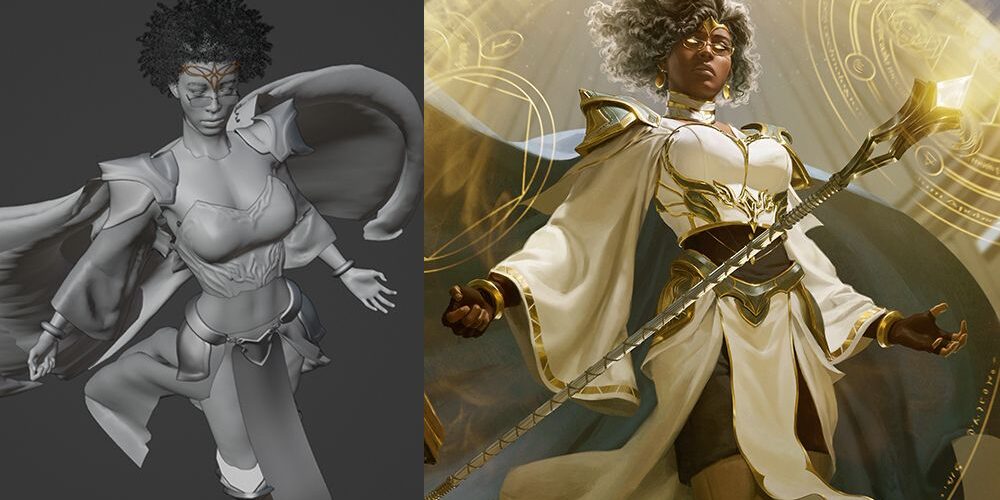
The art world has recently seen a surge in the use of 3D blockouts, a technique that is transforming the creation of realistic fantasy artwork. As artists dive deeper into digital mediums, this method is gaining traction not only for its efficiency but also for its ability to streamline the creative process. The market for digital art is reacting positively to this trend, with increased interest from both creators and consumers seeking innovative approaches to art production.
Immediate reaction
Many digital artists have expressed excitement over the integration of 3D blockouts in their workflow. This technique allows them to swiftly visualize scenes, providing a foundational framework that can be refined into intricate works. Social media platforms are buzzing with posts showcasing before-and-after comparisons, highlighting how these quick mock-ups pave the way for more detailed designs. Artists notice that they can enhance their storytelling by placing characters and elements within a coherent space, making the art more immersive and engaging.
The immediate reception from the public has also been favorable. Art enthusiasts appreciate the evolution, noting that it adds depth to the genres they adore. Fantasy art, in particular, benefits from the realistic dimensions offered by blockouts. Online communities dedicated to concept art and digital illustrations are flooded with tutorials and discussions, signalling a collective recognition of this innovative approach.
What triggered the move
The rise of 3D blockouts can be attributed to several factors within the digital art scene. One significant trigger was advancements in software tools that facilitate the creation of 3D models and environments. Programs that once catered predominantly to gaming and animation have become more accessible, allowing artists to experiment with blockouts. Additionally, the rapid growth of the gaming and film industries has fueled a demand for high-quality visuals, pushing artists to adopt techniques that keep their work competitive.
Moreover, the recent proliferation of online learning platforms has democratized access to these techniques. Tutorials and workshops abound, enabling emerging artists to quickly grasp the fundamentals of 3D modeling. This has fostered a new generation of creators who are not only skilled in traditional art but are also adept at integrating 3D elements into their compositions.
Why readers should care
Understanding the impact of 3D blockouts in fantasy art is essential for anyone interested in the arts, whether they are creators or consumers. This technique signifies a shift in how artistic narratives can be visualized, leading to richer experiences in both gaming and visual storytelling. For artists, mastering 3D blockouts can open pathways to enhanced creativity and efficiency, enabling them to push the boundaries of their craft.
For art enthusiasts and collectors, the rise of this approach indicates a new era in the quality and depth of fantasy art. As more artists adopt these techniques, the potential for innovative storytelling increases, ultimately enriching the art market. In the short term, it is likely that we will see an influx of high-quality, immersive artworks that blend traditional artistry with groundbreaking digital methods, providing viewers with vivid experiences and fresh perspectives.
Original Source: https://www.creativebloq.com/art/digital-art/how-simple-3d-blockouts-help-build-realistic-fantasy-art