Immediate reaction
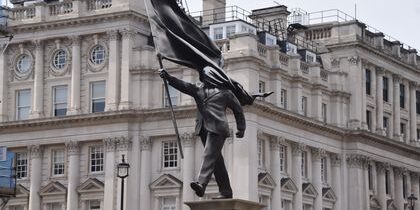
A striking new statue, attributed to the elusive street artist Banksy, has appeared in Central London, capturing the attention of art enthusiasts and the general public alike. The sculpture depicts a monocle-wearing man in a tailored suit, with his eyes obscured by a giant flag. He appears to be walking off a ledge, an imagery that provokes thoughts of precariousness in an era marked by socio-political turmoil.
The immediate response on social media has been palpable, with numerous posts highlighting both its artistic merit and its political implications. Art collectors have responded positively, expressing both excitement and curiosity about the piece’s potential value and its implications for the street art scene. Londoners, both locals and tourists, gather at the site daily, capturing photographs and sharing their interpretations of the work, reinforcing the continuous impact Banksy’s art has on urban landscapes.
What triggered the move
This new installation appears to engage with themes of conformity and blind patriotism, particularly resonating in a divided Britain where issues of identity and belonging dominate public discourse. Observers have suggested that the flag may symbolize nationalism, while the blindfolded figure raises questions about awareness and complacency in current societal conditions. It is notable that the piece emerges at a time when many are grappling with economic uncertainties and shifting political landscapes, amplifying the urgency of the commentary it presents.
The timing also coincides with Banksy’s recent actions, which include other politically charged artworks and campaigns aimed at raising awareness on various global issues. His strategic timing in unveiling this statue may be a deliberate response to current events, inviting viewers to reflect on their roles within society at large. As art continues to serve as a powerful vehicle for social commentary, this piece stands as a necessary reflection of the moment.
Why readers should care
This installation not only adds to Banksy’s prolific repertoire but also acts as a catalyst for dialogue around pressing societal issues. Given Banksy’s status as a public art icon, the statue encourages discourse on the relationship between art and activism, urging a deeper engagement with themes that resonate far beyond the art world.
In the short term, the statue’s presence is likely to attract increased foot traffic to the area, benefiting local businesses while potentially influencing the broader art market, with heightened interest in Banksy’s oeuvre. Furthermore, its political implications may prompt an influx of press coverage, cementing its place within contemporary discourse on the role of art in society.
As the reactions continue to unfold, this latest work serves as a poignant reminder of the power of art in reflecting and shaping societal narratives, making it an essential point of interest for anyone invested in the future of public art and social commentary.