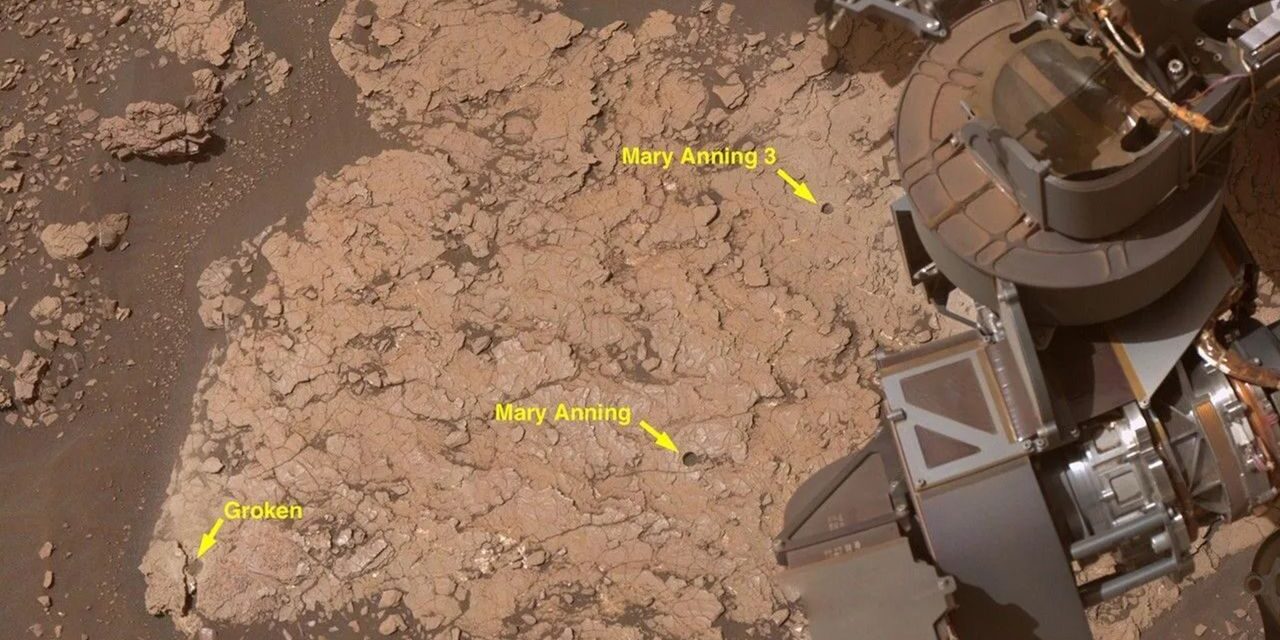
A NASA rover has made a groundbreaking discovery on Mars, uncovering a rock that contains seven new organic molecules. This finding marks the most diverse collection of organic matter identified on the Red Planet to date, further fueling the ongoing debate about the potential for life beyond Earth.
What happened
The Curiosity rover, which has been exploring the Gale Crater since 2012, analyzed a rock sample from the Martian surface and detected these seven organic compounds during its mission. The molecules were identified using Curiosity’s onboard laboratory, equipped with advanced instruments that are capable of performing detailed chemical analyses. This discovery builds upon previous findings of simpler organic compounds and appears to indicate a wider variety of organic chemistry occurring on Mars than previously understood.
The rover utilized its Sample Analysis at Mars (SAM) suite, which includes gas chromatography and mass spectrometry, to process and analyze the samples. The identified molecules include a variety of carbon-based compounds, which are essential building blocks of life as we know it. While this does not confirm the existence of life on Mars, it does provide critical insights into the planet’s organic chemistry.
Why it matters
The implications of this discovery are significant for the scientific community. Organic molecules can have various origins; they may be produced through geological processes, or they could possibly be remnants of biological processes. Understanding the nature of these molecules can help scientists draw conclusions about Mars’ past conditions, including its climate history and the potential habitability of the planet.
Previous missions have detected organic materials, but the diversity presented by this latest finding surpasses anything observed thus far. This diversity suggests that a more complex set of chemical reactions might be occurring in Martian geology, opening avenues for future research into whether life ever emerged in Mars’ ancient past.
What comes next
As the Curiosity rover continues its exploration, researchers on Earth are eager to analyze the broader implications of this discovery. The next steps involve detailed examinations of the new organic compounds to better understand their chemical structures and possible origins. Future missions, including the Perseverance rover, may also seek to explore similar areas and collect new samples that could be returned to Earth for more comprehensive analysis.
Moving forward, the mission teams will be closely monitoring the rover’s ongoing findings while preparing for upcoming missions and collaborative efforts with international space agencies. This discovery not only enhances our understanding of Mars but also paves the way for deeper investigations into the possibility of extraterrestrial life throughout the cosmos.
Original Source: https://www.livescience.com/space/space-exploration/nasa-rover-uncovers-rock-with-7-new-organic-molecules-on-mars-the-most-diverse-collection-ever-seen