
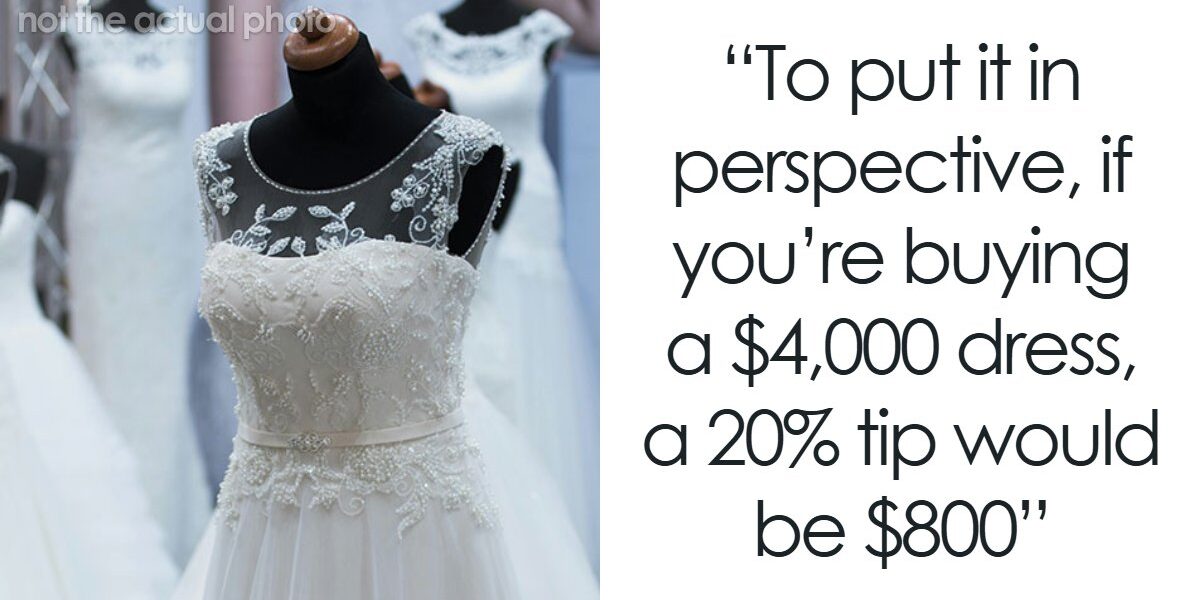
In a recent online discussion, a woman’s refusal to tip her wedding dress consultant has sparked widespread debate, with many internet users rallying in support of her decision. The conflict unfolds as a reflection of the evolving norms surrounding gratuities in service industries, specifically in the bridal sector.
Background and context
The incident began when a woman shared her experience with a bridal shop while shopping for her wedding dress. After selecting an outfit, she was informed that it was customary to tip the consultant who assisted her. The notion of tipping for a wedding dress fitting was unfamiliar to her, leading to discomfort during the transaction.
“I felt really icky,” she recounted, describing her feelings about the tipping request. She expressed doubts about whether it was appropriate to tip someone for what she perceived as their job responsibilities. The bridal consultant had been professional and helpful; however, she believed that the service was already compensated through the price of the dress. This sentiment resonated with many users online, highlighting differing opinions on gratuity in this specific context.
Latest developments
As the story gained traction on social media platforms, numerous users articulated their experiences with tipping in various sectors, with a significant focus on the bridal industry. Some shared that they felt obligated to tip for services like hair and makeup during weddings but questioned the need to tip for a product purchase.
Following the initial post, a few bridal consultants took to the same platforms to express their views. They noted that while tipping can be customary in some areas of the service industry, it should not feel mandatory for clients. Additionally, they argued that the wages for consultants vary widely, and in some places, tips significantly supplement their income.
This divergence in opinions highlights a broader conversation about expectations in service industries amidst rising costs of living and wage pressures. Many agree that while tips may be welcome, they should not be a requirement, particularly when purchasing high-cost items like wedding dresses.
What to watch next
As discussions surrounding this topic continue, it is likely that more individuals will voice their experiences and opinions on tipping in the bridal industry and beyond. This controversy has already spurred conversations about the expectations placed on consumers in various service contexts.
Future developments may also include how bridal shops react to this debate. Some may consider revisiting their policies on tipping or clarifying their positions to customers. Moreover, consumers might increasingly evaluate their own tipping habits as they navigate the landscape of service industries.
As societal norms regarding gratuity evolve, understanding the balance between fair compensation for service and consumer comfort will undoubtedly play a crucial role in shaping these discussions. The ongoing dialogue will not only impact bridal consultants and their clients but may also influence tipping practices in service sectors more broadly.
Original Source: https://www.boredpanda.com/tipping-for-a-wedding-dress/