
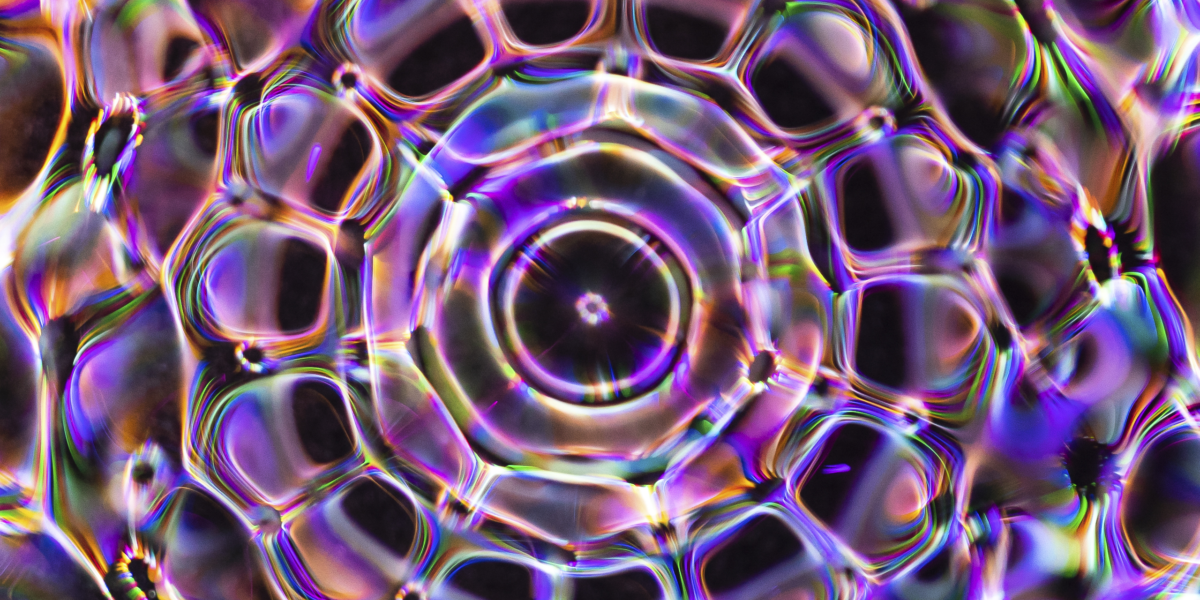
A groundbreaking discovery in the world of physics has emerged as researchers report the creation of a novel type of time crystal generated through synchronized vibrations. This unexpected development could deepen our understanding of time crystals and their potential applications in quantum computing and beyond. The research team, consisting of scientists from various institutions, unveiled their findings in a recent publication, highlighting the unique properties of this newly formed time crystal.
What happened
The study focuses on a time crystal that is formed when a system of particles—specifically, ions—oscillate in a synchronized manner. This synchronization leads to an emergence of periodic structures in time, breaking the conventional notion of equilibrium. Unlike typical solids or liquids, time crystals exhibit non-equilibrium states that cycle in time without energy loss. The researchers utilized advanced laser techniques to manipulate these ions, achieving stability in a configuration that has never been observed before.
This experiment builds on a concept first theorized by Nobel laureate Frank Wilczek in 2012, which envisaged a phase of matter exhibiting oscillations in time under specific conditions. The newly created time crystal demonstrates a compelling interaction between order and chaos, as the synchronized vibrations maintain the system’s stability while displaying time-dependent variations. Initial tests show that this time crystal displays more intricate dynamics than previously identified versions, which could have profound implications for future research.
Why it matters
The emergence of this new type of time crystal holds significant implications for both theoretical physics and practical applications. Researchers believe time crystals could enable advancements in quantum computing, offering potential solutions for creating more stable qubits— the fundamental units of information in quantum systems. The stability of time crystals under varying conditions can serve as a basis for developing reliable quantum networks and systems.
Additionally, the discovery prompts a reevaluation of our understanding of time itself. Time crystals challenge the conventional thermodynamic principles and introduce new questions about the relationship between time, energy, and matter. This may lead to innovative explorations across various scientific fields, from condensed matter physics to cosmology. The concept of manipulating time oscillations to create stable materials could also be leveraged for energy storage and nanotechnology applications.
What comes next
As the scientific community reviews these findings, future experiments will likely aim to explore the stability, scalability, and long-term behavior of this new time crystal. The research team plans to investigate how variations in temperature, external forces, and particle interactions affect its properties. Researchers are particularly interested in testing the practical applications of these crystals in quantum computing settings, where they can potentially enhance computational speed and efficiency.
In summary, the discovery of a new time crystal arising from synchronized vibrations not only challenges current scientific paradigms but also sets the stage for further exploration in quantum science. The coming months will be critical as researchers delve deeper into the properties of this time crystal, paving the way for potential technological breakthroughs that could redefine our approach to various scientific and engineering disciplines.
Original Source: https://www.sciencealert.com/a-strange-new-time-crystal-emerges-from-synchronized-vibrations