
Research into dark matter has taken a significant step forward as scientists involved in one of the world’s most ambitious experimental projects have announced a critical milestone in their deep underground efforts. This development is expected to enhance our understanding of dark matter, one of the universe’s most elusive components.
Latest developments
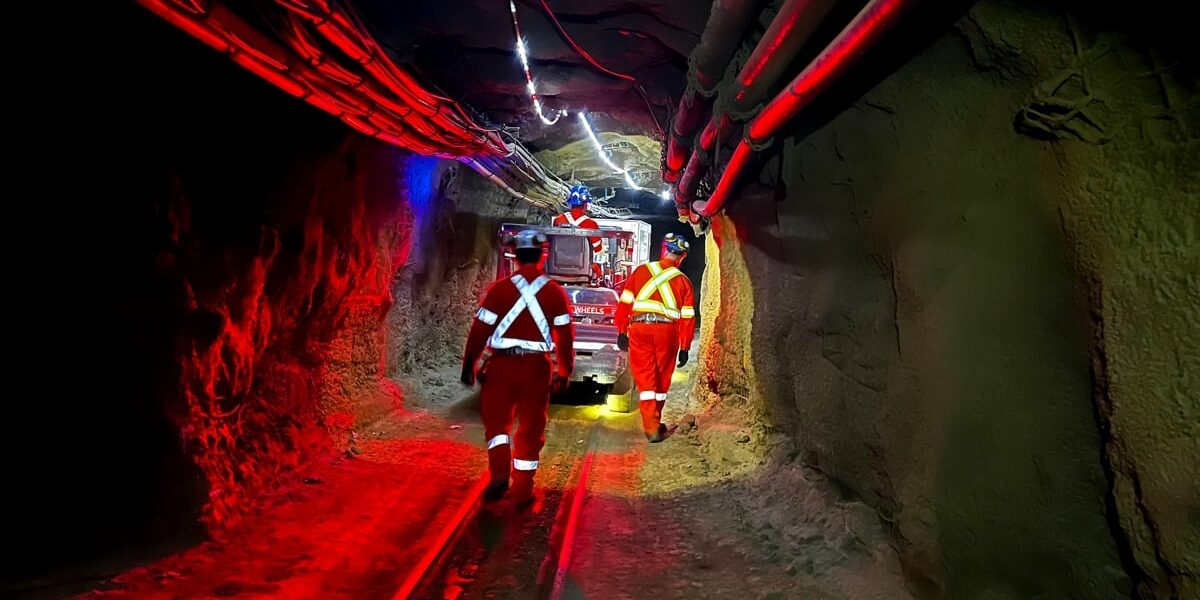
In a recent update, the team behind the Deep Underground Neutrino Experiment (DUNE) successfully completed a series of tests on their sophisticated detection equipment that will be deployed in the Sanford Underground Research Facility in South Dakota. This testing phase is crucial for ensuring that the detectors function optimally under the extreme conditions found nearly a mile beneath the Earth’s surface.
The experimental setup is designed to capture rare interactions of neutrinos—subatomic particles that could provide insights into dark matter properties. The researchers reported that they have achieved the necessary sensitivity levels to detect these interactions, marking a significant milestone that allows them to proceed to full-scale construction of the detector facilities.
This progress comes on the heels of advancements in scientific techniques and technology. The project’s collaboration includes a diverse group of physicists and engineers from institutions worldwide, working together to innovate and optimize the detectors for better data collection and analysis.
Background and context
Dark matter makes up approximately 27% of the universe but remains largely unobserved. It cannot be seen directly, making its properties deeply challenging to understand. The pressing question of what dark matter is has led scientists to explore various avenues, including theoretical models and data from high-energy particle collisions.
The DUNE project is part of a broader international effort aimed at decoding the mysteries surrounding dark matter and the fundamental forces of nature. By placing the detector deep underground, the team can minimize the interference from cosmic rays and other background noise that can cloud measurements. The South Dakota site was selected for its stability and relative isolation, providing an optimal environment for this sensitive research.
In addition to exploring dark matter, DUNE aims to address questions related to neutrino physics, which has implications for understanding the asymmetry between matter and antimatter in the universe. The anticipated findings could advance not just dark matter research but also the broader field of particle physics.
What to watch next
As the experiment transitions into the next phase of construction and data collection, scientists are preparing for a host of anticipated outcomes. Over the coming months, the focus will shift to fine-tuning the experimental setup and finalizing the calibration of the detectors. Researchers will also commence additional tests to ensure the system’s robustness against potential anomalies.
Looking ahead, significant developments are expected from collaborations between DUNE and other dark matter experiments worldwide, as they share methodologies and discoveries. This aligns with an evolving landscape in cosmology that increasingly emphasizes the need for synergies to tackle some of science’s toughest questions.
As the DUNE experiment progresses, the scientific community will be watching closely for breakthroughs that may reshape our understanding of the universe and its fundamental components, particularly dark matter.
Original Source: https://www.sciencealert.com/dark-matter-experiment-reaches-critical-milestone-deep-underground