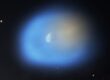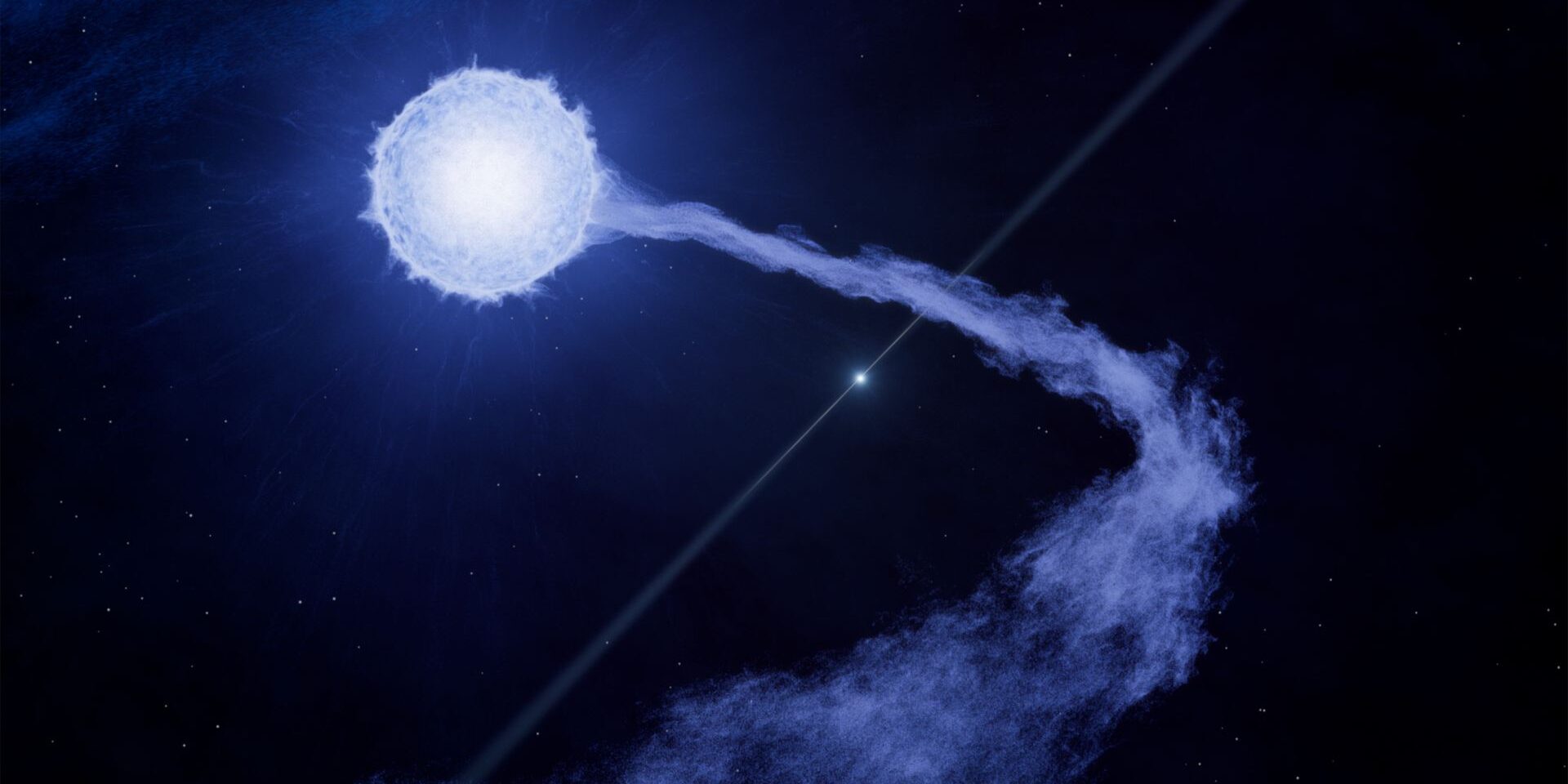
Recent observations have unveiled a fascinating cosmic phenomenon: a pulsating zombie star is intermittently flashing, a result of a massive, gaseous outflow from a neighboring celestial body. This discovery, hailed as groundbreaking by astronomers, has provided a unique insight into the complex dynamics of stellar remnants and their interactions with surrounding environments.
The latest turn
The latest findings reveal that the zombie star, known as a pulsar, is exhibiting erratic brightness changes due to what researchers are informally calling a giant cosmic “fart.” This expelled gas from a nearby star—likely a massive stellar companion—interferes with the pulsar’s electromagnetic emissions. The cosmic outflow, composed of ionized particles and radiation, periodically envelops the pulsar, causing it to wobble and flash inconsistently from our perspective on Earth.
Researchers from the International Astronomical Union reported these observations in a recent study published in the journal “Astronomy and Astrophysics.” The phenomenon could offer new insights into the life cycles of massive stars and their remnants, particularly how they interact with each other during their evolutions.
How the story got here
This research builds on previous studies of pulsars—highly magnetized rotating neutron stars that emit beams of radiation. Pulsars are known for their regular timing and strong magnetic fields, which make them natural clocks within the cosmos. However, this pulsar has defied the norm, exhibiting unpredictable flashing behavior.
Initial observations were made using advanced telescopic arrays to monitor the light curves from the star. Over several months, astronomers noticed unusual and abrupt flickers in brightness. Subsequent analysis suggested that these changes correlate with the arrival of gas from the companion star, referred to informally as “the fart.” This outflow appears to periodically obscure and influence the pulsar’s emissions, causing the observed wobbling and variability in brightness.
The study’s lead scientist emphasized the importance of interdisciplinary collaboration in making this discovery possible, combining observational techniques from both optical and radio astronomy. Detailed simulations were also crucial in modeling the interactions between the stars, helping to understand how such outflows can impact stellar behavior.
Next expected developments
Looking forward, astronomers are keen to conduct further observations to elucidate the precise mechanisms driving this erratic behavior in pulsars, especially in the context of their relationship with companion stars. Long-term studies utilizing both ground and space telescopes are expected to refine our understanding of the dynamics at play in such binary systems.
Moreover, the implications of this research extend beyond this particular pulsar. It adds to the broader narrative of how stars evolve in tandem and the effects of their interactions on astronomical phenomena. Future milestones may include the development of enhanced models of stellar interactions and more detailed analysis of similar systems throughout the galaxy. Continued exploration in this field may unlock further mysteries of the universe, detailing how nearby celestial objects can influence one another in ways previously unimagined.
Original Source: https://www.livescience.com/space/astronomy/a-giant-cosmic-fart-is-making-a-wobbling-zombie-star-repeatedly-flash-us-groundbreaking-observations-reveal