Key details
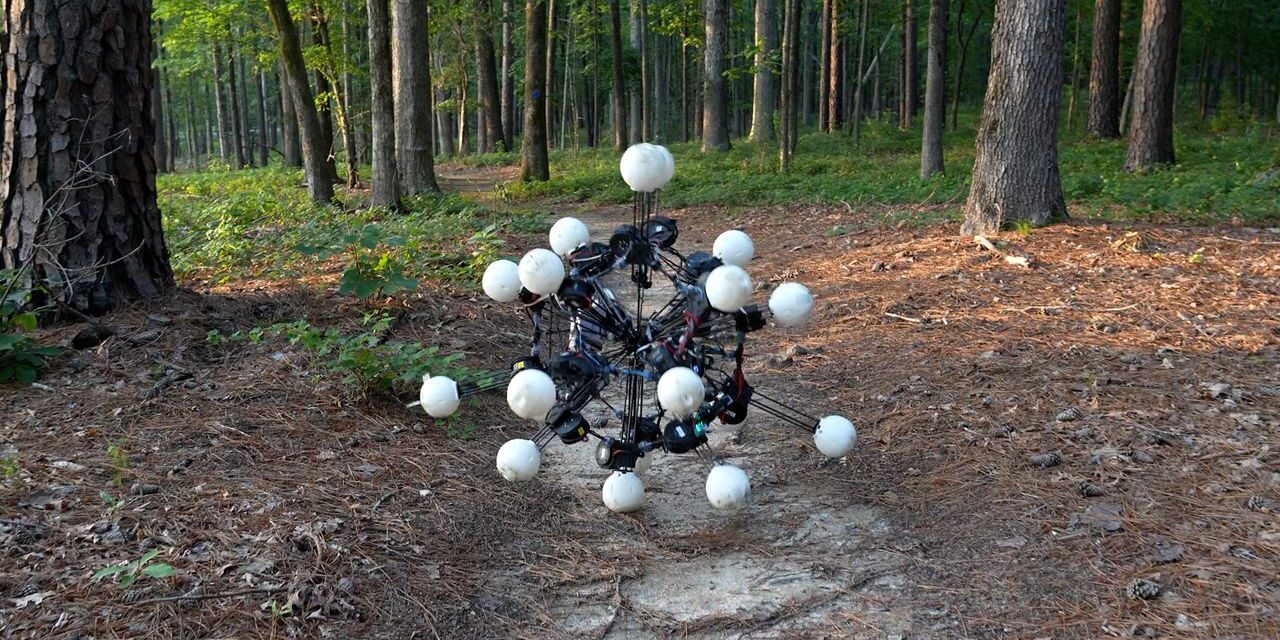
In a groundbreaking study, researchers have designed a multi-legged robot featuring 20 legs that demonstrates exceptional locomotion abilities, including the capability to scale walls and navigate through trees. The robot’s intricate leg structure and advanced control algorithms allow for increased stability and agility, making it an ideal candidate for diverse applications from military reconnaissance to environmental monitoring. Researchers utilized lightweight materials combined with sophisticated sensors, enabling the robot to adapt in real-time to varying terrains and obstacles.
The design was inspired by biological organisms, particularly insects and arachnids, which excel in mobility across complex environments. Each leg on the robot functions independently yet synchronously with the others, allowing it to maintain balance while traversing uneven surfaces. Video evidence has shown the robot adeptly maneuvering both vertically and horizontally, a feat that traditional wheeled robots struggle to achieve. The studies were conducted by a team at the Massachusetts Institute of Technology (MIT) and were recently published in the journal *Science Robotics*.
Why this matters
The implications of this development extend well beyond mere robotic curiosity. As urban environments continue to evolve, the need for versatile robotic systems that can access hard-to-reach places is increasing. For instance, the ability to scale walls could aid in search-and-rescue operations in disaster scenarios, effectively reaching victims trapped amidst debris. Furthermore, the robot’s ability to navigate trees could prove instrumental in environmental studies, such as monitoring wildlife or assessing hard-to-access ecosystems impacted by climate change.
Military applications also loom large, with potential uses in surveillance and reconnaissance missions, where stealth and the ability to traverse diverse landscapes without detection are paramount. This robot could provide real-time data collection while minimizing human risk in hazardous environments. Additionally, the advancements in robotics may lead to competitive developments in autonomous systems, pushing the boundaries of what robotics can achieve in practical and commercial contexts.
Broader picture
The quest for versatile robotics has been driven not only by technological advances but also by a growing recognition of the challenges posed by natural and urban environments. The increasing complexity of tasks faced by robots in the real world highlights a need for solutions that are both innovative and adaptable. The research team’s findings reinforce the notion that biomimicry—drawing inspiration from nature—can lead to significant breakthroughs in robot design.
Looking forward, the challenge will be to integrate these new robotic systems into societal frameworks while addressing ethical considerations and practical deployment scenarios. As robots become more capable, discussions surrounding privacy, safety, and employment will grow more pronounced. Ultimately, this pioneering robot may serve as more than just a technological wonder; it might symbolize a shift toward a future where advanced robotics enhance our ability to interact with and understand the complex world around us.
Original Source: https://www.livescience.com/technology/robotics/scientists-found-the-optimal-robot-body-and-it-has-20-legs-watch-it-scale-walls-and-move-through-trees