
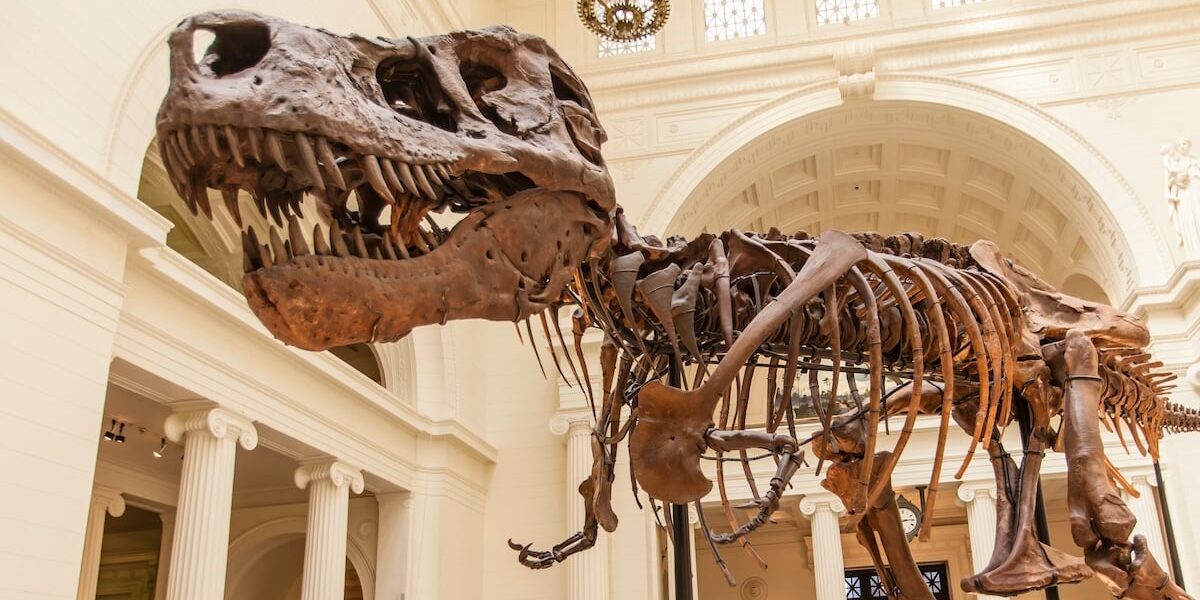
In a groundbreaking study, paleontologists have unveiled fresh insights into the evolutionary enigma of the Tyrannosaurus rex and its notoriously diminutive forelimbs. Recent research suggests that the small arms of the T. rex may not have been a disadvantage, but rather an adaptation to its ecological niche and behavior. This revelation challenges long-standing assumptions about the iconic carnivore’s anatomy and its role in the prehistoric ecosystem.
What happened
The research, led by a team from the University of California, Berkeley, employed advanced imaging technology alongside biomechanical modeling to analyze the limb structure of T. rex and its relatives. The study revealed that while T. rex arms were short, they were likely strong enough for specific functions, potentially including grasping prey during feeding or aiding in mating rituals. The findings suggest that instead of relying on its forelimbs for hunting, the T. rex engaged in different strategies that did not necessitate larger arms.
Additional fossil evidence from closely related species indicates a pattern of arm reduction linked to their feeding behaviors and ecological roles. By comparing the limb proportions of various theropods, researchers observed that as some dinosaur lineages evolved into larger body sizes, their forelimbs became shorter, suggesting a shift in their adaptability and survival strategies.
Why it matters
This research addresses a long-standing curiosity in paleontology regarding the T. rex’s evolutionary design. For decades, the iconic dinosaur’s short arms sparked a myriad of theories ranging from the humorous to the scientifically plausible. Clarifying the biological purpose of these appendages helps paint a more accurate picture of the T. rex’s lifestyle and its adaptation mechanisms during the Late Cretaceous period.
Understanding these adaptations provides insight into broader evolutionary trends among predatory dinosaurs and mammals. It may change how scientists interpret the functional morphology of other species and influence future research in vertebrate paleobiology, highlighting the complex interactions between anatomy, behavior, and ecological dynamics.
What comes next
Moving forward, paleontologists aim to refine their hypotheses regarding T. rex’s behavior and biomechanics through further fossil discovery and advanced technology. Researchers are also looking into related theropods that exhibit similar features to construct a more comprehensive view of evolutionary history in both predators and their prey. The immediate outlook includes more detailed examinations of T. rex fossils and possibly a reevaluation of ancient ecosystems to better understand the roles these features played in their survival.
As scientists continue to unravel the mysteries surrounding T. rex and its relatives, the ongoing study promises to offer deeper insights into the evolutionary pressures that shaped these formidable creatures. Anticipation mounts for future findings that may not only enhance our knowledge of the T. rex but also provide broader implications for understanding the evolution of large predators across the ages.
Original Source: https://www.sciencealert.com/scientists-may-finally-know-why-t-rex-had-such-tiny-arms