
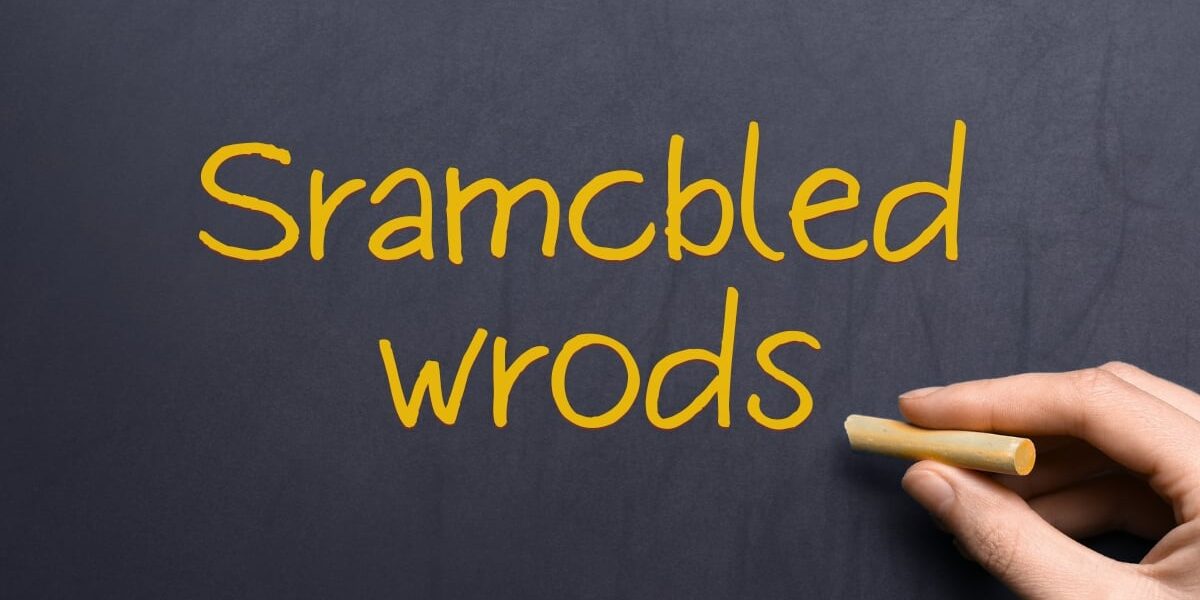
Recent studies reveal fascinating insights into why we can often read scrambled words without significant effort. This ability has intrigued researchers and linguists alike, as it challenges our traditional understanding of language processing in the brain.
Background and context
In 2000, a widely circulated internet claim posited that the human brain can interpret jumbled letters in words if the first and last letters remain in place. This idea gained traction, prompting psychological investigations into cognitive processing related to reading. Observations showed that our brains do not decipher each letter individually but rather recognize entire words or chunks of letters. This phenomenon plays into how we prioritize contextual clues and familiarity over strict letter sequence.
The human brain’s capacity to comprehend scrambled words is primarily linked to the way it processes language. Research indicates that our reading relies heavily on visual perception and predictive capabilities. The brain uses the surrounding letters and the context of the sentence to fill in the gaps, allowing us to understand words even when they are jumbled. This skill showcases the brain’s remarkable efficiency in optimizing the reading experience by minimizing processing time.
Latest developments
Recent advancements in cognitive neuroscience have provided deeper insights into the mechanisms behind our ability to read scrambled words. A study published in 2023 employed eye-tracking technology to measure how readers comprehend jumbled text. Researchers found that when readers encounter scrambled words, their brains quickly engage contextual information, allowing for faster interpretation and comprehension.
Additionally, findings suggest that this cognitive flexibility is not merely an exercise in convenience but a representation of how the brain prioritizes meaning over form. The latest research highlights that the brain can effectively predict upcoming words based on patterns established throughout the reading process. This predictive power enhances our ability to read quickly, even when letters are arranged in non-standard formats.
What to watch next
As language and literacy continue to evolve in the digital age, understanding how the brain processes scrambled words has important implications for education and technology. Educators may find it beneficial to incorporate lessons that emphasize the relationship between context and comprehension, particularly in an increasingly visual and interactive learning environment.
On the technological front, businesses developing AI and language processing tools can draw on these insights to improve systems that interact with human language. Better algorithms that mimic human understanding of scrambled language may enhance communication efficiencies in translation software or chatbots.
Future research will likely explore how individualized learning styles affect the reading of scrambled text and how this knowledge can address various language barriers. Understanding the nuances of cognitive processing will pave the way for developments in teaching methodologies, ultimately leading to improved literacy rates across diverse populations.
As our understanding of the brain’s language processing continues to grow, the intersection of neuroscience, education, and technology promises exciting avenues for further exploration.
Original Source: https://www.sciencealert.com/why-your-brain-can-read-scrambled-words-according-to-science