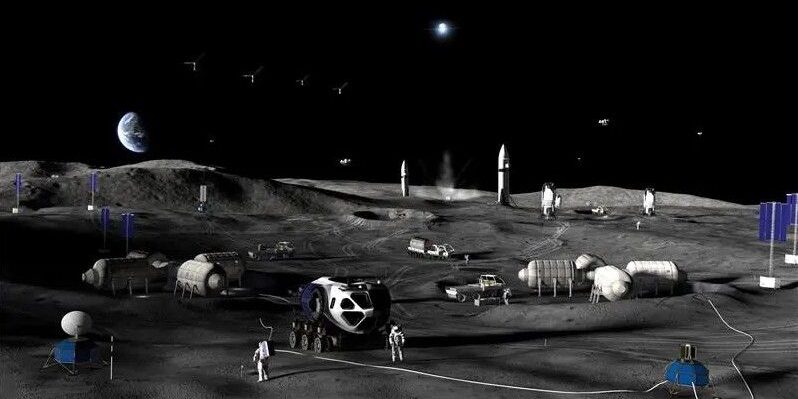
NASA’s recent release of its ‘Moon Base User’s Guide’ has stirred significant excitement and concern within both the aerospace community and the public. The guide outlines plans for establishing a sustainable human presence on the Moon, part of the Artemis program aiming for a lunar base by the end of the decade. Industry insiders are cautiously optimistic but highlight numerous technical and logistical challenges that lie ahead.
Immediate reaction
Reactions to the guide have been a blend of enthusiasm and skepticism. Aerospace companies eagerly anticipate new contracts and opportunities, with stocks of key players like Lockheed Martin and Northrop Grumman experiencing a modest uptick following the announcement. However, many experts warn that the target of 73 moon landings over the next decade intensifies existing concerns related to budget constraints, technological feasibility, and the long timeline for development.
One industry analyst remarked, “We’re looking at an unprecedented scale of lunar operation that requires not only innovation but also substantial funding and international collaboration.” As the dust settles, it is clear that while NASA’s vision is ambitious, the execution will demand immense resources and coordination.
What triggered the move
The drive for a permanent lunar base has been intensified by international competition in space exploration. With several countries, including China and Russia, ramping up their lunar ambitions, the United States recognizes the strategic importance of re-establishing its leadership in space. The Moon offers both scientific opportunities and potential access to resources, such as water ice, that could support longer-term missions to Mars and beyond.
The culmination of technological advancements in robotics and sustainable living systems prompted NASA to outline a more detailed approach. The Moon Base User’s Guide highlights plans for habitats, transportation infrastructures, and life support systems that would be essential for a permanent human presence. The necessity to navigate complex orbital mechanics and harsh lunar conditions adds layers of difficulty to the project.
Why readers should care
The implications of this initiative extend far beyond the realm of space exploration. A successful lunar base could ignite new scientific discoveries and technological innovations, benefiting various sectors on Earth. Additionally, it poses questions about geopolitical dynamics, resource utilization, and the ethical implications of extraterrestrial colonization.
For the public, the excitement of a renewed moon program blends with the recognition of challenges that may require reallocation of national priorities. Environmental advocates are concerned about the potential impact of lunar mining and human activity on the Moon’s untouched surface. Furthermore, as the U.S. invests in lunar exploration, the discourse around space funding versus terrestrial needs becomes increasingly relevant.
In the short term, the anticipation generated by NASA’s guide may spur renewed interest in space science education and careers, drawing younger generations toward STEM fields. However, it will also heighten scrutiny on government funding and private sector involvement in a project that will be integral not only to NASA’s future but to humanity’s endeavors in the cosmos.