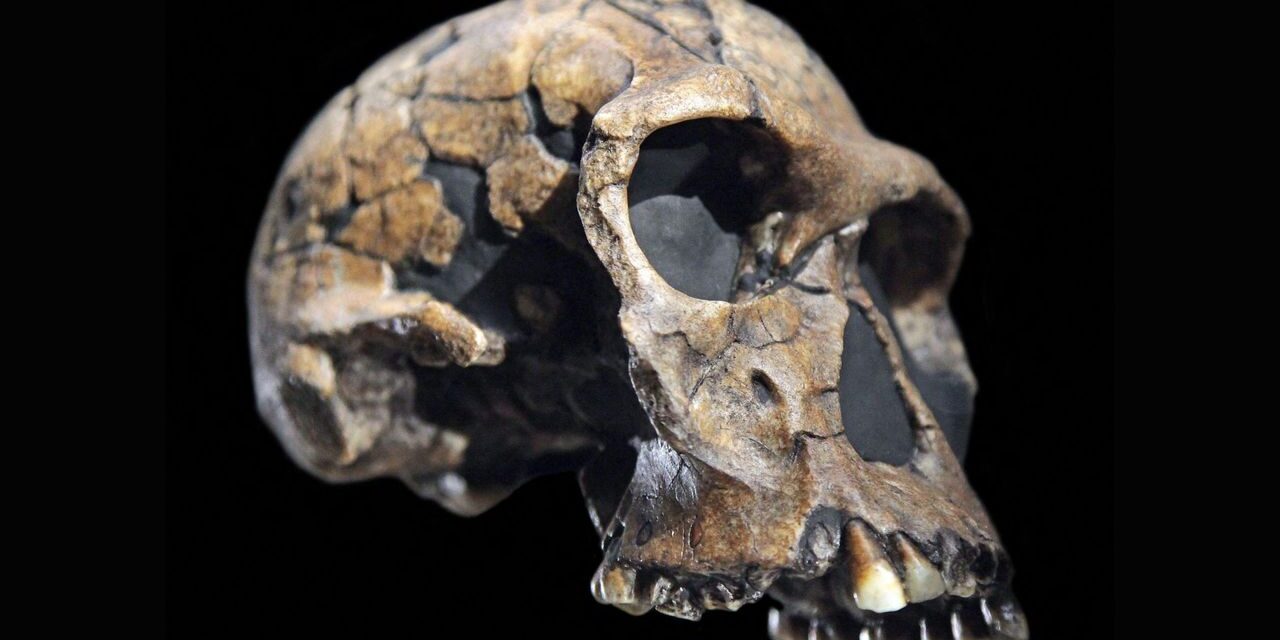
With a species name translating to ‘handy man’, Homo habilis has been dubbed the earliest member of the Homo genus to which modern humans belong. However, questions surrounding its rightful place as a precursor to Homo sapiens continue to stir scholarly interest and public curiosity alike. Are we definitively faced with our earliest human ancestor? Or is Homo habilis a distant relative with ties to our evolutionary story, yet separated by a unique lineage?
Homo habilis was identified and named by the Leakeys, a renowned family of paleoanthropologists, following an excavation in Tanzania during the 1960s. Elucidating further details of its nature and behavior has been no small task, given the relative paucity of fossil evidence available. Standing roughly 1.3 meters tall and possessing a cranial capacity markedly smaller than today’s Homo sapiens, Homo habilis displayed a number of decidedly human traits. Its use of tools, presumably for butchering meat, suggests a cognitive ability beyond what previous species displayed.
Nonetheless, ongoing debates challenge assumptions about Homo habilis’ place in the human lineage. Unlike later species such as Homo erectus, Homo habilis lacks the key features typically associated with our concept of ‘human’, such as body proportions similar to ours and sophisticated stone tools. Combined with wide diversity in the fossil record, this has led some researchers to label Homo habilis as something other than a direct ancestor of Homo sapiens.
Recent discussions in online forums and social platforms further highlight this controversy. Questions like “Is Homo habilis even human?” and “Should we call the first tool maker a human?” spotlight the duality of the conversation. Some experts argue against deploying the term ‘human’ to describe any member of the Homo genus outside of Homo sapiens, arguing that this can lead to misunderstandings about the complexities of evolution.
However, others argue that such exclusivity detracts from the grandeur of the evolutionary journey. After all, we would not be here without the contributions of our distant ancestors and their respective developments. For these anthropologists, Homo habilis is human in the sense that it is part of our larger evolutionary story.
Meanwhile, the place of Homo habilis within the Homo genus itself has been contested. Some anthropologists argue that the considerable physical diversity within the species could potentially identify more than one species. Others argue Homo habilis should be allocated to the Australopithecus genus which is thought to have given rise to the Homo lineage.
In turn, this dispute has implications for the time frame of human evolution. If Homo habilis is an offshoot of the Australopithecus rather than a direct human ancestor, humanity’s timeline could be considerably shorter than previously estimated.
Thus, answers to the human status of Homo habilis remain as elusive as the half-century-old questions posed by the Leakey family’s discovery. As new archaeological methods and genome technology continue to evolve, we might eventually acquire a clearer picture. Until then, Homo habilis inhabits a fascinating, if nebulous, position within our evolutionary history.
The question of Homo habilis’ humanity is more than just a semantic quibble or scientific dispute. The conversation reaches into the heart of our understanding of what it means to be human and how we distinguish ourselves within the rich tapestry of life on Earth. It is a confrontation between our desire for clear evolutionary delineations and the complex, often messy realities of Nature.
In the interim, Homo habilis continues to captivate the public and scholarly attention— offering a mirror to gaze into our past and speculate on what early steps on the path to Homo sapiens may have looked like. Regardless of its place in our lineage, Homo habilis undeniably contributed to the unique story of human evolution.
Original Source: https://www.livescience.com/archaeology/human-evolution/homo-habilis-is-the-earliest-named-human-but-is-it-even-human