
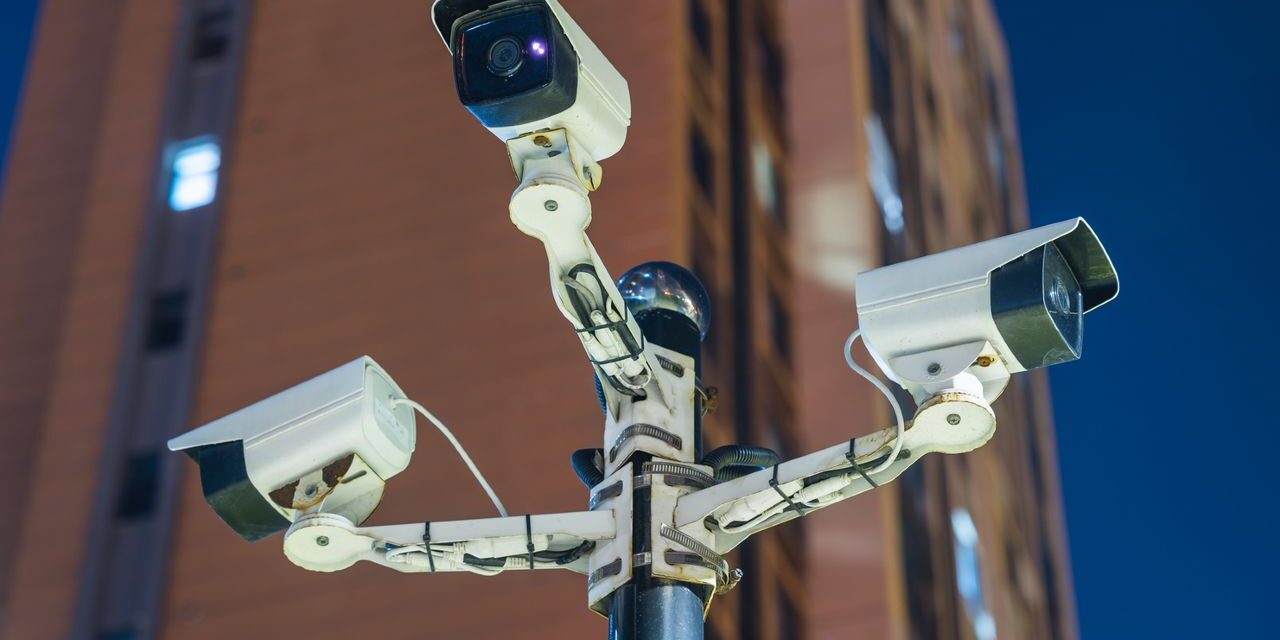
Amidst growing concerns over privacy, AI systems enabling mass surveillance have come under a spotlight in the United States, with critics arguing that there are currently no national laws that meaningfully limit the usage of this data. This unchecked use of AI technology raises serious questions about privacy and personal freedoms in a world increasingly dominated by digital innovation.
Davis Polk, a New York-based law firm, has researched extensively into the US law governing mass surveillance. Their conclusions affirm critics’ concerns: there are no national laws that offer comprehensive restrictions against the unrestricted application of AI in surveillance systems. This revelation draws attention to the continuous tug of war between technological progress and fundamental human rights.
The role of AI in surveillance has been a controversial subject. AI-powered security cameras, for instance, are now capable of recognizing individual faces in vast crowds, or identify ‘suspicious’ behavior. Used responsibly, these could be valuable tools in maintaining public safety. In states like Illinois, Texas, and Washington, legal frameworks like the Biometric Information Privacy Act (BIPA) have been implemented to regulate the collection and storage of biometric data. Yet, these state-level laws offer piecemeal protection at best and fail to address the issue on a broader, national scale.
A recent report by BuzzFeed News found a private surveillance network, powered by AI and deployed in over 700 cities across the US. According to the report, the system granted nearly 1,800 law enforcement agencies access to footage taken from private security cameras without the owners’ explicit consent. This example underscores how the current gaps in US legislation render an ordinary citizen’s privacy nebulous territory. As Ken Gude, a senior fellow with the Center for American Progress expresses it, “The right to privacy should not just apply when the government is involved, but it should protect us from other people and corporations accessing this data.”
But crafting appropriate legislation is a complex task. It requires a delicate balance between ensuring national security and preserving civil liberties. The AI industry is still very much in its nascency, and this lack of concrete regulation reflects lawmakers’ struggle to keep up with its dynamic pace.
“Legislation needs to be crafted carefully to prevent any potential discriminatory practices that could emerge from these programs,” warns Sarah St.Vincent, a researcher on surveillance and domestic law enforcement at Human Rights Watch. “A blanket ban on this tech at federal level may seem appealing, but practicality and nuances of its various uses must be considered as well.”
The debate is far from settled. As AI continues to evolve and permeate everyday aspects of human life, the call for meaningful regulation grows stronger. As asserted by the American Civil Liberties Union (ACLU), “Institutions must have rules, oversight, and effective accountability measures in place to govern its use of surveillance technologies. The public should have influence over whether or how these technologies are adopted in our communities.”
But the question remains: when and how will these rules be put into place? As it stands, the law has not caught up with the technology. A national level law on mass surveillance which meaningfully limits the use of AI is yet to be introduced. Meanwhile, the lens of AI continues to burgeon, steadily transforming the once firm lines of privacy into blurred edges. Society, it seems, stands at a critical juncture where it must reconcile with the price of surveillance in an ever-connected world.