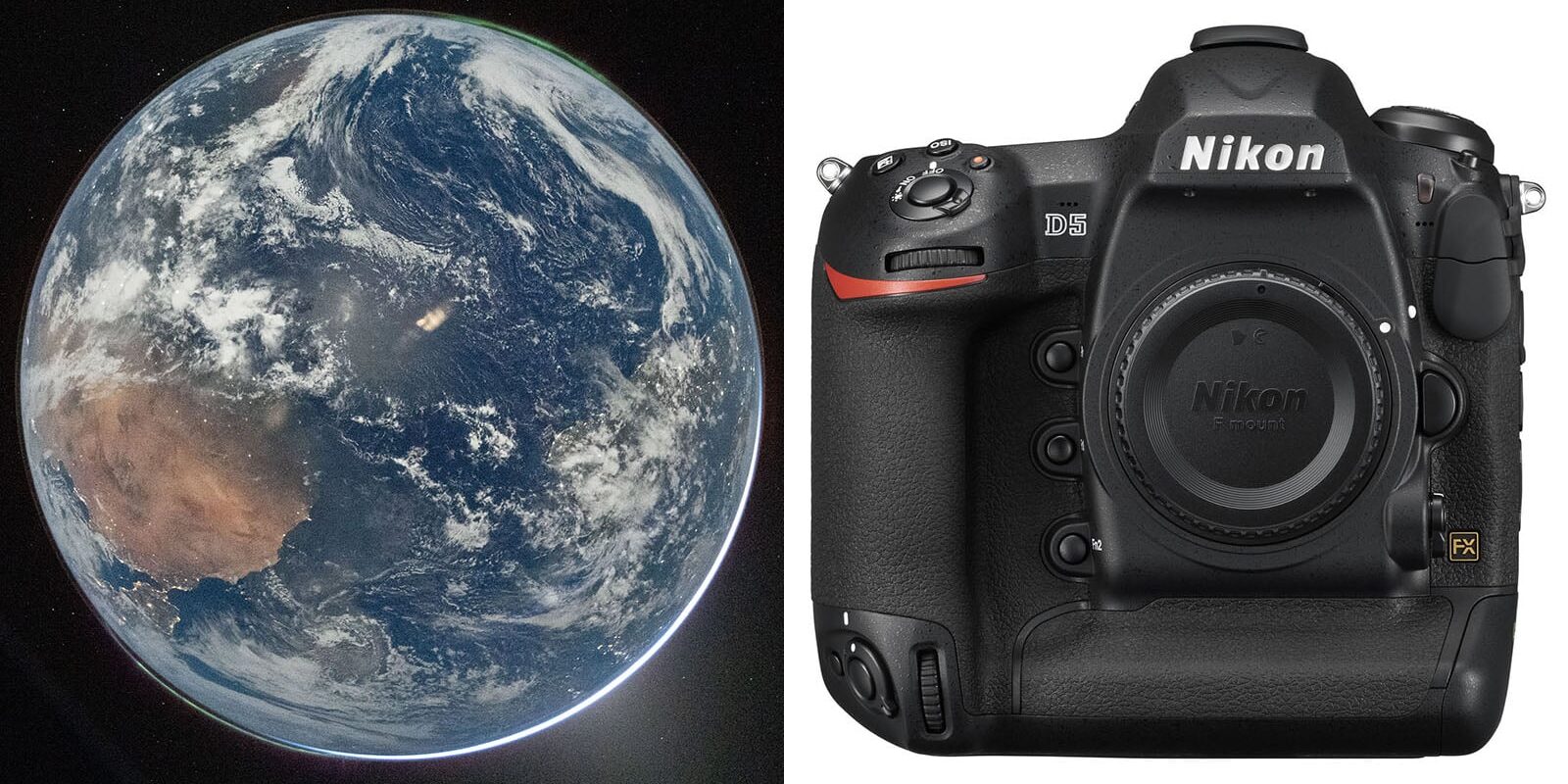
Even ten years after its release, the Nikon D5 DSLR proves its mettle as the ultimate photographic companion for NASA’s planned Artemis II mission. Amidst an ocean of modern cameras with cutting-edge features, this decade-old device retains a niche for itself, demonstrating a compelling case of design longevity.
The Artemis II mission, slated for 2023, is NASA’s endeavour to orbit a crew around the moon as part of its ambitious moon-to-Mars agenda. A crucial part of this voyage is documenting the journey and capturing high-quality images and videos. That’s where the Nikon D5 DSLR lends its prowess. The iconic camera came into the scene in 2016, setting new photography benchmarks, including exceptional speed, accuracy, and image quality.
The primary factors positioning the Nikon D5 as the optimal equipment for the Artemis II mission relate to its robustness, resolution, light sensitivity, and battery life. Recently, the online photography community has been abuzz with debates attesting to its capabilities vis-à-vis newer models across various brands.
The Nikon D5 boasts a ruggedness ideal for withstanding the harsh space environment. Its magnesium-alloy body and extensive weather-sealing positions it to resist extreme conditions, a crucial consideration for space missions. NASA’s legacy of using Nikon equipment for space photography since 1971 underlines Nikon’s reliability in this regard.
Artemis II necessitates high-resolution images, a requirement the D5 effortlessly fulfills with its 20.8-megapixel full-frame CMOS sensor. Coupled with the EXPEED 5 image-processing system, the D5 is known for delivering sharp, high-definition images with rich details, perfect for capturing the moon’s surface and beyond.
Low-light sensitivity is another noteworthy advantage of the Nikon D5. Its ISO ranges from 100 to 102,400, expandable up to 3,280,000. This ability makes it a primary contender for recording celestial features, which often necessitates exceptional light sensitivity.
The D5 also derives its suitability from its battery life. Its EN-EL18a rechargeable Li-ion battery claims to deliver up to 3,780 shots per charge. This extensive battery life is a valuable asset for space missions as they cannot afford frequent battery replacements.
Although the Nikon D5 is far from the latest model on the market, with its successors D6 being launched in 2020, its features remain relevant for practical application. It is worthy of note that Nikon specifically designed the D5 to meet the demands of professionals, prioritizing durability, reliability, and precision over novelty, making it perfectly appropriate for something as significant as Artemis II.
The D5’s continued use in space exploration serves as a testament to its timeless design and unmatched reliability. While newer models may outperform it in specific areas, it seems none can yet provide the unique combination of robustness, high image quality, exceptional low-light capacity, and long battery life packed into the dependable Nikon D5.
As the countdown begins for the Artemis II mission, the 10-year-old Nikon DSLR stands as its silent but dependable ally. In blending technological precision with rigorous performance, the D5 DSLR symbolizes how time-tested technology can continue to hold its own against newer incarnations, especially when reliability is paramount.
Indeed, the role of the Nikon D5 DSLR in the imminent Artemis II mission could well be a metaphor for technological durability and timeless relevance in an era dominated by the attraction of the latest gadgetry.
In the end, it is perhaps less about the machine and more about the vision it captures. As the D5 readies to journey to the depths of space once again, we wait eagerly to see the marvels of the universe it will reveal.
Original Source: https://petapixel.com/2026/04/06/the-10-year-old-nikon-d5-dslr-really-is-the-best-camera-for-artemis-ii/