In a significant breakthrough, enigmatic depictions in Indigenous rock art have provided evidence suggesting Tasmanian tigers, or Thylacines, existed in Australia far longer than initially belived. This discovery emanates from a confluence of science, history, and archaeology, shedding new light on the island’s unique fauna composition over millennia.
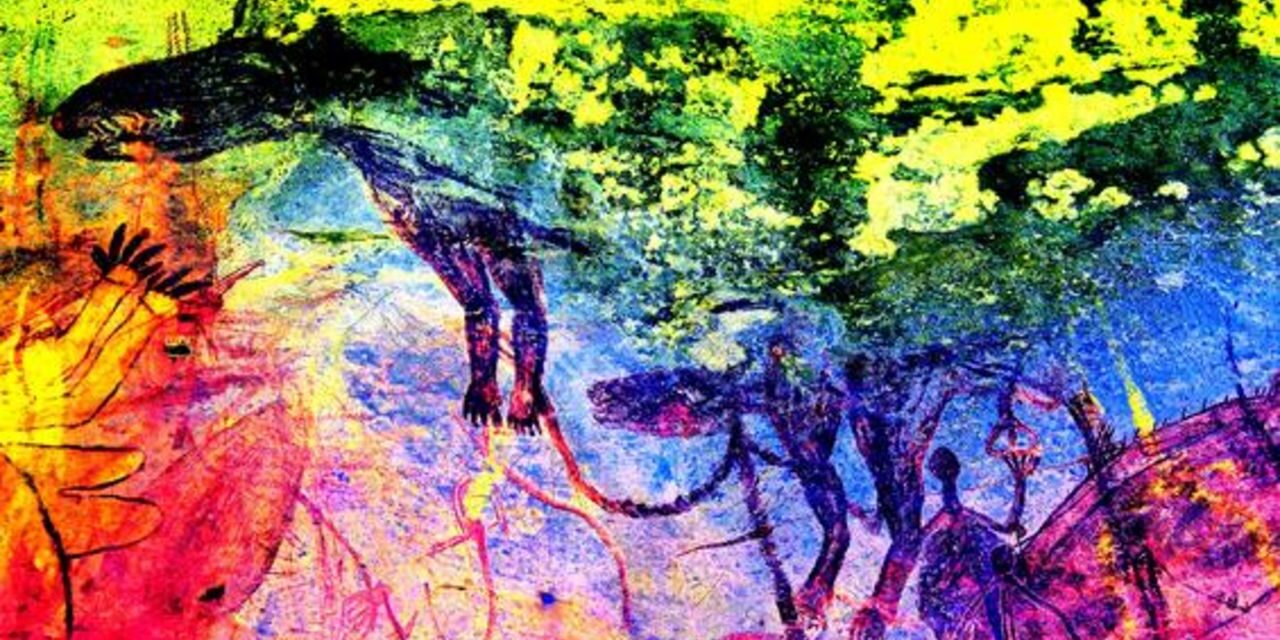
Researchers have been closely studying Indigenous rock art across Australia, and this fascinating depiction, located in Yilbilinji, a tiny rock site at Limmen National Park, Northern Territory, has captured the attention of scientists worldwide. In a pattern reminiscent of Thylacines, the images depict striped creatures with a stiffened tail and gaping jaw — characteristics resembling the extinct marsupial.
Dr. Christopher Clarkson, an archaeologist from The University of Queensland involved in the study, has referred to these illustrations as “Tasmanian Tiger-like motifs”. This depiction’s dating, approximately a thousand years old, extends the Thylacine’s presence on the mainland, contradicting the previously held belief that these creatures disappeared around 3,000 years ago.
The surprising revelation of Thylacines in Indigenous art interprets the enigmatic creature’s relationship with ancient humans, the environment, and ultimately, its extinction. Clarkson suggests that this could upend our understanding of the Thylacine’s geographical range and timeline. The rock art may indicate continued coexistence with indigenous communities far longer than previously reported.
Thylacines, often dubbed as Tasmanian Tigers due to their distinctive stripes, were the largest known carnivorous marsupials of modern times. Believed to have been hunted to extinction, the last known Thylacine died in Hobart Zoo, Tasmania, in 1936.
Though officially deemed extinct, sporadic sightings over the last few decades have stirred speculations about the creature’s survival. However, no verifiable evidence of their continued existence has been produced.
The discovery of this rock art was shared online, with reactions pouring in from historians, scientists, and Tasmanian Tiger enthusiasts, highlighting its implications. Dr. Paul Tacon, Chair in Rock Art Research at Griffith University, expressed excitement on Twitter, “Amazing find! These images show how rock art is vital for understanding Australia’s unique fauna”.
Online discussions are rife with possibilities that this discovery opens a new chapter of understanding about this elusive marsupial. The images not only change our understanding of when these creatures disappeared from mainland Australia but also offer insights into their interaction with humans.
Historically, Indigenous Australians have been known to depict a diverse range of wildlife in their rock art which has enlightened researchers about the existence and extinction of several species. This discovery, therefore, further emphasizes the relevance of Indigenous rock art in preserving natural history, and its potential to reshape our understanding of species’ timelines.
According to Martin Porr, an Associate Professor in Archaeology at The University of Western Australia, this could herald interesting developments in the understanding of Australia’s prehistoric fauna, stating that “The validation of such depictions can lead to new insights into Palaeolithic fauna.”
These illustrations of Thylacines emphasize the interplay of nature and culture, bearing witness to a time when the biodiversity was varied, and human life revolved around coexistence with these creatures. As the broader scientific community awaits more research to unequivocally confirm the depiction of a Thylacine, this discovery has undeniably stirred curiosity and excitement.
This news underpins how interconnected scientific research, historical records, and Indigenous culture is in shaping our understanding of the world. As we delve deeper into the past, we unravel more about the present and future, further accentuating the importance of protecting and studying our irreplaceable historical and ecological heritage.