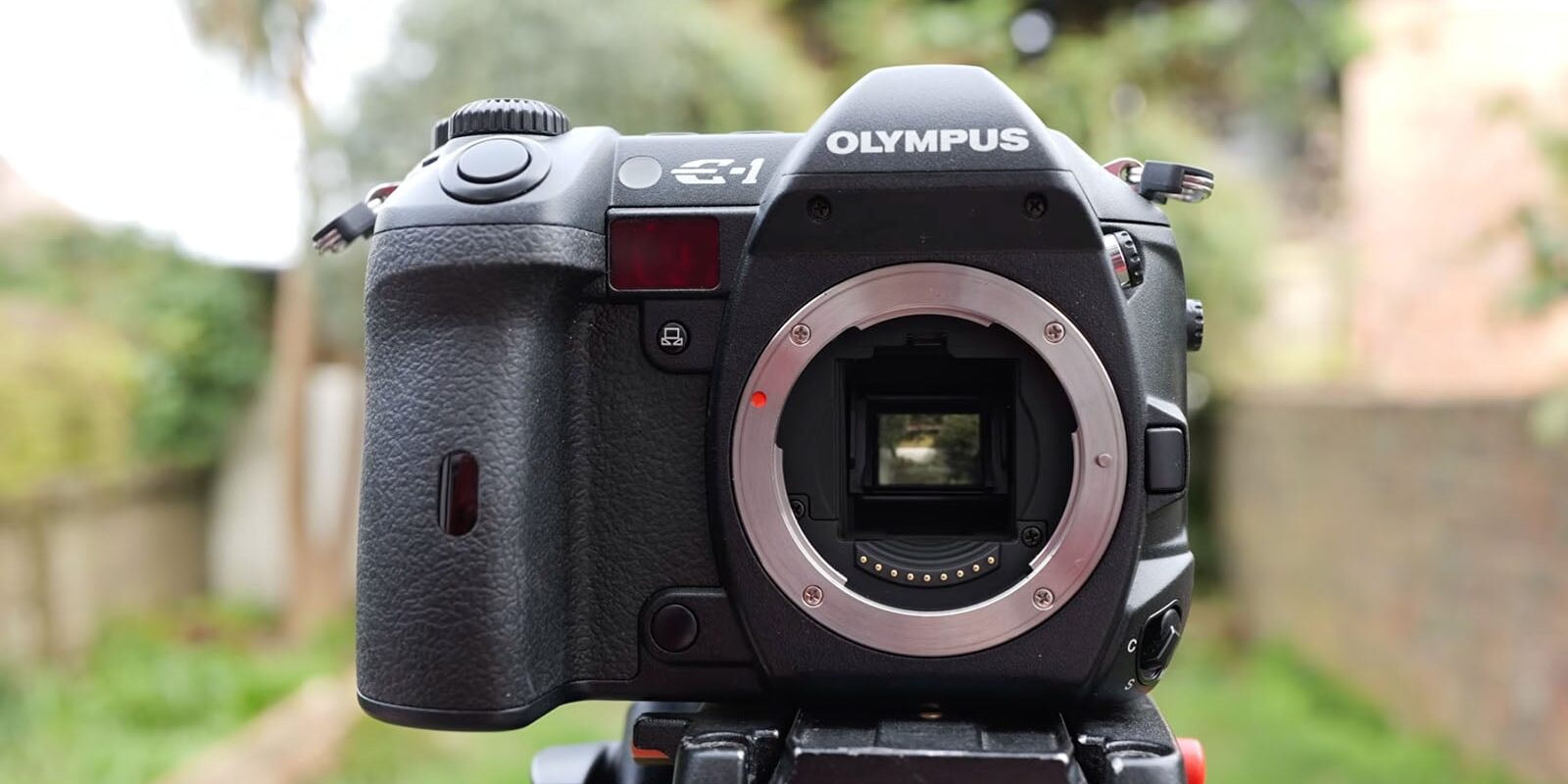
It’s been 23 years since the introduction of the revolutionary Four Thirds System, a specification for a digital single-lens reflex camera known as DSLR. Conceived in 2002 by Olympus and Kodak, it was the first digital camera system to be designed from the ground up for digital technology, with no roots in film. But how does it hold up more than two decades later in an era where mirrorless cameras dominate and smartphones have all but decimated the point-and-shoot market?
The Four Thirds system was a standout in three ways: it was the first to break away from the 35 mm default of old film SLRs, it facilitated an initial shift towards more compact DSLRs, and it was an early experiment in lens and camera inter-compatibility. It derives its name from the 4:3 aspect ratio of its image sensor. In comparison to the popular 3:2 ratio used by other DSLR cameras, this feature guaranteed a high image quality even in portrait orientation, providing an edge for photography enthusiasts and professionals alike.
Upon its release in 2003, the revolutionary prowess of the Four Thirds DSLR was evident in the functions it provided. The 4:3 aspect ratio utilized by Four Thirds cameras delivered a 33% more efficient area than the film SLR cameras, resulting in higher image quality that was downsized for cropped photo formats. Moreover, the compact design resolved the weight issue that plagued most traditional full-frame cameras, making this camera more mobile and travel-friendly.
Fast forward to 2021, in an era where high-end mirrorless cameras are booming and smartphone cameras have taken quantum leaps in image production, how does the venerable Four Thirds DSLR fare?
In terms of image quality, the Four Thirds DSLR still impresses. Even with a lower pixel count compared to modern mirrorless or smartphone cameras, the image quality remains sharp and the colours vibrant. The image sensor, although smaller by today’s standards, still efficiently captures light and delivers satisfying results. The lens system, despite its age, is still among the most versatile and diverse available, offering phenomenal image quality.
In terms of speed and portability, the Four Thirds DSLR struggles to compete with newer compact mirrorless cameras and is bested by flagship smartphone cameras. However, it was still a game-changer in its day, and for photographers who can tolerate its bulk, it can still deliver excellent results.
On the downside, one major issue for Four Thirds DSLR cameras today is the obsolescence of the technology. Spare parts and specialized repair services are getting harder to find, and new lenses are no longer being produced, making maintaining a Four Thirds system increasingly challenging.
While photographers today may choose from a range of modern cameras with various attributes like mirrorless design, full-frame sensors, or even AI-powered smartphone cameras, it’s important to step back and appreciate how the Four Thirds system broke new ground in the early 21st century, influencing the course of digital photography.
Indeed, the Four Thirds DSLR cannot reign over the camera field in a technologically advanced era. However, its significant impact on digital photography cannot be underestimated. It gifted aspiring photographers and professionals the freedom to shoot quality images without the overload of bulky gear, and a plethora of lenses to select and interchange with ease. Despite being overshadowed by advanced technology today, the Four Thirds DSLR has etched its name in the annals of the digital photography revolution and continues to inspire the breed of cameras emerging in the industry.
Revisiting this classic 23 years after its launch reminds us how far digital photography has come, and gives us a sense of respect for the revolution that once was. It holds an undeniable charm that amalgamates nostalgia with unprecedented technology. Nearly a quarter-century later, the Four Thirds DSLR still holds relevance, reminding us of the leap digital photography took all those years ago.
Original Source: https://petapixel.com/2026/03/20/testing-the-very-first-four-thirds-dslr-23-years-after-it-launched/