
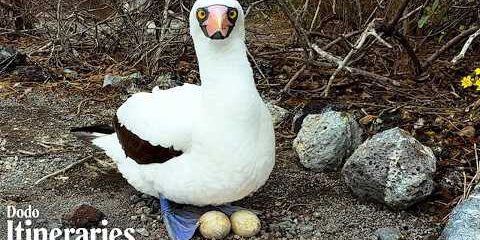
The Nazca booby, a seabird native to the Galápagos Islands, showcases a remarkably peculiar family life that has drawn the attention of ornithologists and nature enthusiasts alike. This unique avian species exhibits a fascinating breeding process characterized by an unusual system of parental care and sibling rivalry.
Key details
At the core of the Nazca booby’s family life is an intricate breeding cycle that begins with courtship displays that unfold over several weeks. The mating pairs, often monogamous, engage in elaborate behaviors to strengthen their bond before laying two eggs. However, what sets the Nazca booby apart is its tendency towards brood reduction. Typically, the first egg hatches first, often resulting in the older chick outpacing its younger sibling in growth and development.
This has profound implications for the younger booby, which can fall victim to what is referred to as “siblicide,” wherein the older chick may peck or otherwise harm its sibling to ensure its own survival. This behavior is not merely a product of aggression; rather, it is a survival strategy, as resources in their harsh island habitat can be limited. Consequently, raising two chicks to fledgling stage is a rarity, as parents often must make difficult choices regarding which offspring to nurture.
Why this matters
The unique reproductive strategy of the Nazca booby underscores the complex interplay between natural selection and environmental factors. In a world where resources are finite, these birds have adapted a reproductive strategy that, while seemingly harsh, maximizes the chances of at least one offspring reaching maturity. This phenomenon offers a vivid illustration of how species evolve coping mechanisms in response to their ecological niches.
Furthermore, the case of the Nazca booby highlights the importance of studying avian family dynamics as a means of understanding broader ecological principles. By observing their behaviors, researchers can glean insights into the impacts of environmental stressors that affect not only individual species but also the overall health of ecosystems. This is particularly important in the context of climate change and human activity that threatens natural habitats.
Broader picture
In the grand tapestry of avian life, the Nazca booby serves as a compelling reminder of the diversity of reproductive strategies found in the animal kingdom. While they may seem bizarre to the casual observer, the Nazca booby’s approach is a testament to the challenges faced by species that inhabit fragile ecosystems. Understanding these dynamics not only enriches our knowledge of avian biology but also emphasizes the need for conservation efforts aimed at protecting these unique habitats.
As scholars continue to study the behaviors of the Nazca booby, they shine a light on the intricate relationships forged through family dynamics in the wild. The insights gained can inform conservation strategies, highlighting the importance of preserving the delicate balance that allows such extraordinary life forms to thrive in the face of adversity.
Original Source: https://www.neatorama.com/2026/11/25/The-Bizarre-Family-Life-of-the-Nazca-Booby/