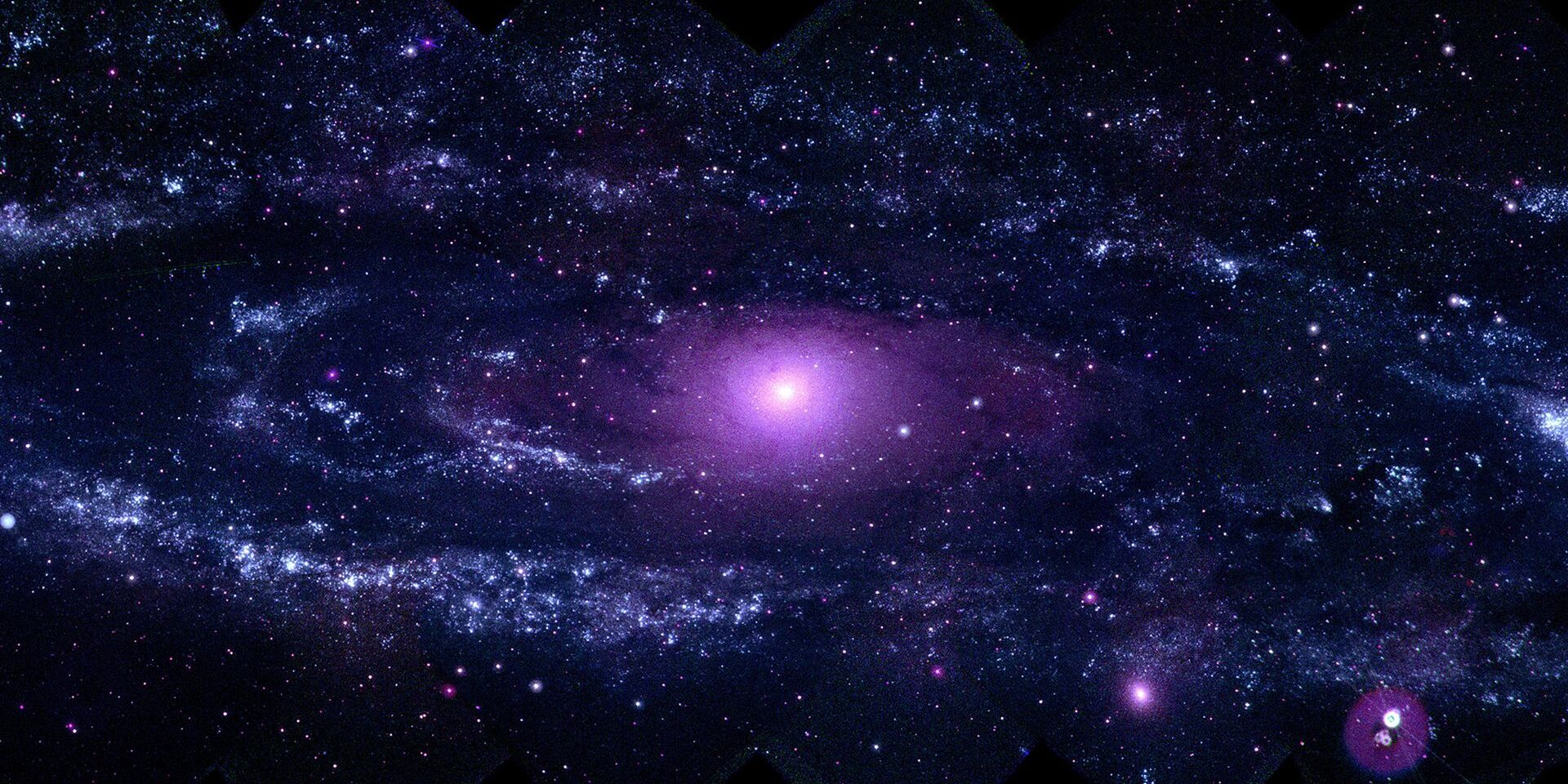
NASA’s Swift Observatory, an instrumental spacecraft for understanding cosmic phenomena, was recently reported as permanently offline after a catastrophic failure that compromised its systems. Prior to its shutdown, Swift captured one of the most detailed and vibrant images of the Andromeda Galaxy ever taken, marking a significant highlight in its scientific legacy.
What happened
The Swift Observatory, known for its nimbleness in detecting gamma-ray bursts and other high-energy events, encountered a malfunction that engineers were unable to rectify. After several weeks of troubleshooting, NASA confirmed that the spacecraft had suffered irreparable damage, leading to its decommissioning. The loss is a significant setback for astrophysics as Swift was one of the few observatories dedicated to simultaneous multi-wavelength observations, allowing astronomers to analyze celestial events across different spectra of light.
In its final days of operation, Swift turned its attention to the Andromeda Galaxy, the closest spiral galaxy to Earth. The resulting image, made possible by its advanced imaging technology, showcases intricate details of Andromeda’s structure, including star clusters, nebulae, and the vast spread of interstellar dust that adds depth to the galaxy’s silhouette against the cosmic backdrop. This unprecedented capture not only serves as a scientific asset but also as a visual marvel for both professional astronomers and the public.
Why it matters
The observations made by Swift have reshaped our understanding of various astronomical phenomena. Its ability to monitor the universe in real-time contributed to crucial discoveries, such as the behavior of black holes and the characteristics of distant supernovae. Swift’s death leaves a gap in the capabilities for monitoring and analyzing high-energy astrophysical events, which are often fleeting and occur over very short timescales.
The stunning image of the Andromeda Galaxy not only celebrates the accomplishments of Swift but also highlights the importance of continuous observation and data collection in astronomy. Scientists are eager to analyze the new data provided in this last image, as it promises insights into the structure and dynamics of galaxies similar to our Milky Way, aiding in the understanding of galaxy formation and evolution.
What comes next
With Swift’s retirement from active service, the astronomical community is looking toward upcoming missions and existing telescopes to fill the void. Future missions, such as NASA’s James Webb Space Telescope and anticipated projects like the ESA’s Euclid, are set to enhance our understanding of the universe with their advanced technology. However, there remains a critical need for a dedicated multi-wavelength observatory that can monitor high-energy events as Swift once did.
The focus now shifts to integrating the data collected during Swift’s operational years into ongoing research. As scientists continue to analyze the Andromeda images and other data sets captured during its mission, there is hope that Swift’s legacy will live on, inspiring new generations of astronomers and unveiling further insights into the magnificent cosmos we inhabit.