Key details
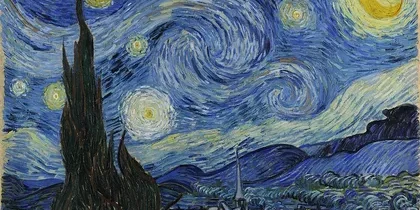
A recent study by a team of astronomers has brought to light a compelling theory regarding Vincent van Gogh’s iconic painting, “Starry Night.” The researchers utilized modern sky-mapping technology and historical records to identify a specific date in June 1889, when van Gogh created the renowned artwork while at the Saint-Paul-de-Mausole asylum in Saint-Rémy-de-Provence. They assert that the celestial features depicted in the painting align remarkably with what the night sky would have looked like on that evening.
The astronomers reconstructed the atmospheric conditions and positions of celestial bodies visible from the asylum—most notably, the bright crescent moon and the swirling stars. By using software capable of accurately rendering the sky from any point on Earth at any moment in time, they sought to connect Van Gogh’s imaginative interpretation with actual astronomy.
This claiming convergence of art and science not only sheds light on a piece of art history but also opens avenues for engaging discussions about the interplay between artistic inspiration and scientific inquiry.
Why this matters
The significance of the study extends beyond merely making a case for a particular celestial scene. It exemplifies how contemporary technology can enhance our understanding of classical artworks. With recent advancements in astronomic visualization, researchers are beginning to create a more tangible link between artists’ visions and the realities of their environments.
Art historians and critics often engage in debates about the intent behind an artist’s work and the experiences that shape it. By identifying specific astronomical events that coincided with Van Gogh’s life, this study adds to the rich narrative surrounding “Starry Night.” Understanding the constellation patterns that influenced van Gogh may also enrich the appreciation of how deeply he was connected to the landscapes and sky that dominated his emotional state.
Nevertheless, the findings have been met with skepticism. Some art historians argue that the emotional and psychogenic aspects of the painting cannot be distilled merely to its astronomical accuracy. They insist that art transcends the objective reality; it expresses subjective experience in ways that strict scientific analysis cannot wholly encapsulate.
Broader picture
This latest research highlights ongoing conversations around the intersections of science and the humanities. As astronomers pursue an understanding of historical celestial patterns, they inadvertently challenge conventional interpretations of artworks, pushing for a broader analysis of creativity that transcends strict categories.
While the identification of a particular night sky may seem academically interesting, it raises salient questions about the role of perception, emotion, and imagination in both art and science. If an artist’s creative process is considered a response to a specific moment in time—one that encapsulates both emotional and physical realities—how far can we go in dissecting those moments?
In weighing both sides of the discourse, this investigative endeavor ultimately urges us to reflect on how we view masterpieces like “Starry Night.” Are they meant to be taken strictly as creative expressions influenced by tangible elements, or do they evoke a more profound essence—one that speaks to the human experience beyond empirical validation? This identification may suggest a marriage of disciplines, yet it also serves as a reminder that some elements of artistic inspiration may remain eternally elusive.