
What happened
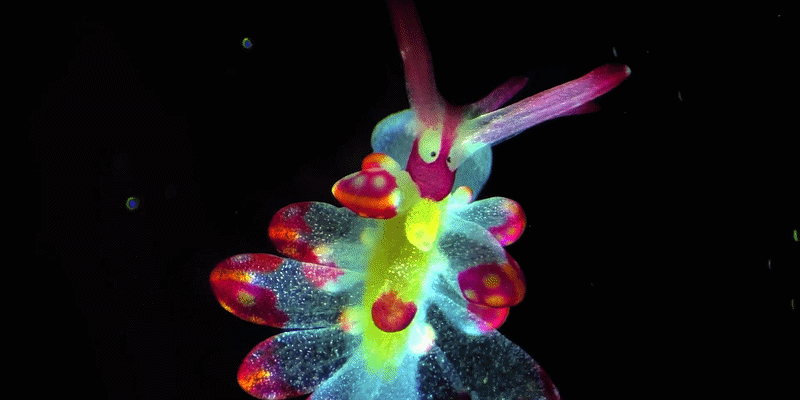
The latest results from Nikon’s Small World in Motion contest have unveiled an astonishing array of microscopic life captured in motion. This annual competition has garnered attention not just for its captivating images but for showcasing the intricate details of life forms that are generally invisible to the naked eye. This year, competitors pushed the boundaries of scientific imaging, using advanced technology to reveal the dynamic interactions of microorganisms in their natural habitats.
Why it matters
This year’s winners highlight the importance of microscopy in scientific research and the broader understanding of ecosystems. By illustrating the way these tiny organisms interact, breed, and survive, these visual representations help to educate the public on ecological balance and biodiversity. The contest also fosters interest in microbiology, encouraging students and researchers to explore the microscopic world. Many of these organisms play crucial roles in various environmental processes, from nutrient cycling to the global carbon climate balance.
Furthermore, the emotional impact of seeing these creatures in motion through the winning entries serves as a reminder of the complexity of life. For example, the winning video captures the bustling behavior of plankton, revealing not only their beauty but also their critical role in marine ecosystems as the foundation of the food chain. Such insights can help inform conservation efforts, emphasizing the need to protect even the smallest of life forms that are integral to our planet’s health.
What comes next
Looking forward, the success of this year’s contest is expected to amplify interest in future editions. Nikon aims to expand its outreach to educational institutions, encouraging participation and sparking curiosity among budding scientists. Additionally, as technology advances, so too does the potential for more nuanced and detailed portrayals of microscopic life, prompting questions about what undiscovered phenomena could be captured in the future.
The immediate outlook involves increased discussions around the role of microscopy in environmental and biological research. As public awareness grows, so may funding opportunities in related fields to support deeper investigations into microorganisms and their habitats. Future iterations of the contest will likely include new categories, perhaps framing the competition around emerging issues like climate change or biodiversity loss. This evolving interest serves as an invitation for all to look closer at the unseen worlds around us.
Original Source: https://www.thisiscolossal.com/2026/09/2026-nikon-small-world-in-motion-video-competition/