
The latest turn
Recent advancements in geological research have reignited interest in the Earth’s diverse subsurface formations. Scientists have discovered new insights about the varying depths of the Earth’s layers and how these structures impact everything from seismic activity to natural resource distribution. This renewed focus not only highlights the importance of understanding our planet’s anatomy but also underscores the necessity of sustainable practices concerning the resources derived from these depths.
How the story got here
The exploration of Earth’s depths has a long history, tracing back centuries when early scientists first conceptualized the planet’s internal structure. Over the years, significant milestones have marked our journey into understanding these depths. The Mohorovičić Discontinuity, commonly referred to as the Moho, marks the boundary between the Earth’s crust and the mantle. This discovery in the early 20th century opened the door to studying the properties of the mantle, which extends to about 2,900 kilometers below the surface.
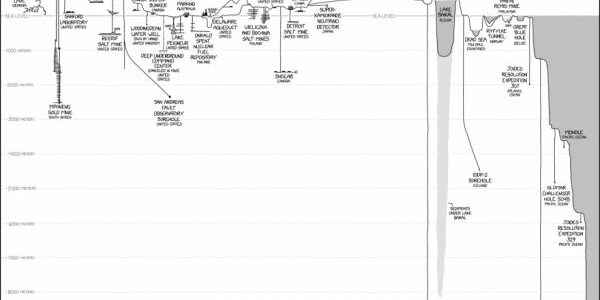
As seismic technologies evolved, researchers have been able to probe deeper areas of the Earth. The discovery of the outer and inner cores—comprised mainly of iron and nickel—during the mid-20th century further elucidated our understanding of the Earth’s magnetic field and tectonic movements. In comparison, the Kola Superdeep Borehole project, initiated in 1970, sought to drill as deep as possible into the Earth’s crust, ultimately reaching about 12 kilometers. Although it fell short of penetrating the Moho, the project provided invaluable data about high-temperature and high-pressure conditions.
Today, scientists continue to analyze the data collected from these project milestones and newer exploratory technologies. For example, developments in artificial intelligence and machine learning are aiding researchers in simulating models of the Earth’s interior, allowing for better predictions regarding seismic events and resource availability. The unfolding advancements in drilling and imaging techniques promise to illuminate unknown features of the Earth’s interior and further enhance our understanding of the geological processes shaping our environment.
Next expected developments
As researchers look forward, several key milestones stand out. The establishment of international collaborations aimed at studying the mantle and core could enhance our collective understanding of geological processes that influence surface phenomena like earthquakes and volcanicity. Moreover, initiatives focusing on sustainable resource management at studied depths are gaining traction, reflecting a growing awareness of the environmental impact linked to resource extraction.
The next decade is likely to bring more sophisticated drilling projects and expansive geophysical surveys, aimed at understanding the interactions between the Earth’s layers and their implications for climate change, mineral deposits, and energy sources. The urgency of addressing global challenges will propel these efforts, making it essential to examine not only what lies beneath our feet but also how we responsibly manage it moving forward. The culmination of these initiatives could redefine not only our geological frameworks but also our approaches to resource utilization in an increasingly resource-constrained world.
Original Source: https://www.neatorama.com/2026/07/13/Comparing-the-Different-Holes-in-the-Earth/