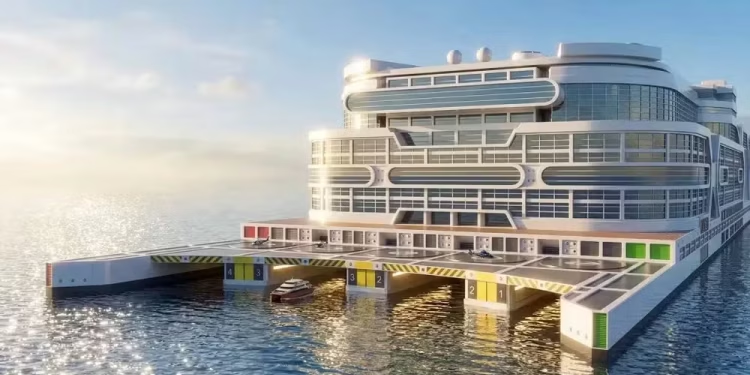
The Freedom Ship project aims to create a unique maritime community, offering a revolutionary floating city concept that can accommodate up to 80,000 residents. This ambitious endeavor proposes a self-contained world on the water, challenging traditional notions of urban living.
What happened
Initially conceived in the late 1990s, Freedom Ship gained traction as a response to increasing urbanization and the challenges of land-based living. Designed as a mile-long vessel, it promises a floating habitat complete with residential spaces, retail shops, schools, and recreational facilities.
The vision for Freedom Ship includes advanced technologies to sustain energy, manage waste, and provide amenities typically found in large cities. With a modular design, it aims to incorporate various features like parks, entertainment centers, and educational institutions. The floating city would also harbor its own port, enabling it to dock in international waters and visit different countries at will.
Following a series of revisions and redesigns, the project has faced delays, primarily due to funding issues and regulatory challenges. However, recent conversations around sustainable urban living and rising sea levels have revitalized interest, prompting potential investors to reconsider the feasibility of this floating megastructure.
What it means for readers
The Freedom Ship project reflects broader trends in urban development and sustainability. For readers interested in innovative solutions to urban overcrowding and climate-related displacement, this floating city presents a provocative concept. It challenges the limitations of terrestrial living, offering a glimpse into how future cities may adapt to changing environmental conditions.
Moreover, the project raises important questions regarding social systems, governance, and community dynamics in a space where traditional boundaries and regulations may not apply. By conceptualizing a self-sustained environment, proponents invite discussion on how humanity might organize itself in increasingly complex geopolitical landscapes.
While Freedom Ship remains a vision for now, it serves as a beacon for potential urban solutions that prioritize mobility and adaptability in response to future challenges.
What happens now
The future of Freedom Ship hangs in the balance as potential stakeholders evaluate its viability. As discussions surrounding climate change escalate and the necessity for sustainable living options grows, the project could see renewed interest and investment. Innovative financing models and partnerships may arise, facilitating its development into a prototype for future floating communities.
Meanwhile, advocacy for urban solutions that prioritize resilience, sustainability, and adaptability is gaining momentum. Readers can expect ongoing discussions in urban planning circles about the practical implications of such floating structures, highlighting both the allure and complexities of living at sea.
Ultimately, Freedom Ship embodies a transformative vision that could reshape our approach to urban living. As the world grapples with rapid population growth and environmental pressures, monitoring the progress of this ambitious project might offer crucial insights into the cities of tomorrow.