Researchers have made an intriguing discovery regarding how slime mold, a simple organism devoid of a brain, makes complex decisions. This research opens new avenues for understanding non-neuronal decision-making systems, challenging previously held notions about cognitive processes occurring solely in animals with centralized nervous systems.
Latest developments
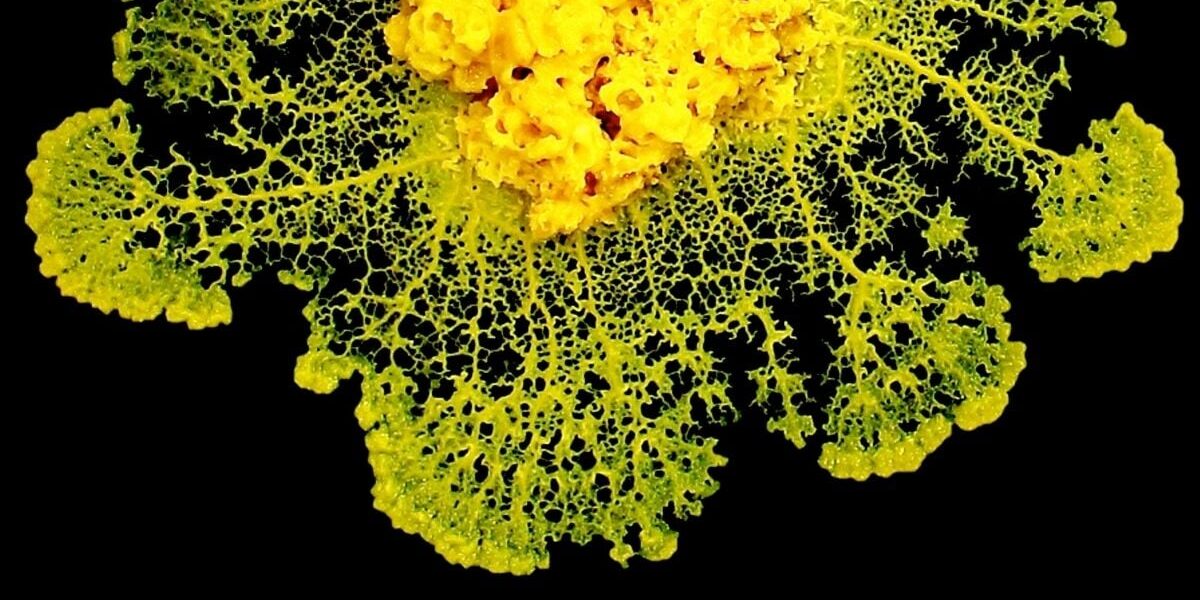
In a recent study published in the journal Proceedings of the National Academy of Sciences, physicists at the University of California, Davis, revealed how the slime mold Physarum polycephalum navigates its environment and makes decisions based on the availability of nutrients. The researchers used advanced imaging techniques and computer simulations to track the organism’s behavior in real-time.
The team found that the slime mold exhibits a form of collective behavior, where it utilizes spatial and temporal cues from its surrounding environment to guide movement. When presented with multiple food sources, the organism demonstrated a preference for a particular food type and systematically explored different pathways, continuously altering its decisions based on the stimuli it encountered. This behavior effectively mimics decision-making processes usually attributed to higher organisms.
Background and context
Slime molds, though classified as protists, belong to a group of fungi-like organisms that have fascinated scientists for decades due to their unique properties. Unlike more complex organisms, slime molds can exist in a unicellular form but can also aggregate to form multicellular structures under favorable conditions. Notably, the lack of a centralized nervous system raises questions about how these organisms manage to respond to environmental challenges effectively.
Previous studies have indicated that slime molds can solve mazes and optimize paths to food sources, demonstrating a remarkable ability to adapt and learn from experience. Their decision-making capabilities have often been attributed to chemical signaling and physical responses to environmental changes. However, the recent findings provide a deeper understanding of the underlying mechanics of these processes, suggesting the organism’s behavior can be construed as a form of primitive intelligence.
What to watch next
The implications of this research extend beyond the scope of biological inquiry; they offer insights into computing and artificial intelligence. The algorithms inspired by the behavior of slime molds could potentially enhance problem-solving capabilities in robotic systems and optimize networks in various fields, such as telecommunications and logistics.
Future studies may focus on further decoding the cellular and molecular processes that underpin decision-making in slime molds. Additionally, researchers might explore how similar mechanisms could exist in other simple organisms, broadening our understanding of intelligence across the biological spectrum.
As investigations into non-neuronal decision-making continue, this research could reshape scientific perspectives on cognition and intelligence, illustrating that complex decision-making can emerge from simplicity. The findings concerning slime molds challenge traditional views and prompt a reevaluation of the essential qualities of intelligence itself.
Original Source: https://www.sciencealert.com/physicists-discover-how-slime-mold-makes-decisions-without-a-brain