
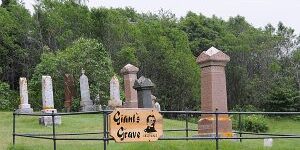
Hidden in the picturesque community of Englishtown, Nova Scotia, lies the grave of one of the province’s most renowned historical figures, Giant MacAskill. Known for his extraordinary size and strength, MacAskill was a 19th-century giant who captured the imagination of a nation and left an indelible mark on local culture.
Key details
Giant MacAskill, born in 1825, stood at an impressive 7 feet 9 inches tall, making him one of the tallest men to have ever lived. He was originally from Scotland and immigrated to Canada as a young man. His life was marked by various accomplishments, including appearances in circus shows and exhibitions across North America. MacAskill passed away in 1863, and his remains were interred in Englishtown, where he had spent a significant part of his life.
Today, his grave is a simple stone monument that attracts visitors from all over, drawn by curiosity about the man who embodied the spirit of the larger-than-life legends of folklore. The gravestone bears his name and dates, but it serves as more than a marker; it is a testament to the local heritage and history intertwined with MacAskill’s life and legacy.
Why this matters
The significance of Giant MacAskill’s grave extends beyond its physical presence. It stands as a symbol of the unique cultural landscape in Nova Scotia and offers insight into the period of early Canadian history. His story sheds light on issues of identity, immigration, and the evolving narrative of what it means to be Canadian. For many locals and tourists alike, visiting MacAskill’s grave is not merely a pilgrimage to pay respects but also an opportunity to reflect on human stories that shaped their communities.
Moreover, there is an increasing interest in heritage tourism, where visitors seek out sites that provide a sense of connection to the past. As a result, sites like MacAskill’s grave can foster economic benefits for small communities, providing impetus for conservation efforts and local storytelling initiatives that keep history alive.
Broader picture
The narrative surrounding Giant MacAskill is also reflective of broader themes in Canadian society, emphasizing how individual stories contribute to the national consciousness. The intersection of folklore and historical fact creates a complex tapestry that informs contemporary discussions about shared culture and heritage.
As interest in local history continues to rise alongside societal shifts towards valuing diversity and representation, figures like MacAskill represent a dual legacy. They churn up questions about strength, difference, and identity while simultaneously serving as a benchmark to evaluate present-day inclusivity. Visiting his grave is an opportunity for reflection—not only on a singular life but also on the collective journey that shapes Canadian identity.
In sum, Giant MacAskill’s grave is more than a mere resting place; it symbolizes the rich history of Nova Scotia and invites ongoing dialogue about what it means to be part of a community while honoring the legacies left behind by those who walked before us.
Original Source: https://www.atlasobscura.com/places/giant-macaskill-s-grave