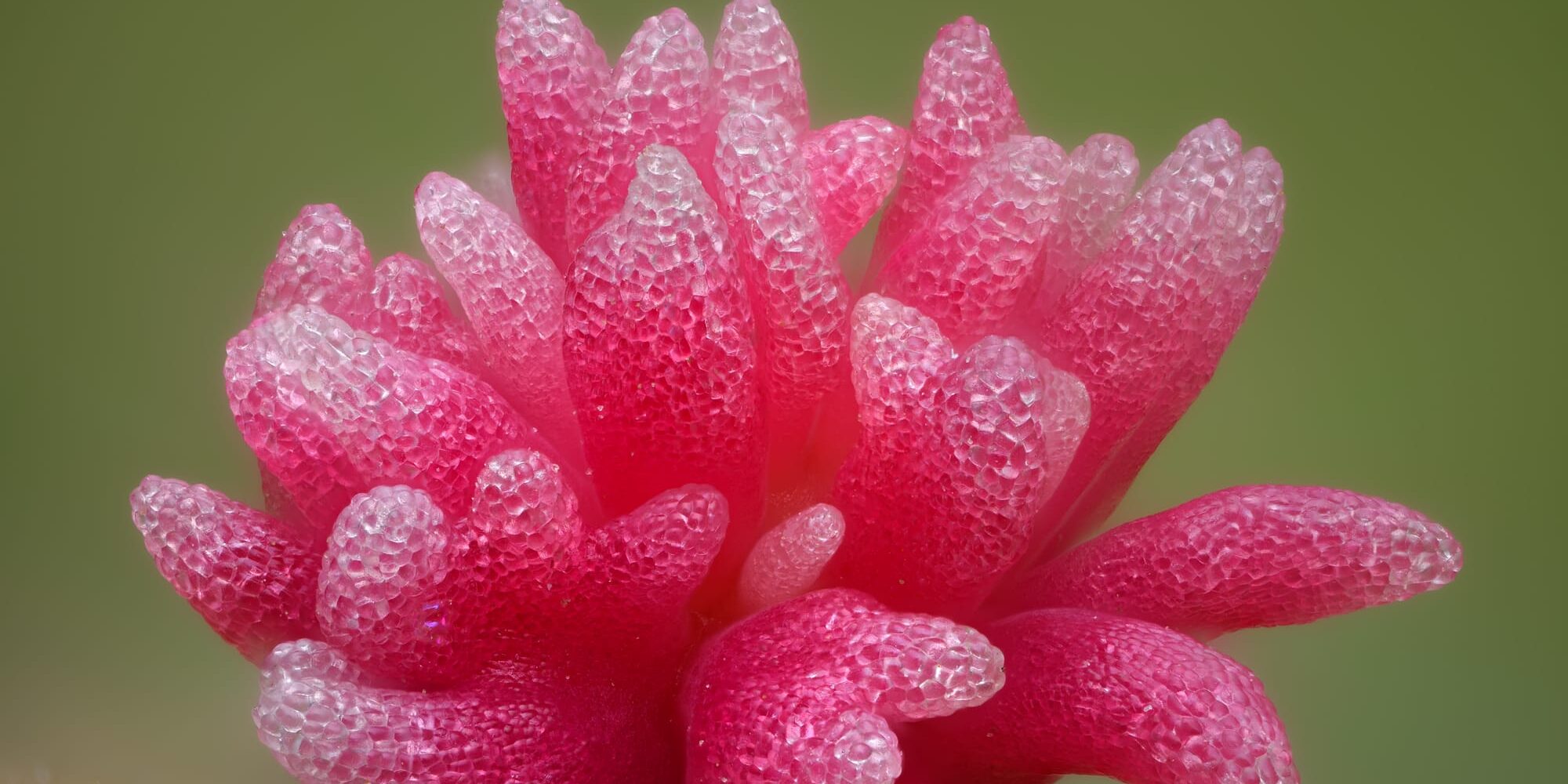
Timothy Boomer, a naturalist and photographer, recently unveiled a series of stunning images that delve into the bizarre and often overlooked world of insect galls. These unusual growths, which form on plants as a response to insect infestations, offer more than just visual intrigue; they pose significant questions about ecology, evolution, and the intricate relationships between insects and plants.
Key details
Insect galls are abnormal plant growths that occur when certain species of insects, like wasps, aphids, or mites, exploit a host plant’s resources. The plant responds to the insect’s presence by creating a protective structure, often leading to remarkable shapes and colors. Boomer’s photography captures the complexity and beauty of these galls, showcasing their variety from the minute, almost imperceptible bulges to larger, more elaborate formations.
His close-up techniques bring out textures and details often missed by the naked eye, revealing intricate patterns and vibrant colors. Each photograph not only serves as a testament to the aesthetics of nature but also becoming a conversation starter about these phenomena’s ecological and biological significance.
Why this matters
Understanding insect galls is crucial for multiple reasons. First, they highlight the co-evolution of insects and plants, illustrating how these life forms adapt to one another over millennia. As insects manipulate plant growth for their needs, the resulting galls can serve as vital habitats for various microorganisms and other small creatures, contributing to local biodiversity.
Moreover, studying these adaptations helps ecologists evaluate the health of ecosystems. Galls can serve as indicators of environmental changes, as shifts in their distribution or prevalence may signal alterations in climate or habitat quality. This is particularly relevant in an era marked by rapid environmental change and biodiversity loss.
Boomer’s work also resonates in a public context by drawing attention to the hidden life forms that exist around us. By presenting insect galls in a captivating manner, he encourages viewers to consider the complexity of nature and the intricate web of interactions that define ecosystems. His photography aims to foster a sense of curiosity and appreciation for biodiversity that often goes unnoticed in everyday life.
Broader picture
The exploration of insect galls interfaces with broader themes in conservation biology. As habitat loss and climate change continue to threaten ecosystems worldwide, understanding even the smallest components, like insect galls, can have significant implications for conservation efforts. They are not merely botanical oddities; they hold insights into resilience, adaptation, and the delicate balance of life on Earth.
Furthermore, Boomer’s documentation contributes to a growing trend among naturalists and artists who aim to raise awareness about the importance of insects—often vilified yet undeniably integral to ecological stability. By transforming the often-overlooked galls into subjects of beauty and intrigue, his work stands as a reminder of nature’s artistry and the endless discoveries that lie within our environment.
In a world increasingly focused on the immediate and visually striking, Boomer’s photography invites contemplation on the unseen connections within ecosystems and emphasizes the need for informed stewardship of the environments we share.
Original Source: https://www.thisiscolossal.com/2026/10/timothy-boomer-photographs-plant-galls/