
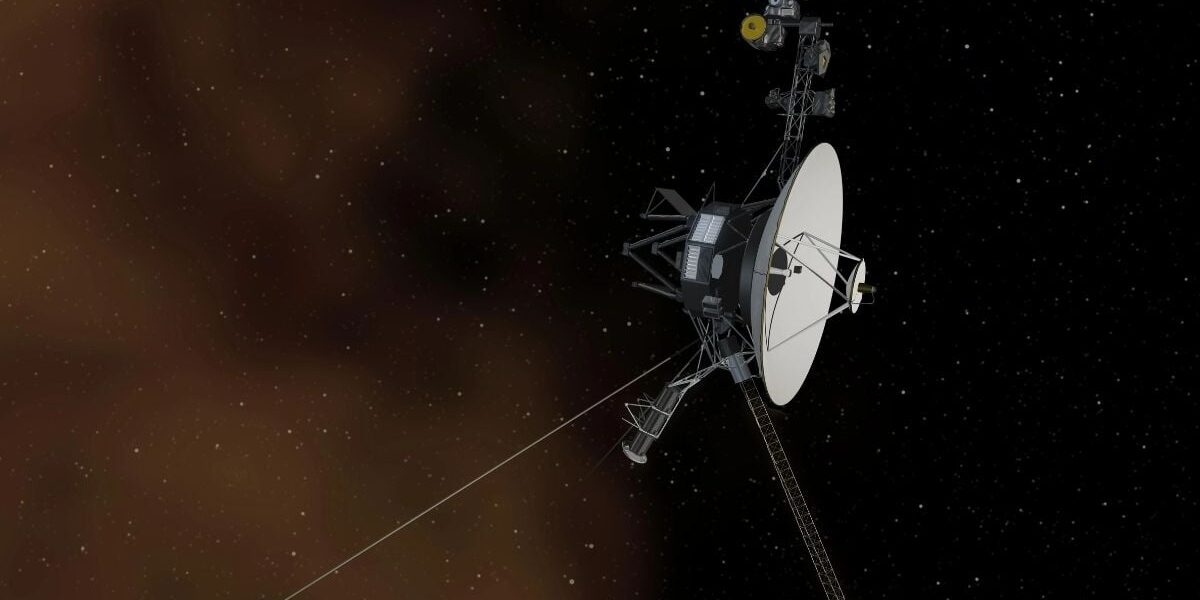
Since its launch in 1977, Voyager 1 has traveled over 14 billion miles through the cosmos at an astounding speed of approximately 38,000 miles per hour. Despite this remarkable velocity, it has yet to reach even one light-day, a testament to the vastness of space and the challenges of interstellar exploration.
Latest developments
As of this year, Voyager 1 remains in communication with NASA, providing invaluable data on the conditions of interstellar space. Recently, scientists noted a decline in the spacecraft’s power, prompting discussions about its long-term viability. With its nuclear power source estimated to last until about 2025, engineers are meticulously planning which instruments to keep active in the coming years, striving to maximize the scientific output of the mission.
In late 2023, Voyager 1 transmitted measurements indicating unusual cosmic ray activity, sparking interest among astrophysicists. This development aids researchers in understanding particle interactions in the heliosphere and beyond—a realm largely unknown until Voyager ventured forth. The exploration prompts scientists to ponder whether there are still new discoveries waiting in the void.
Background and context
Launched on September 5, 1977, Voyager 1 was initially designed to conduct a flyby of Jupiter and Saturn. It provided the first close-up images of these gas giants and their moons, transforming our understanding of the solar system. After accomplishing its primary mission, Voyager 1 continued its journey into deeper space, transitioning from a planetary probe to an interstellar ambassador.
The spacecraft crossed the heliopause, the boundary where the solar wind from the sun gives way to the interstellar medium, in 2012. This significant milestone marked its entry into an unexplored realm, where it provided data about the environment outside of our solar system. However, even traveling at such high velocities, the distances involved in space exploration are staggering. One light-day, the distance light travels in a day, is about 26 billion miles—far beyond Voyager’s current reach.
What to watch next
As Voyager 1 approaches the limits of its power and technological capabilities, the upcoming years will be crucial for the mission. Scientists aim to prioritize the instruments that will remain operational, focusing on those that could yield the most significant scientific insights into the interstellar environment.
Moreover, Voyager 1’s continued journey raises questions about future missions and the exploration of interstellar space. The insights gained may inform the design of next-generation spacecraft aimed at reaching other star systems, a goal that lies several decades ahead. As NASA and the global scientific community keep a watchful eye on Voyager 1’s performance and data, its legacy will undoubtedly influence future explorations of the cosmos.
Despite the challenges, Voyager 1 serves as a beacon of human curiosity, reminding us of both how far we’ve come and how much further we have yet to explore.
Original Source: https://www.sciencealert.com/voyager-1-has-been-flying-across-space-since-1977-and-still-hasnt-traveled-1-light-day