
Background and context
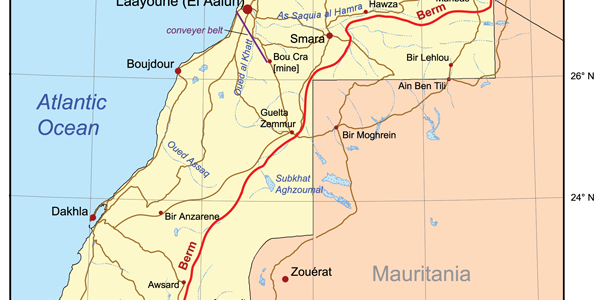
The Moroccan Wall, also known as the Berm, is a formidable series of fortifications stretching approximately 2,700 kilometers across Western Sahara. Constructed in the 1980s by Morocco, it serves a dual purpose: to secure Moroccan sovereignty over the region and to isolate the Sahrawi people, who have long sought independence. The wall consists of earthen and stone barriers, fortified bunkers, and, crucially, an extensive network of landmines, making it the longest continuous minefield in the world.
This complex geopolitical landscape has its roots in the late 1970s when Morocco laid claim to Western Sahara, following Spain’s withdrawal from the territory. The Sahrawi Arab Democratic Republic (SADR), represented by the Polisario Front, opposed this move, leading to decades of armed conflict. A ceasefire was brokered in 1991 under the auspices of the United Nations, but tensions have persisted. The minefield itself serves as a grim reminder of the area’s turbulent history, with landmines posing a continuous threat to civilian life and wildlife.
Latest developments
In recent months, the situation surrounding the Moroccan Wall has gained renewed international attention. A series of reports from humanitarian organizations have highlighted the escalating impact of unexploded ordnance on local populations. There has been a notable increase in casualties reported due to landmine encounters, with both civilians and livestock at risk.
Furthermore, political talks mediated by the UN have stalled, leaving the status of Western Sahara unresolved. Morocco’s recent military maneuvers near the wall, along with Polisario’s declarations of renewed military readiness, have heightened fears of potential clashes. The international community is closely monitoring these developments, as any escalation could have significant ramifications not just regionally, but also for global international relations.
In addition to the humanitarian crisis, discussions around the environmental impact of the minefield have also surfaced. Activists are raising awareness about the ecological damage caused by the mines and their effect on local fauna and flora, adding an environmental dimension to the ongoing conflict.
What to watch next
As the situation unfolds, attention will remain focused on diplomatic efforts from the UN and various international stakeholders calling for a revival of peace talks. It is critical for the international community to push for demining initiatives to address the humanitarian disaster unfolding in the region.
Moreover, the response from the Moroccan government, in conjunction with the Polisario Front’s military posture, will be pivotal. How both sides address the persistent security issues surrounding the wall—along with broader geopolitical maneuvers involving regional players such as Algeria—will significantly influence the prospects for peace.
In summary, the Moroccan Wall is not merely a physical barrier but a symbol of a protracted conflict that highlights the complexities of sovereignty, human rights, and international diplomacy. As the world watches, the need for a peaceful resolution becomes increasingly urgent.