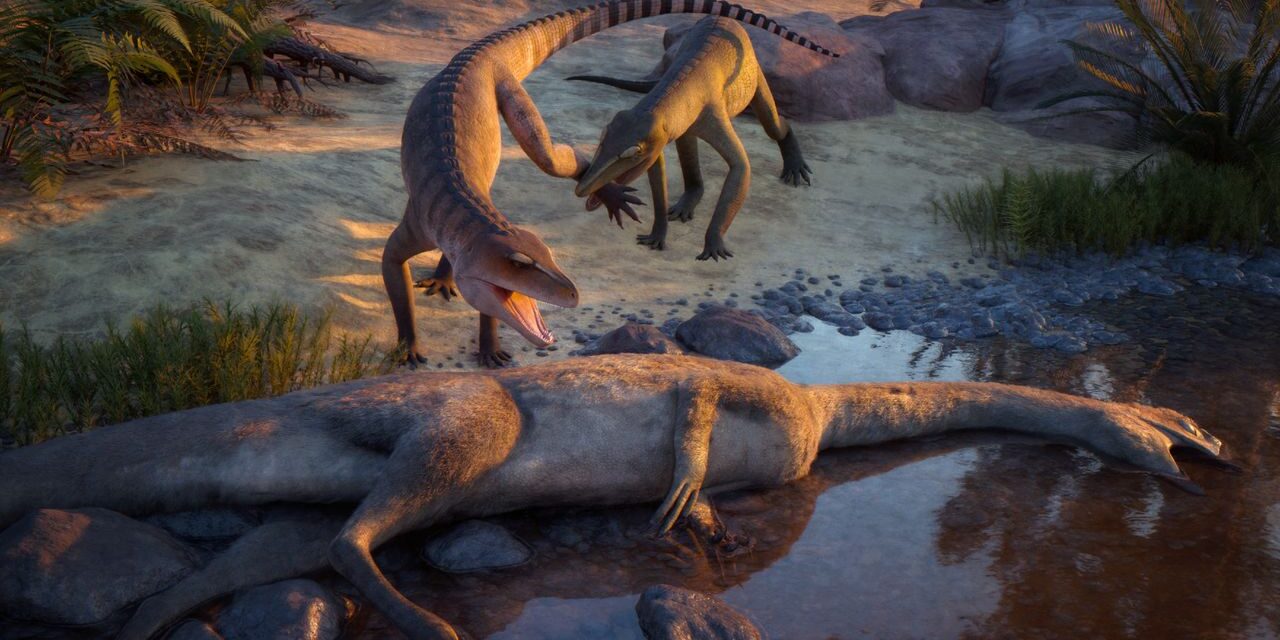
In a groundbreaking development for paleontology, a Triassic crocodile relative previously neglected in a museum basement for nearly eight decades has been identified by researchers from the New Mexico Museum of Natural History and Science. The specimen, which dates back roughly 230 million years, has generated excitement not only among paleontologists but also among enthusiasts eager to learn more about prehistoric ecosystems.
Immediate reaction
The announcement has sent ripples through the scientific community, with many researchers voicing their astonishment at the significant find. Dr. Sarah Thompson, a prominent paleontologist, remarked, “This discovery is pivotal. It provides us with insight into an ancient lineage that has shaped our understanding of terrestrial ecosystems during the Triassic period.” The revelation sparked a flurry of social media discussions, with many in academia promoting the potential for further studies utilizing this newly identified specimen.
Publicly, the announcement has revitalized interest in museums and their collections. Visitors are increasingly engaging with local institutions, inspired by the idea that previously overlooked pieces in their own towns could yield crucial information about Earth’s history. Local news outlets have also picked up the story, emphasizing the importance of preserving and studying museum collections.
What triggered the move
The identification process began when a team of researchers undertook an audit of the museum’s extensive holdings, which contain thousands of specimens collected over decades. During this systematic review, the peculiar yet unidentifiable fossil caught the attention of a graduate student working on a thesis project focused on prehistoric reptiles. Utilizing modern imaging techniques and advanced morphological analysis, the team was able to connect the dots, identifying the specimen as a member of the Archosauria clade, which includes modern birds and crocodiles.
This discovery underscores the importance of ongoing research in museum collections, particularly when anthropogenic factors are increasingly threatening geological sites around the world. As research methodologies evolve and improve, institutions are encouraged to reassess older specimens that may hold untapped value.
Why readers should care
Understanding the characteristics and evolutionary role of such specimens as the newly identified Triassic croc relative has broader implications for our knowledge of biodiversity and ecological resilience. The ability to trace lineages back over millions of years could offer lessons about adaptation and survival amidst changing environments. This insight is especially relevant given current concerns about climate change and species extinction.
Moreover, this rediscovery emphasizes the vital role that museums play in scientific research as well as public education. As more fossils are reassessed, there is a potential for exciting announcements that deepen our insight into Earth’s early history. For the public and scientific community alike, these findings can engender a renewed commitment to preserving our planet’s natural history and the institutions that house it.
In the short term, we can expect enhanced interest in museum initiatives and an uptick in funding opportunities aimed at encouraging more research into existing collections. This will likely lead to further discoveries that could reshape our understanding of evolutionary history.