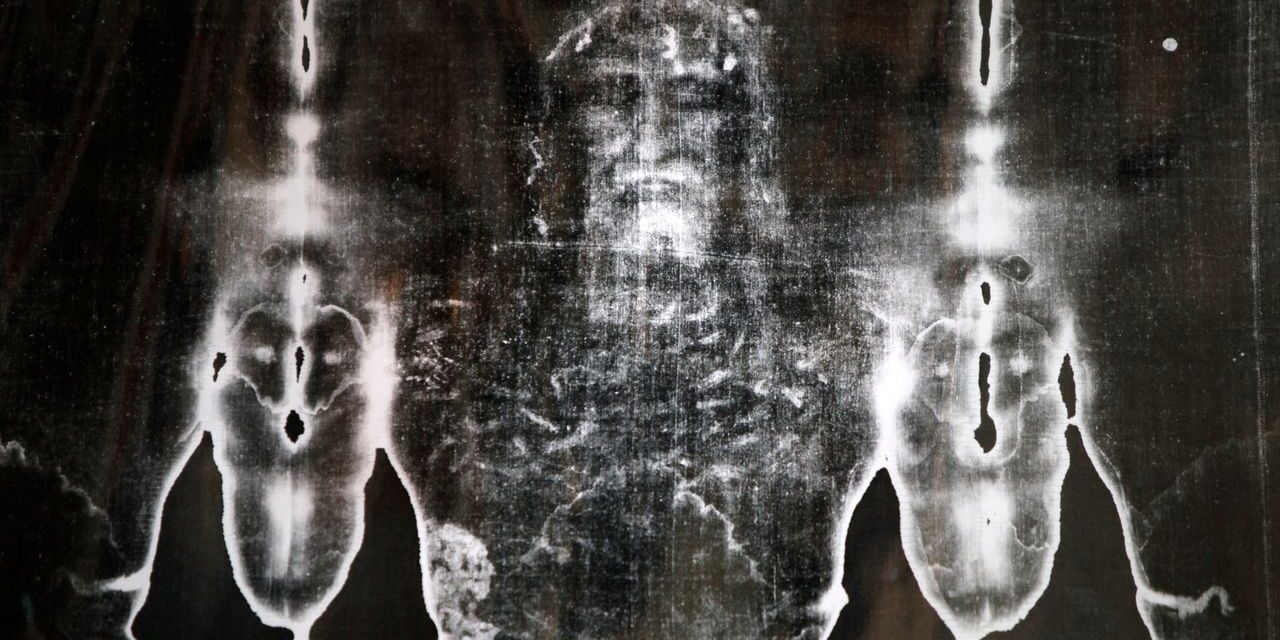
The Shroud of Turin, an age-old relic believed by many to be the burial cloth of Jesus Christ, has had its authenticity questioned once again. The newest twist in this enduring religious debate involves two very unusual contaminants found on the fabric: traces of DNA derived from carrots and red coral.
This peculiar discovery has kindled a fresh wave of speculations and debates within the scientific, religious, and online communities. Many are questioning how or why DNA from such unlikely sources would end up on the age-old relic.
The remarkable findings stem from an analysis conducted by an international cadre of researchers from various prestigious institutions such as the University of Padua, the University of Pavia and the Institute of Biotechnology in Italy, as well as the University of Granada in Spain. By meticulously extracting and sequencing the genetic material found on the ancient piece of linen, they were able to identify a broad spectrum of organisms that have come into contact with the shroud over the centuries.
Amidst the bacterial and human DNA was the strand of genetic material traced back to Daucus carota, the common carrot, and Corallium rubrum, a species of red coral endemic to the Mediterranean Sea. How they ended up on the Shroud of Turin, a focal point of Christendom for centuries, is proving to be a puzzling question.
The report to this effect, published in the journal ‘Scientific Reports’, is the first comprehensive catalog of biological materials found on the shroud. The assortment of DNA discovered paints a vivid picture of the relic’s journey through different hands and places since its first documented appearance in the 14th century.
Arguments concerning the legitimacy of the Shroud of Turin as Christ’s burial cloth are not new. Radiocarbon dating conducted by different institutions in 1988 suggested the fabric originated between 1260 and 1390, far later than the time of Christ. Believers, however, contend that contamination over time may have skewed these results.
Revelations of the unusual contaminants have stirred also fresh debates on popular online platforms, such as Reddit and Twitter. Some express incredulity, noting the peculiar coincidence of finding carrot and red coral DNA on the same piece of cloth. Others view the discovery as potential evidence that the shroud may have been part of some grand medieval masquerade.
Given the novelty and shock of the discovery, it’s easy to overlook the fact that apart from the carrot and red coral DNA, traces of various other organisms were discovered on the shroud, from bacteria that thrive on the human skin to those residing in water wells. The presence of these organisms suggests that the shroud was exposed to a diverse range of environments, which likely contributed to the accumulation of the diverse DNA found on it.
Tracing the origin of the unusual contaminants, the researchers point out that red coral was often used in ancient Mediterranean cultures for its apotropaic (evil-warding) properties, while carrots were commonly used in ancient dyeing practices. However, it remains unclear how these materials could have ended up on the shroud.
While the implications of these discoveries remain uncertain, the findings nonetheless provide exciting new insights into what is undoubtedly one of the most iconic and controversial religious artifacts in human history. As the debates continue, it’s clear that the mystery surrounding the Shroud of Turin is bound to endure. One thing, however, is for certain- each piece of new evidence, no matter how strange, brings us that much closer to uncovering the shroud’s intriguing past.
Original Source: https://www.livescience.com/archaeology/shroud-of-turin-claimed-to-be-jesus-burial-cloth-contaminated-with-carrot-and-red-coral-dna