In Hollywood, the dynamics of the visual narrative are significantly influenced by the choice of creative tools. Nowhere is this more evident than in the rising use of anamorphic lenses, even in animated films. Previously restricted to the realm of high-end photography and cinematography, anamorphic lenses have emerged as an absolute game-changer in the film industry, enhancing the aesthetic appeal of every frame.
Anamorphic lenses allow cinematographers to capture a wider field of view than traditional spherical lenses, without the distortion effect often associated with fisheye lenses. Notably, they deliver unique visual characteristics, including horizontally compressed images, oval-shaped bokeh, and striking lens flares – characteristics that have become synonymous with Hollywood’s visual storytelling.
Iconic films like “Star Wars”, “Indiana Jones” and “Die Hard” have been shot entirely on anamorphic lenses, contributing to their cinematic look. Moreover, the unique characteristics of anamorphic lenses have extended their usage to animated movies, impacting the visual language significantly.
Many might question the relevance of anamorphic lenses for animated movies since the virtual world does not depend on a physical lens. Nevertheless, their virtue lies in achieving a visually rich narrative, replicating the feeling of watching a live-action movie. It’s all about aesthetic emulation – adhering to the language of cinema audiences are accustomed to, despite the medium of delivery.
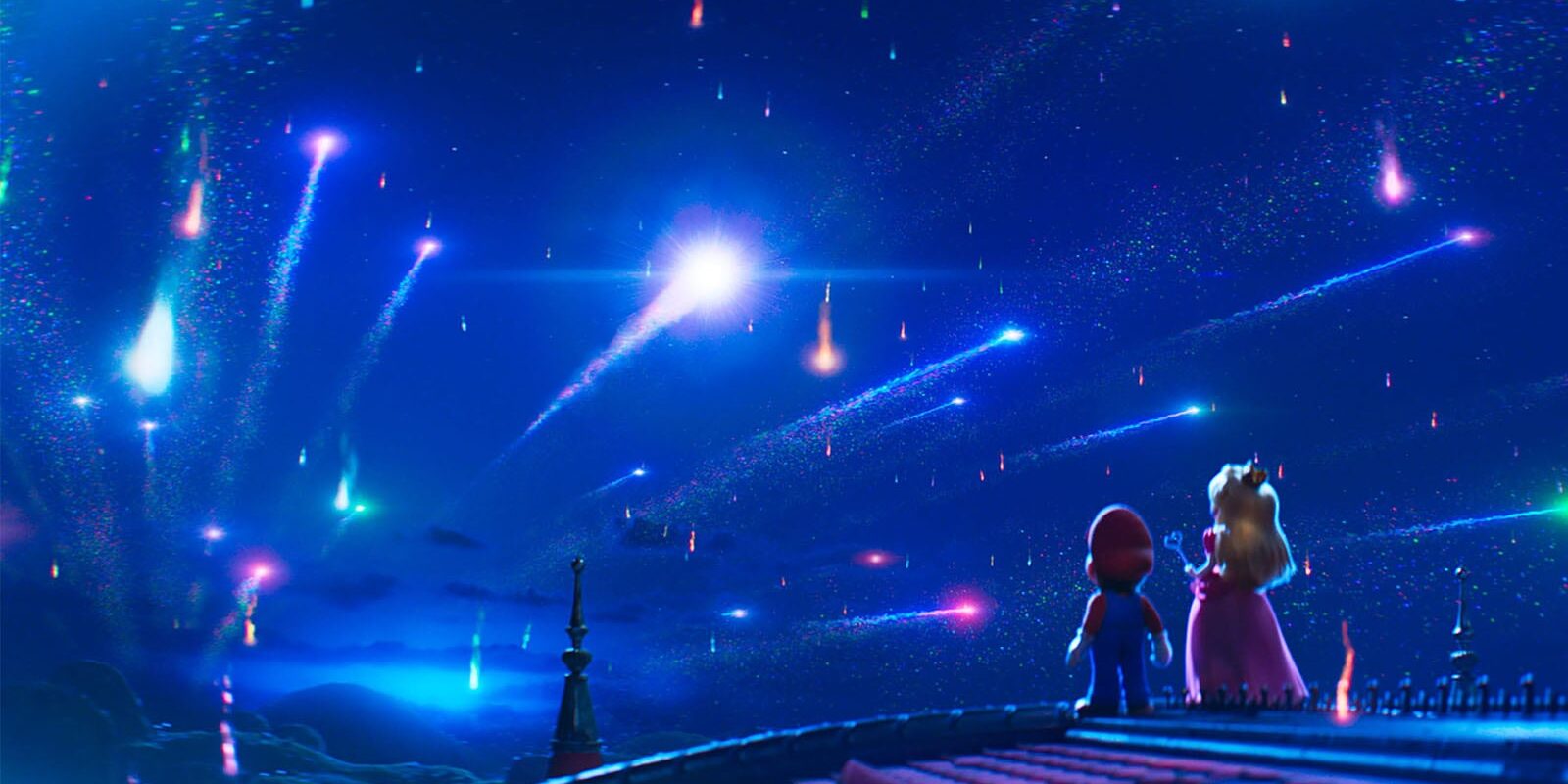
Recent animated films, such as Pixar’s ‘Onward’ and ‘The Mitchells vs. the Machines’ by Sony Pictures Animation, extensively used anamorphic-bokeh and streak flares, reflections of the visual cues of anamorphic lenses. In these films, anamorphic simulation contributes to a more immersive cinematic experience, maintaining visual consistency with live-action films that the audience is familiar with.
In the broader film community, the rise of anamorphic lenses has been discussed on multiple platforms. Top-tier directors and cinematographers have advocated for anamorphic lenses in online filmmaker forums, promoting their aesthetic advantages over traditional spherical lenses.
Renowned cinematographer Roger Deakins once mentioned in a podcast, “The Deakins Den”, “There is something about the quality of anamorphic… I love the horizontal lens flares and the oval out-of-focus elements in the background.”
Even companies producing digital animation software have taken note of this trend. Software solutions now offer ‘anamorphic camera scripts or plugins’ to simulate the look of anamorphic lenses in animation, further reinforcing the concept of visual realism in a digitally driven world.
Greg Downing, President of Ex’pression College for Digital Arts, recently discussed this in an interview stating, “The emulation of anamorphic lenses in CG animations has reached an interesting point. The fact that we use the same language to describe the optical behavior of real-world lenses and virtual lenses is quite fascinating.”
Yet, it’s essential to note that the use of anamorphic lenses doesn’t automatically guarantee a cinematic masterpiece. It’s ultimately a tool in the director’s arsenal, used judiciously to tell a compelling story.
Anamorphic lenses’ extended prevalence in Hollywood, encompassing both live-action and animated movies, exhibits an evolution in cinematic language. The lasting influence of these lenses reinforces not only their technical advantage but also their contribution to enhancing the aesthetics and emotional depth of visual storytelling.
Original Source: https://petapixel.com/2026/04/02/anamorphic-lenses-are-everywhere-in-hollywood-even-animated-movies/