In what is hailed as a significant scientific breakthrough, a team of international paleoanthropologists announced their discovery of fossils from an 18 million-year-old ape in Africa. The fossils, unexpectedly discovered in a region not traditionally associated with such finds, present a promising new avenue for understanding primate evolution.
The find was unveiled in a location unexpected for such revelations – Namibia, on Africa’s southwest coast. Namibia’s arid environment, infamous for its vast dune desert, was never previously considered a hotspot for primate fossils. This find has now placed Namibia firmly on the map for evolutionary studies.
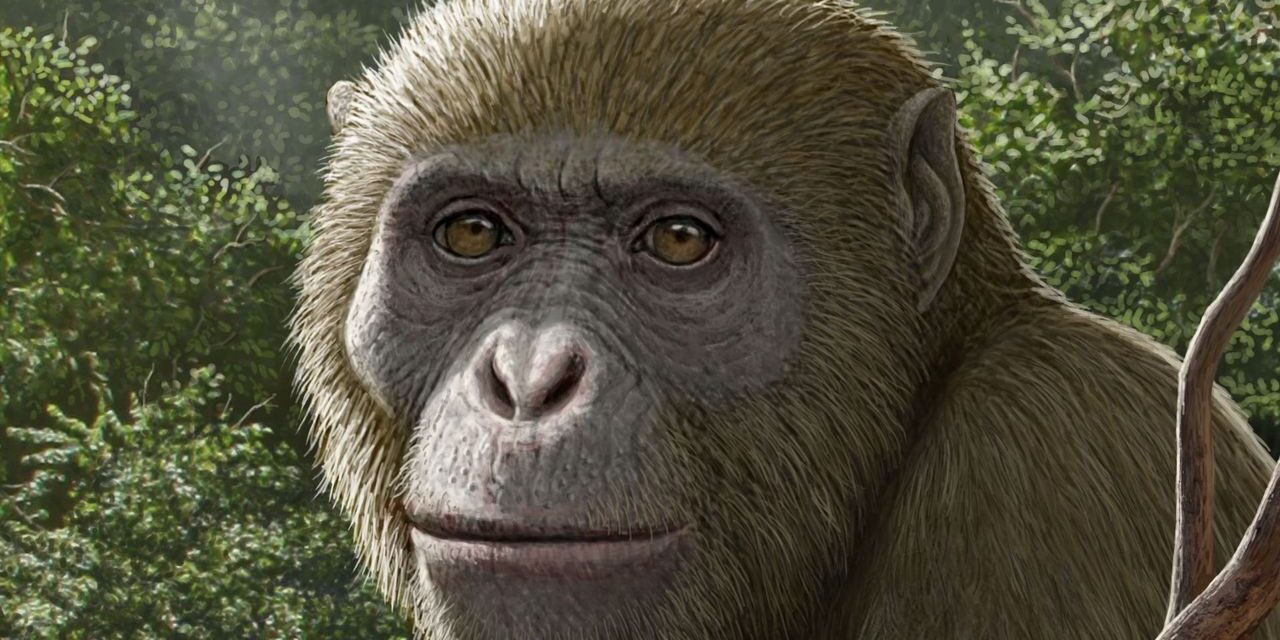
The fossils belong to an ancient ape species, now named “Namascetus namibiensis,” discovered in Namibia’s Zirkel Fossil Deposit. These remains date back to the Miocene epoch in the Tertiary Period, approximately 18 million years ago. The epoch, lasting from 23 million to 5.3 million years ago, remains critical to evolution scholars due to the significant evolutionary diversification in life forms, especially mammals.
The remarkable discovery was covered in an article published in the esteemed journal, ‘Communications Biology’. The publication details the study undertaken by an international team of experts led by French, Namibian, and South African researchers.
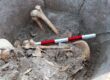
The find comprises multiple teeth and part of the lower jaw. Allocating the fossils to an ape or monkey proved initially challenging due to their primitive characteristics, but they were later confirmed as belonging to an early ape due to certain dental features that are typically unique to this group of primates.
This discovery has far-reaching implications for our understanding of early primate evolution. It offers critical data on when and how ancestral apes began branching into distinct lines, one leading to modern apes and humans, and other lines leading to various monkey species. The Namascetus’ ancient age indicates that this branching might have occurred much earlier than initially hypothesized.
Moreover, exploring this particular geographic region could provide unique insights into why apes and monkeys evolved on different paths. The current consensus in the scientific community stipulates that environmental changes forced ancestral primates into new habitats, resulting in divergent evolution.
It is believed that apes ventured into forested areas, evolving abilities like swinging or brachiating from branches, while monkeys remained in the drying woodland savannas, becoming skilled running and leaping climbers. However, Namibia’s ancient Miocene environment was much drier than the traditional forests and woodlands associated with apes, throwing new light on potential reasons for their evolutionary divergence.
The Namascetus also introduces new possibilities for how and when ancient primates dispersed across Africa and the globe. Previous finds concentrated in Kenya, Uganda, and other East African fossil sites had suggested primates originated in East Africa, spreading westwards over time. It’s now suggested that primates possibly dispersed from Central Africa southwards towards Namibia, and from there, towards the west coast.
This discovery certainly challenges conventional wisdom regarding the expected locations for uncovering primate fossils, shedding new light on the dispersal patterns of early primates. It equally highlights the need to explore underinvestigated or overlooked regions for potential groundbreaking discoveries.
As researchers continue studying these promising fossils, they expect more revelations about our primate ancestors. This unexpected find in Namibia reaffirms that our understanding of the past, just like evolution, is invariably evolving.
Original Source: https://www.livescience.com/archaeology/human-evolution/18-million-year-old-fossils-of-ape-found-in-africa-but-in-an-unexpected-place