
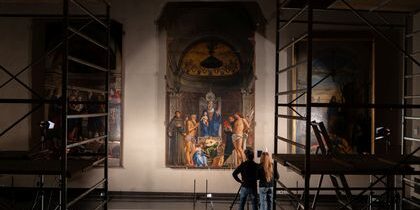
In an unprecedented move that illustrates modern technology’s impact on historical preservation, experts are offering a unique viewing experience as they carefully restore a renowned 15th-century masterpiece by Giovanni Bellini, and the whole process is available for the public to watch.
The artwork in question is “Christ Blessing,” one of the significant works of Venetian painter, Giovanni Bellini. It was painted circa 1460 and is currently housed in the conservation studios of Boston’s Isabella Stewart Gardner Museum.
Up until now, such significant restoration work has been a behind-closed-door process, which rarely gave a glimpse to the layman observer of the careful, meticulous, and scientifically aided techniques used to restore paintings to their original glory. However, the Gardner Museum’s innovative approach takes a different turn, opening up the cryptic world of art restitution to a broader audience.
The museum’s endeavor has gained wide attention online, with art mavens and novices alike expressing their fascination with being able to observe the restoration process in real-time. Previously, most people’s understanding of art restoration relied on before-and-after photos, which could not comprehensively capture the painstaking care and precision that goes into each step of the process.
According to Gianfranco Pocobene, the Gardner Museum’s Head of Conservation, the ability to share this rich and complex process with the public helps demystify the intricacies of art preservation. “The restoration of artworks, especially old master paintings, often seem enigmatic to the average person. By transparently showing our work, we aim to elucidate how we use both traditional methods and cutting-edge science to aid in the preservation efforts,” said Pocobene.
A team of experts outlined a detailed plan to carry out the project, which will involve techniques such as infrared imaging, high-resolution photography, microscopic examination, pigment analysis, and ultraviolet light examination. These methodologies will help conservators gain a better understanding of the materials and techniques Bellini and his workshop used, informing their approach to the painting’s conservation.
As they embark on this meticulous restoration, millions of viewers across the globe will be able to watch as the conservators expertly remove centuries of dust, discolored varnish, and old restorations to reveal Bellini’s original vision.
Giovanni Bellini was an Italian Renaissance master renowned for his innovative color and landscape techniques. His grand oeuvre, “Christ Blessing,” is no exception to his exceptional capabilities and is a pivotal piece in the 15th-century art world. Bellini’s artistry, combined with the fact that scant few of his early paintings survive, makes this conservation endeavor critical in preserving our world’s artistic heritage.
Theoni Panagiotopoulos, an art historian, and blogger highlighted the significance of this project. “The chance to see Bellini’s masterpiece revived scratch by scratch isn’t just about the thrill for art enthusiasts worldwide – it’s also an incredible opportunity to learn about the skill and precision involved in conservation and the efforts we take in preserving our global art history.”
This online coverage caters to a growing interest in heritage preservation and opens another chapter in the nexus of art and technology. However, beyond technological integration, the project communicates a dedication to education and dialogues on art history, conservation, and cultural appreciation. In an era where isolation is commonplace, initiatives like this rekindle collective involvement and engagement in the arts.