Known for her thought-provoking and uniquely provocative works, American artist Kathleen Ryan has taken the art world by storm with her latest series of oversized sculptures. Gaining substantial attention online, Ryan’s artwork challenges conventions; presenting rotting produce sculpted on a large scale, but adorned with an unexpected elegance – thousands of semi-precious stones.
This distinctive series, titled ‘Bad Fruit’, is not merely a comment on the perishability of food but offers a deeper, more challenging insight into the juxtaposition of decay and beauty. The sheer size of the sculptures, which can be up to seven feet in length, combined with the undeniable allure of the gemstones, demands attention while providing an unusual, often unexplored perspective on waste and excess.
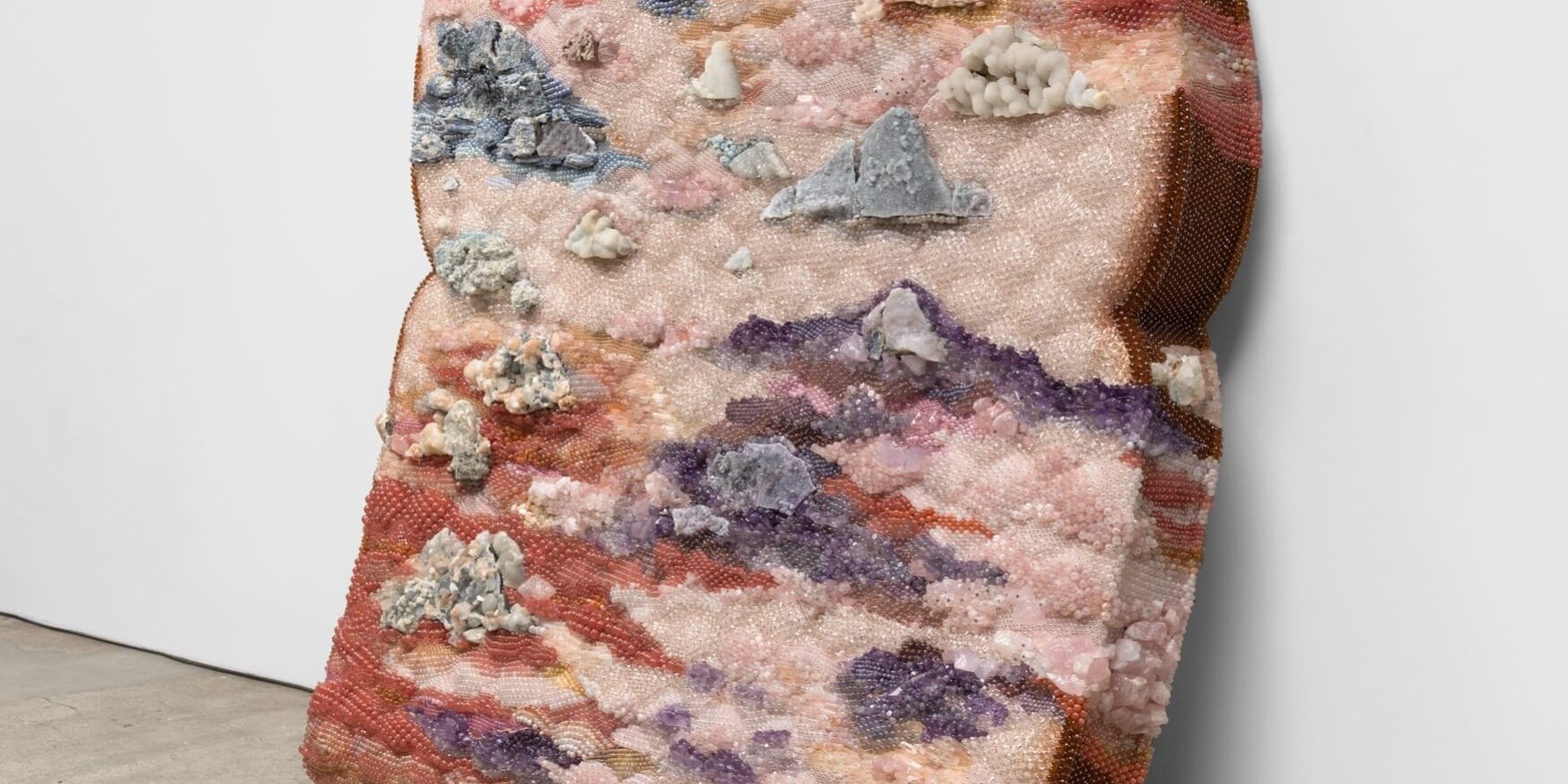
Intricately detailed and impeccably designed, Ryan’s sculptures replicate decomposing fruit in a way that is both intriguing and unsettling. Papier-mâché and steel pins form the base of these extraordinary pieces, creating a realistic, albeit oversized, representation of rotting food. Surprisingly, it’s the addition of semi-precious stones such as malachite, opal, smoky quartz, and pearls, among others, that deliver a delicate and unexpected form of beauty to the rotting fruit structures.
By elegantly adorning decaying food with these beautiful stones, Ryan creates a visual contrast between waste and luxury. The effect is, as one Instagram user noted, “shockingly beautiful”, with many more sharing their fascination and admiration for the contradictions and commentary presented in the series.
Pieces like ‘Sour Sparkle’, an eight-foot rendition of a rotting lemon, and ‘Cherry’, a six-foot depiction of a partially eaten cherry, boast layers of handmade beads, interwoven precisely in specific patterns to mirror the surface decay of the fruit. Contrarily, ‘Queen of the Night’ offers a unique look at a cactus pear using black onyx, green aventurine, serpentine, and garnet. The immaculate attention to detail demonstrates Ryan’s master craftsmanship, adding a degree of enchantment to what would normally be an unsavoury sight.
Art critics and enthusiasts alike have noted the series’ confronting dialogue on consumerism, waste, and opulence, evoking a critical reflection on our societal values. Some have even likened ‘Bad Fruits’ series to memento mori artwork, reflecting on the impermanence of life, which underlines the integral role of time in the processes of decay and deterioration.
Social media has played an instrumental role in spreading awareness about the ‘Bad Fruits’ series, with posts on platforms such as Instagram offering glimpses into the size and intricate detailing of the pieces. Influential art websites and online publications have also covered the works extensively, highlighting both their artistic merit and the thought-provoking messages beneath their glossy exterior.
The indistinct boundary between beauty and rot, posh and poor, conditioned by Ryan through her sculptures, continues to spark global conversations. A stark commentary on the excesses and inequalities of society, this series is another display of her exceptional ability to provoke thought and instigate dialogue through meticulous artwork.
Kathleen Ryan’s latest series effectively utilizes the power of contrast to portray a message steeped in contemporary relevance, forcing viewers to question our attitudes towards consumption and disposal.
In a world where food waste is a growing global concern and conspicuous consumption continues unabated, Ryan’s ‘Bad Fruit’ series proves not only an aesthetic triumph but also a necessary societal critique. By incorporating semi-precious stones into the rotting sculptural forms, she creates an avenue for the reconsideration of the value we place on resources and the overlooked beauty in the most unexpected places. ‘Bad Fruits’ is a testament to her proficiency in addressing pertinent issues with creativity, brilliance, and utmost artistry.
Original Source: https://www.thisiscolossal.com/2026/03/kathleen-ryan-beads-rotting-food-sculptures/