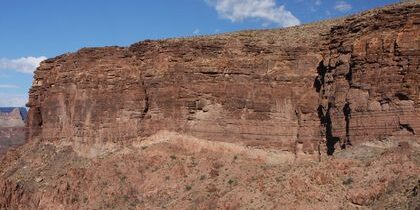
Scientists have made significant strides in understanding the substantial gaps in Earth’s geologic record, which reveal that over a billion years of rock layers may be missing. This astonishing absence raises questions about the processes that have shaped our planet’s history and offers insights into its geological evolution.
Background and context
The geologic record provides a critical timeline of Earth’s history, documenting the evolution of life and the planet’s changing environments. However, geologists have long observed that certain time periods, particularly from one billion to 1.5 billion years ago, are conspicuously sparse in terms of sedimentary rock formations. This gap, known colloquially as the “missing rock record,” represents a significant portion of Earth’s history, specifically during the Proterozoic Eon.
Previously, scientists struggled to pinpoint the reasons behind this absence. Various hypotheses were proposed, suggesting that erosion, tectonic activity, or simply a lack of sediment production could be to blame. However, these theories did not provide a complete picture, leaving researchers puzzled about the underlying mechanisms that could account for this significant loss in geological information.
Latest developments
Recent studies utilizing advanced imaging technology and geology fieldwork have shed new light on the mystery. A team of international scientists led by researchers from the University of Minnesota conducted extensive field analyses and examined geological formations across multiple continents. Their findings indicate that rather than being completely lost or eroded, these ancient rock layers may exist but remain undiscovered beneath layers of younger sediment.
The study suggests that during key periods, Earth’s surface was subjected to geological instability, including shifts in tectonic plates and volcanic activity, which caused these ancient rocks to remain buried and subsequently obscured. Researchers believe that improved exploration techniques and deeper drilling projects may finally bring these concealed formations to light, allowing scientists to piece together vital aspects of Earth’s early geological history.
What to watch next
This breakthrough opens several new avenues for exploration. Scientists are actively discussing future drilling initiatives that target specific locations known for their unique geological features. With advancements in technology and mapping techniques, researchers aim to uncover and analyze these hidden rock layers that can potentially provide insights into the conditions of ancient Earth.
As these explorations progress, the implications for our understanding of Earth’s past could be profound. Uncovering these missing layers may reveal vital information about early life forms, shifts in climate, and the geological processes that have shaped the planet over billions of years. The ongoing research marks a pivotal moment in geology, as it not only addresses one of the field’s longstanding mysteries but could also redefine how scientists comprehend Earth’s complex history.