
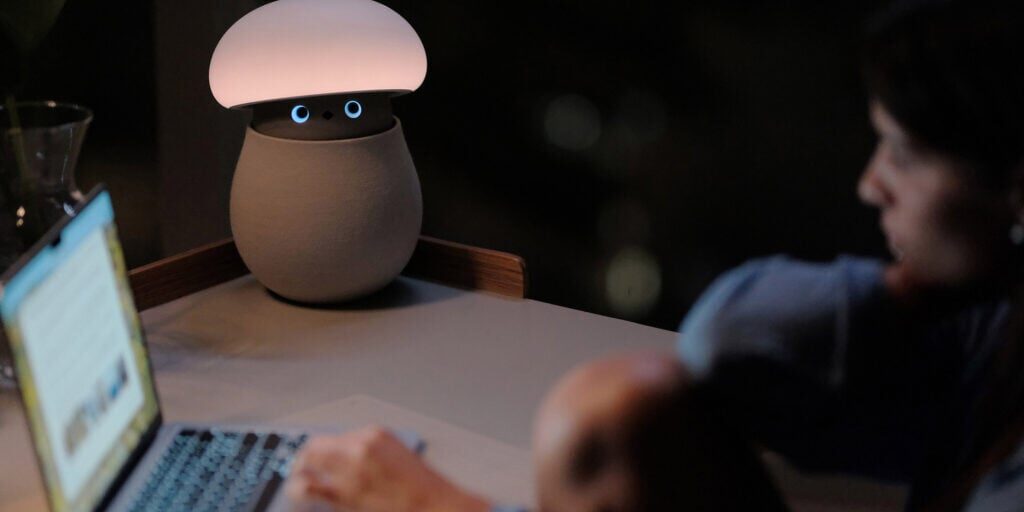
The Mori AI home robot has made headlines for its striking resemblance to a modern table lamp. This innovative design choice marks a significant departure from conventional home robotics, which often prioritize function over aesthetics. The integration of advanced artificial intelligence within an object that blends seamlessly into home decor signifies a step forward in consumer technology.
Key details
Unveiled recently, the Mori AI robot is built with sleek lines and a minimalist aesthetic, appealing to users who value both technology and design. Featuring a state-of-the-art AI system, it is capable of performing household tasks ranging from basic cleaning to voice-assisted management of smart home devices. The robot stands at around 18 inches tall, and its exterior is crafted from durable, yet lightweight materials, offering both functionality and style.
One of the robot’s standout features is its ability to communicate naturally with users. It employs a conversational interface that allows for an engaging user experience. The use of sensors to navigate and adapt to various home environments further enhances its practicality, ensuring it can move without causing disruption. The incorporation of energy-efficient technology also means it can operate for extended periods without frequent recharging.
Why this matters
The design of the Mori AI robot raises critical questions about the role of aesthetics in technology. As consumers increasingly seek products that fit harmoniously into their living spaces, this robot embodies a shift toward more balanced design philosophies in tech. By resembling a table lamp rather than conforming to traditional robotic shapes, Mori may encourage users to adopt home automation solutions previously seen as intrusive or clunky.
This approach not only seeks to increase customer acceptance of home robotics but also addresses concerns about the “robotic footprint” in personal spaces. In a market flooded with utilitarian designs, Mori’s lamp-like appearance is a bold statement that could redefine consumer expectations, steering the industry towards more aesthetically pleasing solutions that do not sacrifice capability.
Broader picture
The emergence of the Mori AI robot comes amid a growing trend toward greater home automation and the Internet of Things (IoT). As households become increasingly reliant on technology, products that blend functionality with design will likely be essential. The ability of home robots to integrate seamlessly into existing decor could be a game changer for market acceptance.
Furthermore, as more consumers prioritize sustainability, gadgets like Mori that boast energy-efficient designs may resonate more with eco-conscious buyers. Such products can lead to a stronger proliferation of smart home devices, as users feel their environment is enhanced rather than cluttered. In the broader context, the Mori AI robot signifies a potential shift in consumer technology—blending intelligence, usability, and design into a coherent package capable of fitting into any modern home.
As we gaze into the future of home robotics, Mori’s innovative design challenges us to reconsider our relationship with technology and how it shapes our living spaces. This could herald a new era where we embrace sophisticated devices that redefine both utility and beauty in our environments.
Original Source: https://www.dezeen.com/2026/11/10/okaq-mori-ai-home-robot-lamp/