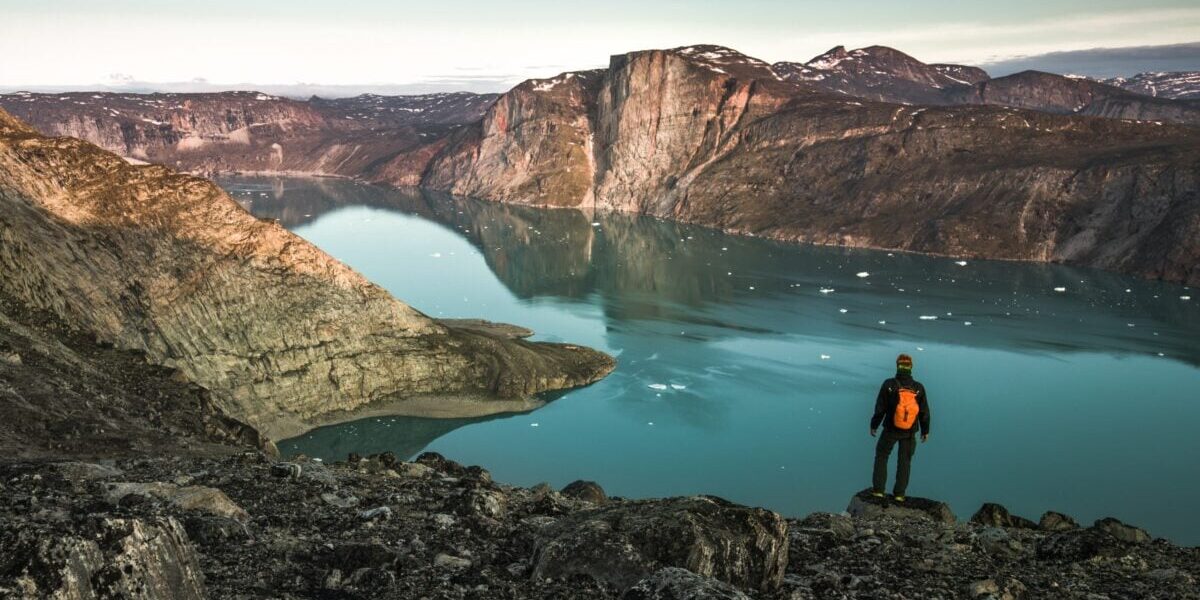
Recent research highlights an alarming potential for tsunami events originating from Greenland’s fjords, raising concerns about their implications for nearby coastal communities. Scientists are sounding the alarm due to a combination of climate change-driven glacial retreat and geological instability in the region.
Background and context
Greenland, home to the world’s second-largest ice sheet, has been undergoing accelerated melting due to climate change. This phenomenon is not only contributing to global sea-level rise but also exacerbating geological vulnerabilities in the region. The fjords of Greenland, carved by ancient glaciers, house steep granite cliffs, which are under increasing stress as the glaciers that previously stabilized them retreat.
Historically, Greenland’s fjords have hosted icebergs that calve from the glaciers, creating waves that are minor in comparison to the potential dangers posed by sudden rockfalls. Current studies suggest that the melting ice might result in landslides that can dislodge significant deposits of rock and sediment, leading to the generation of tsunamis capable of traveling hundreds of miles away.
Latest developments
In a study published in a leading geological journal, researchers from the University of Calgary and the Geological Survey of Denmark and Greenland identified specific fjords that exhibit increased geological instability. Their findings show that areas around Nuuk, the capital city, and other populous bays are at particular risk of significant landslides. The study used a combination of satellite imagery and geological modeling to predict how rising temperatures could trigger these geological events.
Scientists have now begun to monitor key fjords via remote sensing technologies to better understand the dynamics of glacial retreat and the accompanying risks. The potential for a catastrophic tsunami event raises concerns not only for Greenland but also for coastal towns in North America and Europe, which could face the brunt of such natural disasters. Recent simulations suggest that even a relatively small landslide could generate waves several feet high, impacting local fisheries and tourism.
What to watch next
As researchers continue to analyze the data, the focus will remain on identifying early warning systems for coastal communities at risk. Increased monitoring of glacial melting patterns and fjord stability is expected to play a critical role in refining tsunami risk assessments. Furthermore, collaboration between international geological and climate science communities is essential in developing databases that can predict and model potential events more accurately.
In light of these developments, residents, government officials, and emergency management agencies should be aware of the increasing tsunami threat. The integration of climate change adaptation strategies into urban planning and coastal management will be vital in mitigating risks posed by potential geological disturbances in Greenland’s fjords.
As scientists delve deeper into the geological changes occurring in this critical region, the intersection of climate science and geological stability will dominate discussions on future oceanic hazards, reinforcing the need for proactive measures in both assessment and response.
Original Source: https://www.sciencealert.com/scientists-warn-of-a-growing-tsunami-threat-lurking-in-greenlands-fjords