
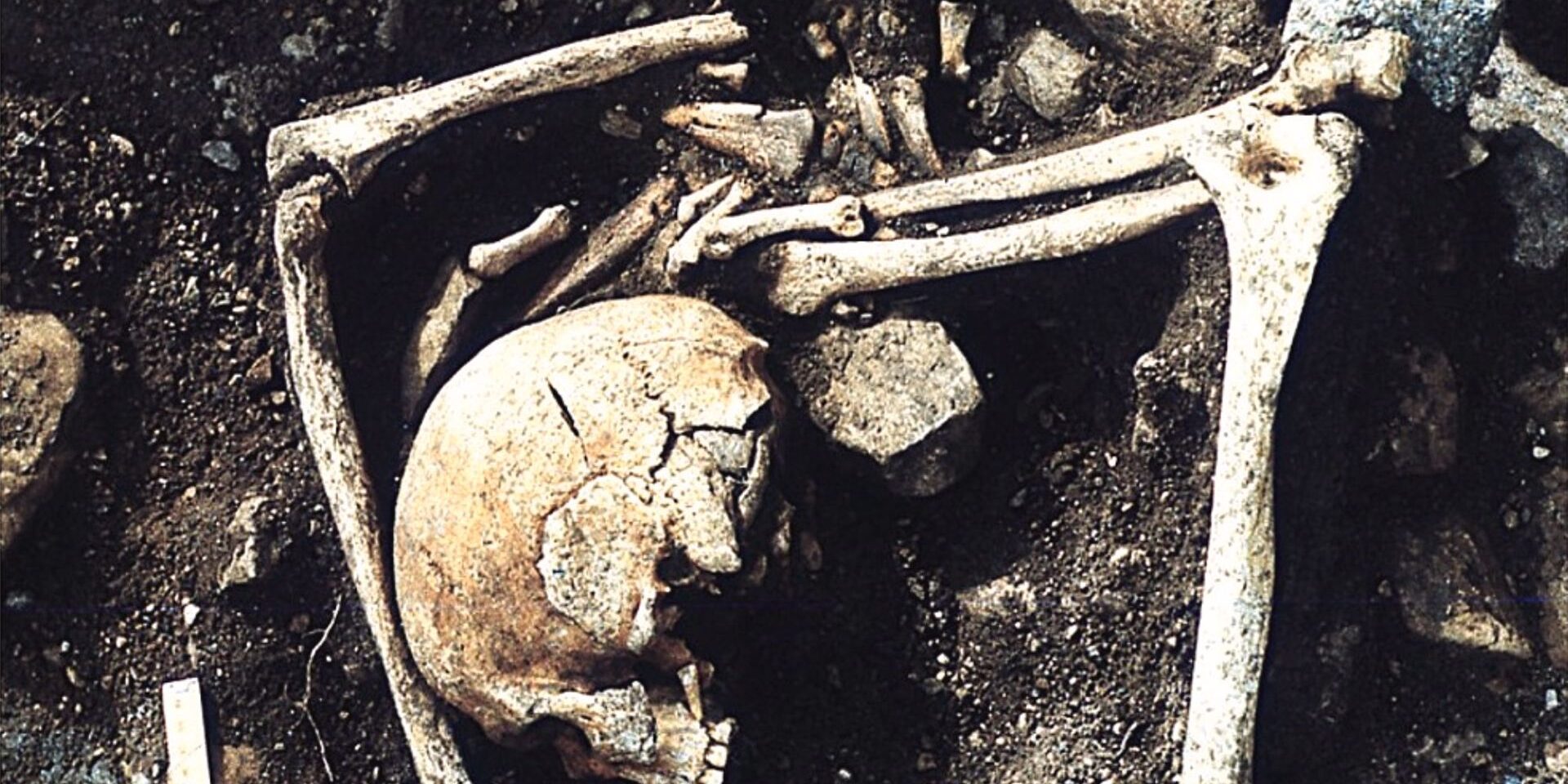
Archaeologists in Latvia have uncovered a burial site believed to date back around 1,200 years, revealing evidence that suggests the individuals interred there may have succumbed to sharp force injuries, likely from a Viking raid. This significant find adds a new layer to our understanding of regional history during the early medieval period.
Background and context
The burial site was discovered in the town of Kuldīga, located in western Latvia. It consists of several graves containing skeletal remains, which exhibit numerous stab and cut marks. Historical records indicate that during this period, the Baltic region faced several incursions from Viking groups, known for their seafaring abilities and raids across Europe. These incursions were characterized by violent confrontations and territorial expansion.
Latvia, caught in the middle of these power dynamics, served as a point of contact between trade routes and military movements. Previous archaeological efforts have unearthed artifacts and remains indicative of Viking influence, including weaponry and items associated with burial practices. However, this recent discovery stands out due to the explicit evidence of violent death, raising questions about the impact of Viking activity in the area.
Latest developments
Recent analyses of the skeletal remains suggest that the individuals were likely part of a larger population caught in a conflict between local tribes and raiding parties. The pattern of injuries found on the remains indicates that these individuals were not merely victims of warfare but were likely associated with a significant encounter that may have involved strategic violence, marking it as a pivotal moment in local history.
Experts noted that the skeletal evidence shows a higher prevalence of wounds sustained during battle compared to typical burial sites from this era. This could imply that the graves belonged to a community facing existential threats from outside forces. The nature of the injuries discovered could lead archaeologists and historians to reevaluate existing narratives around Viking raids and their extent in the Baltic region.
What to watch next
This discovery opens new avenues for research, prompting further excavations in Kuldīga and potentially other sites across Latvia. Archaeologists aim to gather more information to clarify the context surrounding this burial. As researchers delve deeper, they expect to find additional artifacts that could provide insight into the social structures and survival strategies of communities in the region during this turbulent time.
The implications of this finding extend beyond local history, contributing to the broader narrative of Viking influence across Europe. Experts anticipate that future studies may reshape the understanding of how these raids influenced settlement patterns and social dynamics in the Baltic, highlighting the complex interactions between Viking invaders and indigenous populations. As work continues, further developments are awaited that could illuminate this pivotal period of history.
Original Source: https://www.livescience.com/archaeology/vikings/1-200-year-old-burial-in-latvia-holds-people-who-died-of-sharp-force-injuries-possibly-from-a-viking-raid