
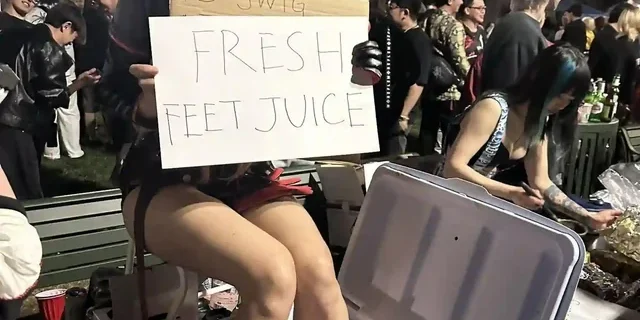
At a recent anime festival in California, a unique trend emerged that left attendees and online audiences alike both curious and perplexed: cosplay models selling “feet juice.” This unusual product, purportedly made from the sweat collected during cosplay events, has ignited discussions about the boundaries of cosplay culture and its commercialization.
Key details
The California Anime Festival attracted thousands of fans eager to celebrate their favorite characters and series. Among the many booths and merchandise options, a small section was dedicated to a group of cosplay models. They marketed their “feet juice” as a novel item inspired by a niche but growing demand within certain online communities.
The models presented the juice in small vials, each labeled with whimsical branding that played off popular anime and gaming franchises. Pricing began at $20, which many attendees were willing to pay, either out of curiosity, fandom, or a desire for a quirky collectible. The phenomenon drew mixed reactions, leading to debates about the ethics and implications of commodifying aspects of personal identity and performance in cosplay.
Why this matters
This development is significant as it highlights shifting norms within subcultures such as cosplay, where participants often share a profound attachment to their crafts. The sale of such unconventional products underscores the intersection between fan culture and commercialism, raising questions about authenticity and the motivations behind fandom.
The response has been polarized: while some fans view the product as a playful and humorous expression of the community, others argue that it objectifies cosplayers and exploits their personas. Critics express concern that the focus on selling such products diminishes the artistry associated with cosplay, which is often celebrated for its creativity and craftsmanship.
Broader picture
As fan conventions evolve, they increasingly embrace a wider array of merchandise, reflecting personal tastes and the influences of internet culture. The sale of “feet juice” may appear bizarre to casual observers, but it reveals deeper trends regarding consumable fandom expressions and internet subcultures. With platforms like TikTok and Instagram igniting various trends, the relationship between creators and fans grows more complex.
The incident also prompts reflection on how cosplaying, originally a hobby rooted in community and shared enjoyment, is intersecting with commercial pressures. While monetization can help bring visibility to lesser-known creators, it also risks alienating traditional elements of the fandom that cherish the art of costume-making and performance. Ultimately, the emergence of “feet juice” at a major convention might signal a tipping point in how such communities will navigate the balance between artistry and commercialization in an evolving digital landscape.