The recent discovery of fossils in southern China has reshaped the understanding of the timeline for the evolution of complex life forms. Researchers announced that these findings suggest complex multicellular organisms may have existed millions of years earlier than previously believed, raising profound questions about the history of life on Earth.
The latest turn
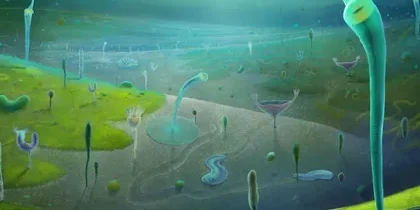
Located in the Doushantuo Formation, these fossils date back to approximately 600 million years ago, during the late Ediacaran Period. The specimens include a variety of organisms, some exhibiting advanced structures that hint at early forms of complex life, such as multicellularity and tissue specialization.
This discovery was made possible by the application of cutting-edge imaging techniques that allowed scientists to visualize intricate details within the fossils, previously obscured by sediment. The team, led by paleobiologist Dr. Wei Li, emphasized that these discoveries push back the timeline of complex life evolution by at least 20 million years, challenging long-held views established by previous findings.
How the story got here
The Doushantuo Formation has long been a site of interest for paleontologists. Its thick layers of sediment and rich fossil record have yielded various simple life forms. However, for decades, researchers have faced challenges in determining the biological complexity of these organisms due to the nature of the fossilization process.
In past years, doubts about the early emergence of complex multicellular life have stemmed from a perceived gap in the fossil record. Many scientists have relied on the Cambrian explosion—around 541 million years ago—as the turning point for the diversification of life, which has cast shadows on earlier periods. The new findings, however, challenge the notion that complex life suddenly appeared during the Cambrian, suggesting instead that the building blocks of more advanced organisms had begun developing much earlier.
Next expected developments
Research is still in its early phases, but the potential implications of this discovery warrant further exploration. Paleontologists are now gearing up for more extensive excavations in the Doushantuo Formation and surrounding regions to uncover additional fossils that might provide further clarity on this ancient ecosystem.
Moreover, collaborations between paleobiologists, geologists, and molecular biologists are expected to deepen the investigation into the genetic and environmental factors that could have driven the evolution of complex life in the Ediacaran. Upcoming studies may also aim to bridge the gap between the earlier and later periods of evolutionary history.
As scientists continue to unveil the mysteries surrounding these ancient organisms, the next milestone is likely to be the publication of detailed analyses of the fossil structures and their evolutionary implications—a step that could redefine our understanding of life’s early history on Earth.