In a recently surfaced series of discussions in the scientific community and making waves in cyberspace, a story has emerged linking Neanderthals to the use of birch bark tar as an antibiotic. This theory, undergirded by archaeological evidence and modern scientific analysis, is casting a new light on the healing capacities of our hominid cousins and their knowledge about the medicinal potential of natural resources.
Scientists have long speculated on the degree of technological and medical knowledge possessed by Neanderthals, an extinct species or subspecies of archaic humans who lived in Eurasia until around 40,000 years ago. The debate surrounding their usage of the tar from birch bark is a new addition to this ongoing dialogue.
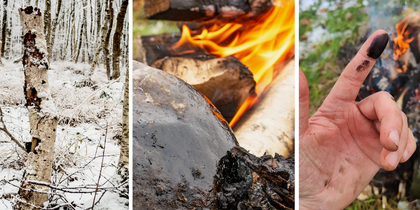
Notably, birch bark tar (BBT) has been discovered in several Neanderthal-inhabited archaeological sites across the northern hemisphere. One such site in Königsaue, Germany, regarded as one of the most relevant due to its well-preserved artefacts dating back to the Middle Paleolithic period, contains traces of BBT. Scholars believe that this tar was used as an adhesive for tools or weapons by applying it to stick wood or bone pieces together.
However, in recent times, the exploration has shifted from simply understanding the adhesive usages of birch bark tar to its medicinal values. A study published in the journal “Antiquity” highlights that birch bark tar possesses antiseptic and anti-inflammatory properties. Such findings have triggered the question: did our extinct cousins use this substance to treat wounds and infections?
According to Dr. Klint Janulis, a prehistoric technology specialist, “Neanderthals using BBT is like Stone Age duct tape.” Yet, while the idea of Neanderthals using BBT as an antiseptic is intriguing, pursuing it necessitates a cautious discourse around the circumstantial nature of the evidence involved.
Complicating the discussion are claims that Neanderthals may have consumed the tar due to its potential gastrointestinal benefits. Julia Galway-Witham, a research assistant at London’s Natural History Museum, elaborates, “Consuming BBT, which has antimicrobial properties, could have contributed towards a healthier gut microbiome.”
Interpreting the ways in which Neanderthals potentially utilised birch bark’s antibacterial properties is also influenced by our understanding of their lifestyle. Numerous online resources assert that these ancient hominids were likely exposed to high rates of injury and infection due to their hunting tactics and the harsh environments they inhabited, further validating the theory of their utilisation of antiseptic substances.
Examining oral health records, scientists discovered that several Neanderthals suffered from gum diseases, abscesses, and other infections. If they indeed exploited birch bark tar’s medicinal properties, it could have helped to improve their oral health and overall wellbeing.
Despite the compelling argument, several scientists advise caution before accepting this theory without reservation. Circumstantial evidence does not solidify this hypothesis, and more in-depth research is needed. As aforementioned, the majority of past discourse has focused on the adhesive applications of the tar, with the therapeutic aspect emerging more recently in researches.
However, the idea that Neanderthals could have potentially used an available natural resource not only for practical applications such as tool-making but also as an immunomodulatory aid presents a fresh perspective. This paradigm shift represents an attempt at an even-handed portrayal of Neanderthals, rehabilitations in the scholarly realm that could obliterate some stereotypes of our ancient cousins.
The debate about Neanderthals and birch bark tar usage continues to evolve, bringing new facets of our ancient ancestors’ lives to the forefront. As a testament to their complex behavioral patterns, these discoveries compel us to reconsider the conventional depiction of Neanderthals, demonstrating a capacity for healthcare practices that echo even into the present day.
Original Source: https://www.smithsonianmag.com/smart-news/did-neanderthals-use-birch-bark-tar-as-an-antibiotic-to-treat-wounds-and-infections-180988393/