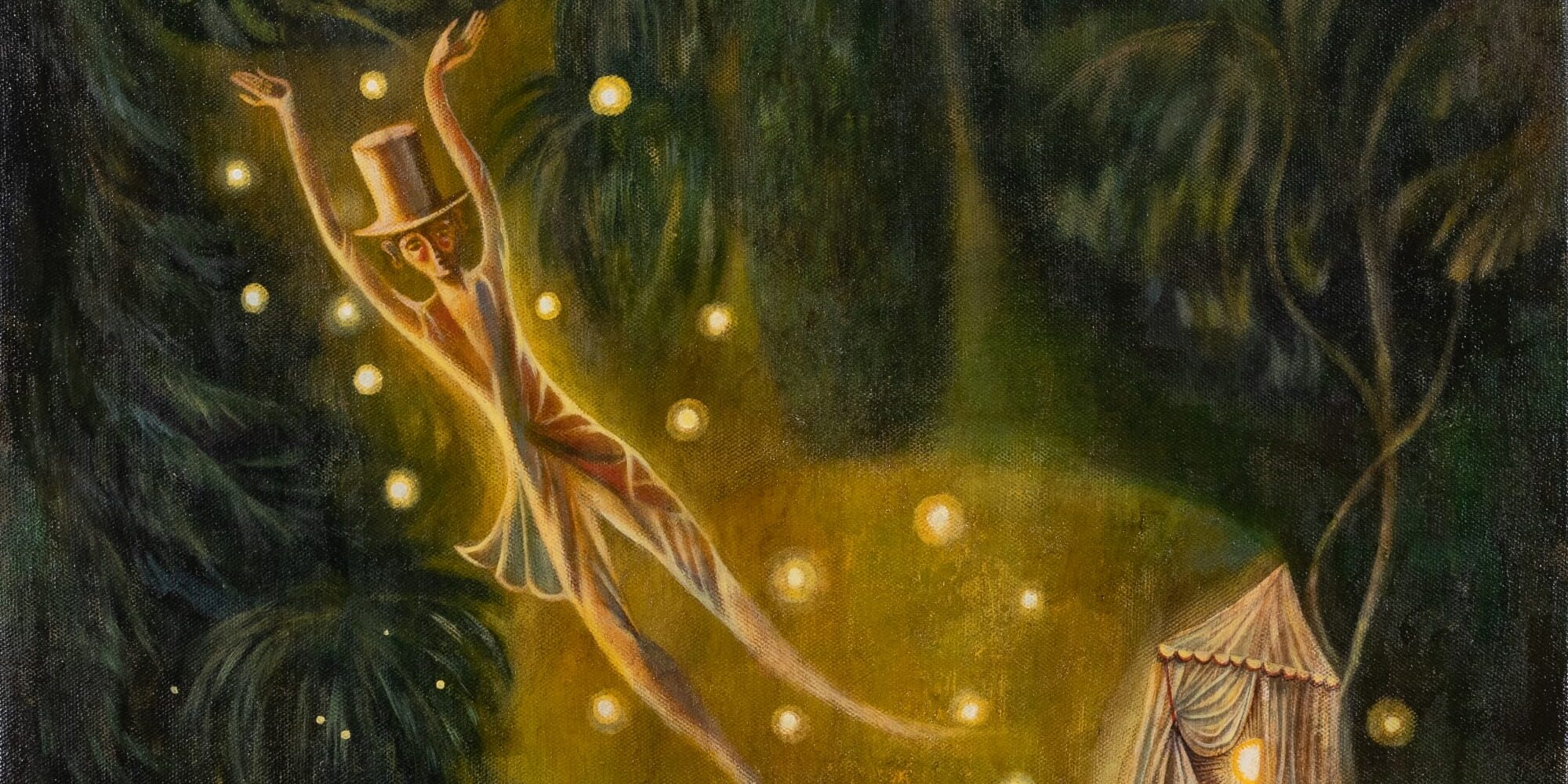
The enigmatic allure of Olaf Hajek’s illustrations have become a hard-to-ignore element in the global art scene. The German-born artist continues to keep his audience entranced with ambiguous narratives and cultural symbolism interwoven into strikingly surreal illustrations.
On first glance, Hajek’s illustrations seem like intricate allegories with a touch of whimsy, each stroke a blend of fantasy and reality. However, his works’ appeal lies in the intentional ambiguity, toying with viewer’s perspective and pushing the boundaries of conventional definition.
Hajek’s technique blurs the line between fantasy and reality. His work depicts a surreal world that borrows from various cultural references, historical periods, and natural elements. This has led to compellingly unpredictable combinations, attracting passionate debates among critics and followers.
Hajek’s oeuvre speaks volumes about his travels and experiences, as his illustrations are imbued with cultural symbols, mythological creatures, and exotic flora. Whether it is Frida Khalo’s visage interspersed with sunflowers or a fantastical rendering of a butterfly with human-like features, ambiguity reigns supreme in Hajek’s mysterious illustrations.
Online discourse around Hajek’s work has been dramatically surging, with art enthusiasts, scholars, and curious netizens engaged in decoding the mysteries of his illustrations. From art blogs to webinars, from panel discussions to social media debates, the cybernetic ripple effect of Hajek’s work is yet another testament to his influence in contemporary art.
Art critic and blogger, Martin Kensington, recently postulated a theory on his platform, suggesting that Hajek’s work could be global storytelling coordinates on a worldly canvas. “His illustrations may seem like stylistic fusions, but they are resonant cartographies of cultural geography. His love for multiculturalism and ethnic aesthetics is more than evident,” writes Kensington.
Contrary to this, a recent post on InstaArt, a popular art-focused Instagram account, offered a different interpretation. It portrayed Hajek’s ambiguity as an intrinsic part of his storytelling style, pushing viewers to create their own narratives and interpretations.
Scholars, too, have found merit in analysing Hajek’s work. For instance, a recent paper published in the ‘Annals of Art History’ dedicated an entire section to the “mytho-historicism” in Hajek’s art. According to the paper, Hajek’s incorporation of myths and historical references into contemporary scenarios offers a layered perspective into his thought process.
The international recognition of Hajek’s work has also carved a niche market for prints, postcards, and stationeries featuring his distinct illustrations. With the increasing appreciation of art in everyday life, Hajek’s ambiguous illustrations are reaching more diverse audiences in an increasingly intimate setup – be it a home, a café, or an office space.
Delving into the recent online coverage around Hajek’s work, it seems apparent that the ambiguity is, interestingly, what makes his work genuinely compelling. His illustrations encourage discussions, interpretations, and, most importantly, they trigger an individual’s imagination.
Hajek himself, in an interview with Artsy.net, acknowledges the ambiguity in his work. “For me, it’s about letting a story unfold in the viewers’ mind from a single frame of my imagination. That’s the beauty of ambiguity,” he said.
The soft-spoken artist’s works stand testimony to the saying: ‘beauty lies in the eyes of the beholder’. Indeed, it is not far-fetched to assume that the efficacy of his work is amplified because those interacting with his illustrations are left with enough room to interpret and reinvent the ambiguity.
While there is much to be dissected and discussed about the mystery embedded in Hajek’s art, one thing is sure: the hypnotic ambiguity is what keeps his audience wanting more. This unresolved element is what ensures Olaf Hajek continues to be a modern master of visual storytelling.
Original Source: https://www.thisiscolossal.com/2026/03/olaf-hajek-surreal-illustrations/