
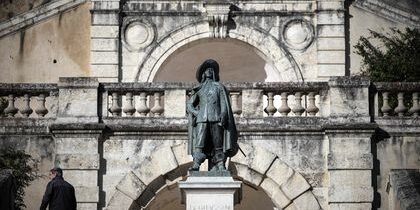
In what can be considered a riveting find for both historians and literature aficionados, a skeleton discovered beneath an 18th-century Dutch church might possibly be the remains of Charles de Batz de Castelmore, more popularly known as D’Artagnan, protagonist of Alexandre Dumas’ famous novel “The Three Musketeers.” This potential revelation has attracted significant attention and provoked speculation amidst archaeological, historical, and literary circles around the world.
In Alexandre Dumas’ historical romance, D’Artagnan is portrayed as a brave, adventurous, and skillful swordsman who becomes a member of the elite corps of guards serving the French king. The intrigue lies in the fact that Dumas’ character was based on a real historical figure—Charles de Batz de Castelmore D’Artagnan—who served Louis XIV as his captain of the Musketeers of the Guard.
The unearthing of the skeleton from a crypt beneath an old church in Maastricht, Netherlands raises the tantalizing possibility that the gascon adventurer’s final resting place has finally been found. The location seems feasible—D’Artagnan died during the Siege of Maastricht in 1673, according to official records.
The discovery was reportedly made during routine maintenance work carried out at the church premises. Scholars from the University of Groningen, who handled the subsequent examinations, have not outright confirmed the identity of the skeleton. However, their preliminary findings suggest that the bones belonged to a man of approximate age, stature, and physical condition consistent with D’Artagnan’s description.
The skeleton displayed signs of being in robust health but bore the visible marks of a violent death, deepening the correlation to D’Artagnan, who was recorded to have met a fatal end in battle. Among the clues examined by scientists is a noticeable injury to the skull, which aligns with historical accounts of D’Artagnan’s death caused by a musket ball to the head.
The news has been making waves on the internet, with users on both social media platforms and online discussion boards expressing their fascination about the potential link to Dumas’ cherished historical fiction. The romantic allure of the Three Musketeers and their daring exploits seems to have captivated the attention of people well beyond literary and historical scholars.
However, developing a concrete confirmation of the skeleton’s identity poses a considerable challenge. As Professor Henrik Vanderhagen from the University of Groningen points out, “Without any direct descendants or substantial personal effects, we’ll have to rely primarily on physical correspondences and historical documentation. It could well take a number of years to reach a definitive conclusion.”
If the skeleton were indeed verified as the remains of the famed Musketeer, the find would not only reinforce the intriguing link between literature and history but also offer invaluable insight into 17th century soldierly life under the reign of Louis XIV—an area often glamorized in historical literature and films alike.
As this mystery unravels, it remains to be seen whether these bones in the Dutch church crypt corroborate the poignant end of a beloved literature hero’s real-life counterpart, or if they merely belong to an unidentified soldier who bore a strikingly similar life to D’Artagnan. Either way, in the words of Dumas, this is clearly shaping up to be “one for all, and all for one” engaging historical puzzle.
Original Source: https://www.smithsonianmag.com/smart-news/this-skeleton-found-beneath-the-floor-of-a-dutch-church-may-belong-to-dartagnan-the-fourth-musketeer-180988448/