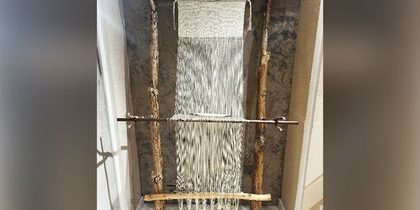
A recent archaeological discovery is weaving an intriguing narrative about the textile practices of the Mediterranean during the Bronze Age. A meticulously crafted loom dated to about 3,200 years ago has been brought to light in a dig site on the island nation of Cyprus.
The loom itself was found within a complex of Bronze Age buildings currently under excavation at the site of Kalavasos-Ayios Dhimitrios, a well-known archeological hotspot on the south coast of the main island.
This discovery offers an unprecedented window into the world of textile crafting and trade during the Late Bronze Age (c. 1650-1050 BC), a critical period that shaped the cultural landscape of the Mediterranean. It also provides striking evidence of the advanced technical knowledge and high degree of specialization in textile production during that era.
Dr. Louise Steel, who led the research team from the University of Wales, emphasized the significance of the find on an international scale. “This isn’t just about Cyprus, it’s about how the whole eastern Mediterranean was connecting and communicating,” she explained. “Textiles are a form of communication, they’re a form of identity.”
The loom is remarkably well-preserved, revealing a wealth of archaeological information. Detailed analysis of the loom’s complex working elements including warp and weft weights, loom weights, spindles and spindle whorls provide valuable insights into the intricacies of Bronze Age textile production.
“This throws open the door to lots of possibilities about how textile production worked during that era,” said Dr. Anna Lappé, an archaeologist specializing in ancient textiles who was not associated with the discovery.
This loom is the first of its kind to be discovered in the Eastern Mediterranean, enriching our understanding of the social, economic, and cultural roles textiles might have played during the Bronze Age. In particular, the loom’s elaborate and complex working setup indicates it was used for producing finely woven textiles, typically associated with high-status individuals, shedding light on the social structure of that period.
The loom’s surprising sophistication also adds more layers to our understanding of Bronze Age trading practices. “Professionally produced textiles of this age would have been a highly valued commodity, likely contributing significantly to the local and regional economies,” observed Professor Thomas Brogan, director of the Institute for Aegean Prehistory Study Center for East Crete, an expert not involved with the study.
While ancient textiles rarely survive in the archaeological record due to their perishable nature, material culture objects such as looms are pivotal in the reconstruction of ancient textile practices.
The team’s findings have already generated a wave of interest across scholarly and social media platforms. From professional archaeologists to history enthusiasts, speculation is rife about the potential implications of this discovery and the additional insights it could provide into Bronze Age Mediterranean society.
The findings have been published in the Journal of Mediterranean Archaeology, attracting international attention from experts in the field.
In the words of Paul Stropper, a Melbourne-based historian with a special interest in ancient civilizations: “This discovery has created a new thread in the fabric of understanding Bronze Age Mediterranean trade and culture.”
With the analyses of this rare and informative artifact at its initial stages, the Kalavasos-Ayios Dhimitrios Loom promises to continue generating valuable insights about Bronze Age life and practices in the Mediterranean region.
This loom’s discovery testifies to the continued importance of archaeological research and the unexpected revelations history can unspool from the depths, weaving a picture of our shared human past. As the team continues its work, the anticipation is keenly felt within the historical and archaeological communities. As their work progresses, it is all but guaranteed that this Bronze Age loom will continue to produce interesting pieces of the historical puzzle.
Original Source: https://www.smithsonianmag.com/smart-news/a-bronze-age-loom-sheds-new-light-on-mediterranean-textile-practices-180988426/